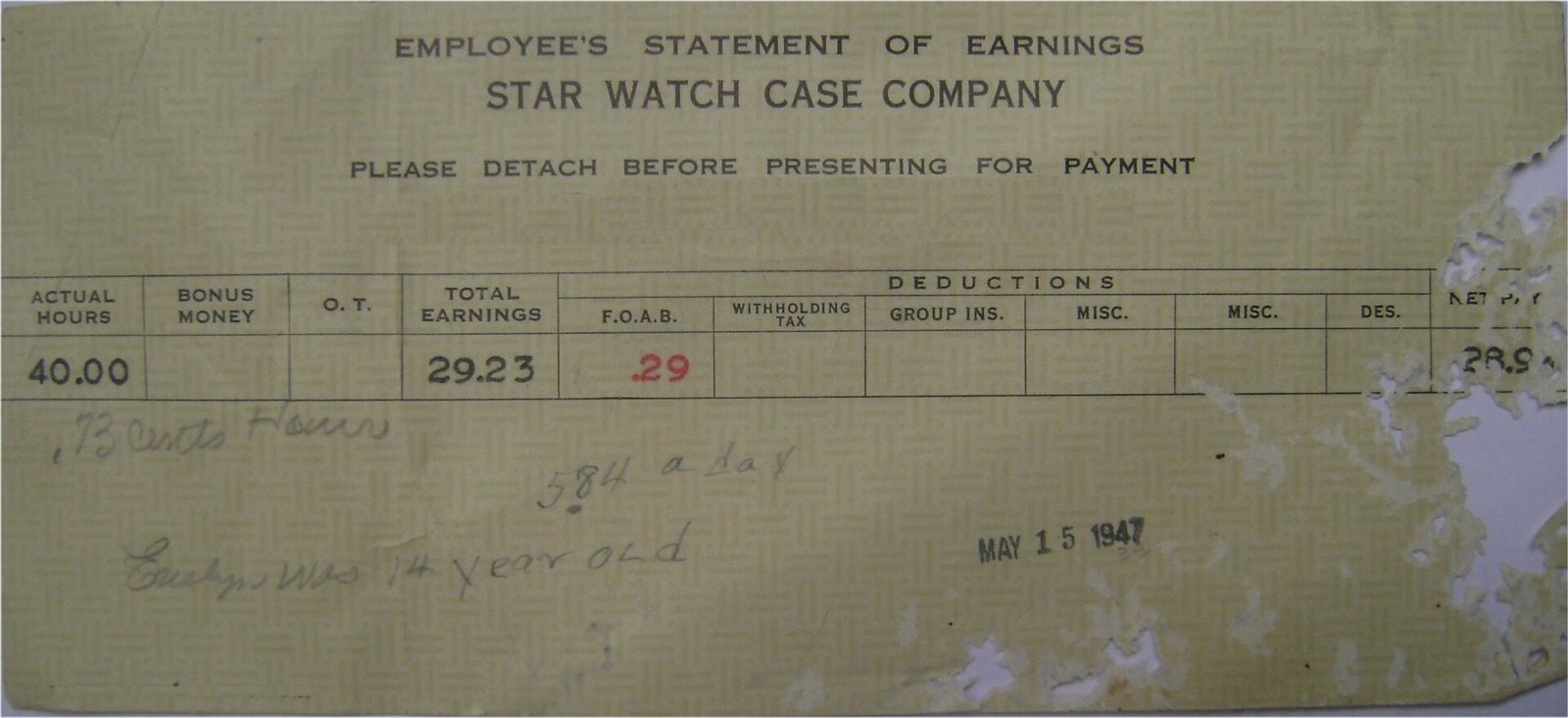
Your first paycheck is often smaller than you expected — your pay stub explains exactly where the rest of the money went.
You worked 20 hours at your campus job or your first part-time gig, did the math in your head and then the paycheck came in lower. That gap is normal. Taxes and other deductions come out before the money reaches you.
Your pay stub (sometimes called a paycheck stub or earnings statement) is the record that shows how your pay was calculated. Learning to read it helps you catch mistakes, understand taxes and plan your budget around what you actually take home.
One note before we start: the federal Fair Labor Standards Act does not require employers to give pay stubs, according to the U.S. Department of Labor. Many states do have their own rules, and most employers provide one, either on paper or through an online payroll portal.
The basics at the top
Most pay stubs start with some identifying details:
- Your name and employer's name — check that they are correct.
- Pay period — the start and end dates of the time you are being paid for.
- Pay date — the day the money is paid out.
- Employee ID — a number your employer uses to track your records.
It is worth checking the pay period against your own record of the hours or shifts you worked.
Earnings: what you made before anything came out
The earnings section shows your pay before taxes and deductions.
- Hours and rate: If you are paid hourly, you will see how many hours you worked and your hourly rate.
- Overtime: If you worked overtime, it may appear on its own line with a different rate.
- Other pay: Tips, bonuses, commissions or holiday pay may also be listed separately.
- Gross pay: This is the total you earned before anything is taken out. If you earn $15 an hour and work 20 hours, your gross pay for that period would be $300.
Many stubs also show year-to-date (YTD) totals. YTD means the total amount from the start of the year through this pay period. These numbers help you see how much you have earned and paid in taxes so far.
Taxes: the biggest chunk taken out
Taxes are usually the largest difference between gross pay and what you take home. Here are the most common ones.
Federal income tax. This is money withheld for your federal income taxes. Withholding means your employer takes a portion out of each paycheck and sends it to the government for you. How much is withheld depends partly on the Form W-4 you filled out when you were hired. The W-4 is the form that tells your employer how much federal income tax to withhold.
Social Security tax. This funds Social Security, which the Social Security Administration says pays retirement, disability, and family and survivors benefits. According to the IRS, the employee share is 6.2% of wages, and your employer pays a matching 6.2%. There is a yearly cap on wages subject to this tax, which changes over time; you can check the current figure on irs.gov.
Medicare tax. This funds Medicare, a federal health program for people 65 and older and some people with disabilities. The IRS says the employee share is 1.45%, with your employer paying a matching 1.45%. Very high earners may pay an additional Medicare tax.
Together, Social Security and Medicare taxes are often shown as FICA, which stands for the Federal Insurance Contributions Act. Some stubs label the Social Security line "OASDI," short for Old-Age, Survivors, and Disability Insurance.
State and local taxes. Depending on where you live and work, you may also see state income tax, city or county taxes, or state programs such as disability insurance.
Deductions: other money taken out
Beyond taxes, you may see other deductions. These are usually split into two types:
- Pre-tax deductions come out before income taxes are figured, which can lower the income you are taxed on. Common examples include contributions to a workplace retirement plan like a 401(k), and some health insurance premiums.
- Post-tax deductions come out after taxes. Examples might include a Roth 401(k) contribution, union dues or wage garnishments.
If you are a student with a part-time job, you might not have many deductions beyond taxes. As you move into a full-time job with benefits, this section tends to get longer.
Net pay: what actually hits your account
At the bottom, you will find your net pay, often called take-home pay. This is your gross pay minus all taxes and deductions. It is the amount deposited into your bank account or paid by check.
When you build a budget, plan around your net pay, not your gross pay or your hourly rate. That small switch can prevent a lot of overspending.
Why it pays to check every stub
Payroll mistakes happen. Taking a minute to review each stub can help you catch problems early:
- Hours: Do the hours match what you actually worked?
- Rate: Is your hourly rate or salary correct, especially after a raise?
- Overtime and tips: Were they included?
- Deductions: Do you recognize every deduction? Did a benefit you signed up for start — or one you canceled stop?
- Personal info: Is your name spelled correctly?
If something looks off, contact your manager or payroll department and ask them to walk you through it. Keep copies of your stubs. They can be useful when you file taxes, apply for an apartment or take out a loan, since many landlords and lenders ask for recent pay stubs as proof of income.
Too much or too little withheld?
If your federal withholding seems too high or too low, you can submit a new W-4 to your employer. The IRS offers a free Tax Withholding Estimator on irs.gov to help you figure out the right amount. The IRS suggests having your most recent pay stubs and your most recent tax return handy when you use it.
Getting withholding closer to right can mean fewer surprises at tax time — either a big bill or a large refund that could have been in your pocket all year.
This article is for education only and is not financial advice. Everyone's situation is different.
Content on The Evergreen Edit is for educational and informational purposes only and is not individualized financial, investment, tax or legal advice. Learn more.
This article is for educational purposes only and isn't personalized financial, tax or legal advice. Consider talking with a qualified professional about your situation.

Kiara Miller — Founder & Editor
Kiara Miller is the founder and editor of The Evergreen Edit. He has been doing independent finance research for two decades and reviews every article before it's published.
More about Kiara →Get smarter about your money.
Join readers who get The Sunday Edit every week.