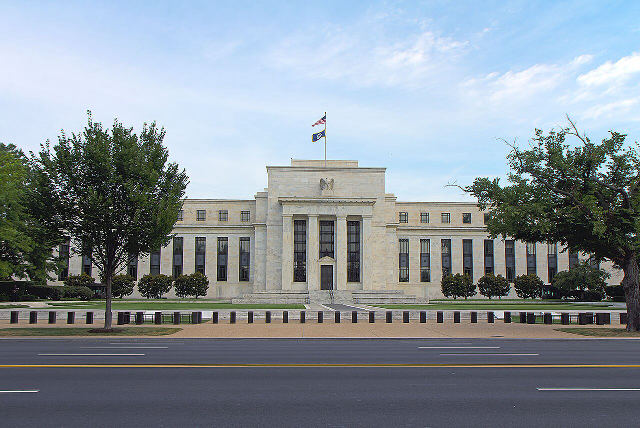

Overall lending standards barely moved, but the details show banks getting pickier about who gets a card and how much they can charge on it.
What did the Fed's new survey say about credit cards?
Banks left overall credit card standards basically unchanged in the third quarter, but they tightened credit limits and grew less likely to approve subprime applicants, the Federal Reserve's October survey of loan officers shows. Demand for cards rose at the same time, so more people are asking while lenders stay choosy.
The findings come from the October 2026 Senior Loan Officer Opinion Survey, which appeared on the Fed's website on Monday, Nov. 2, and on the St. Louis Fed's release calendar for the same day. The Fed polled 61 domestic banks and 18 U.S. branches and agencies of foreign banks. Those banks got the survey on Sept. 21, and their answers were due by Oct. 5, so it captures what lenders were doing over the summer.
The headline can be misleading, so the fine print matters. "Basically unchanged" is a defined term in this report. It means the net share of banks reporting a change was 5 percent or less. Most lenders kept their general standards where they were, but several specific terms did get tighter.
Where banks got tougher
The Fed listed a few exceptions to the "unchanged" picture. For credit cards, banks tightened credit limits on card accounts. They also tightened how often they grant credit card loans to borrowers who fall short of their credit-scoring cutoffs. For other consumer loans, they tightened that same practice. For auto loans, banks raised the minimum required credit score.
A special set of questions on card applicants drew an even clearer line. Banks said they were more likely to approve applications from super-prime and prime borrowers, meaning those with stronger credit scores. They were less likely to approve subprime applicants, and the Fed said small banks drove that trend. Approval odds for near-prime borrowers, the group in between, were basically unchanged. The Fed's written summary doesn't give exact percentages for these answers.
So the same survey shows two different experiences. Someone with a strong score may find it a little easier to get approved. Someone with a thin or damaged credit history may find it harder.
Why it matters that demand went up
Banks also reported stronger demand for credit card loans in the third quarter. That's a shift from the July survey, when card demand was basically unchanged and a modest net share of banks tightened card standards. Demand for auto loans weakened, and demand for other consumer loans held steady.
The survey doesn't say why more people wanted cards, and it would be a guess to say this means households are under more strain. The backdrop is expensive debt, though. The Fed's latest consumer credit report put the average rate on card accounts that were charged interest at 22.36% in August. Americans owed $1.26 trillion on credit cards in the second quarter, according to the New York Fed. As we covered last week, the Fed held its benchmark rate at 3.75% to 4% on Oct. 28.
Card rates have also become a campaign issue ahead of Tuesday's midterm elections, with candidates from both parties pitching rate caps. Those are proposals, not law, and today's rates are what cardholders are actually paying.
What this means for your wallet
The biggest practical effect may be on your credit utilization, the share of your available credit you're using. Say you carry a $3,000 balance on a $10,000 limit. That's 30% utilization. If the bank trims your limit to $7,500, the same balance becomes 40%, even though you didn't spend another dollar. The Consumer Financial Protection Bureau notes that experts advise keeping use at no more than 30% of your total limit. Our guide to credit utilization explains how that ratio can affect your score.
Interest is the second pressure point. At 22.36%, a $5,000 balance costs roughly $93 in interest a month if the balance stays about the same. That's money that isn't reducing what you owe.
You also have some protections if your limit is cut, according to the CFPB:
- Over-limit fees: A card issuer can't charge over-the-limit fees or a penalty rate for going past your new limit until 45 days after it gives you notice of the decrease.
- Reasons: In most cases, the issuer must send an adverse action notice that gives specific reasons for the cut or lets you request them.
- Charges: If a cut leaves you with no available credit, you can't make new charges until you pay down some of the balance.
If you depend on a card's limit, it may help to check your current limit and available credit now rather than finding out at the register. If you're applying for a new card, the survey suggests your score could matter more, and a soft-pull preapproval tool, if the issuer offers one, can show your odds without a hard inquiry. Some borrowers with good credit look at balance transfer cards to pause the interest, though these usually carry a fee and work only if the balance is paid down before the promotional rate ends.
The survey is one snapshot from a sample of banks, and it doesn't mean your own limit will change. The Fed generally runs it four times a year, so the next reading should arrive around the Fed's January meeting.
Frequently asked questions
What is the Senior Loan Officer Opinion Survey?
It is a Federal Reserve survey that asks banks whether their lending standards and terms changed and how demand for loans shifted. The Fed generally conducts it quarterly, timed to its policy meetings.
Can a credit card company lower my limit without asking?
Yes. The CFPB says issuers generally can raise or lower limits, even to the point that you have no available credit left. In most cases they must send an adverse action notice with reasons or a way to request them.
Does a lower credit limit hurt my credit score?
It can, because a lower limit raises your utilization if your balance stays the same, and utilization is a factor in credit scores. How much it matters depends on your full credit profile.
What does subprime mean in this survey?
It's a label for borrowers with weaker credit scores. The Fed's summary sorts card applicants into super-prime, prime, near-prime and subprime groups, from strongest to weakest.
Sources
- Federal Reserve, November 2, 2026
- Federal Reserve Bank of St. Louis release calendar, November 2, 2026
- Federal Reserve, August 3, 2026
- Federal Reserve G.19 Consumer Credit, October 7, 2026
- Federal Reserve Bank of New York, August 11, 2026
- Consumer Financial Protection Bureau, April 25, 2024
- PYMNTS, November 1, 2026
Content on The Evergreen Edit is for educational and informational purposes only and is not individualized financial, investment, tax or legal advice. Learn more.
Your savings goal
Months to your goal: 45
Estimate only. No interest, fees or changes in contributions assumed.
This article is for educational purposes only and isn't personalized financial, tax or legal advice. Consider talking with a qualified professional about your situation.

Kiara Miller — Founder & Editor
Kiara Miller is the founder and editor of The Evergreen Edit. He has been doing independent finance research for two decades and reviews every article before it's published.
More about Kiara →Get smarter about your money.
Join readers who get money stories on their chosen topics, daily or as new articles post.