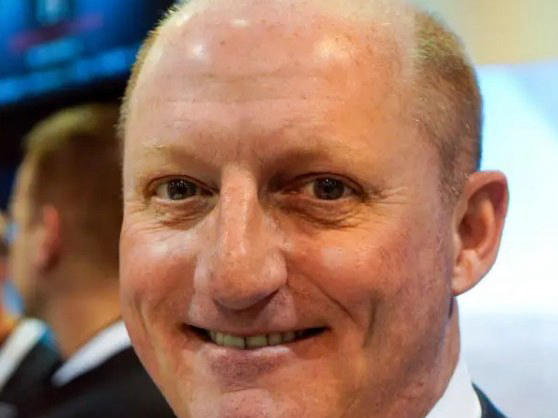
Greg Abel's Berkshire earned a little less from its businesses this summer, but it spent far more buying back its own shares, a sign of how it sees its stock's value.
What did Berkshire Hathaway report for the third quarter?
Berkshire Hathaway said on Saturday, Nov. 7, that third-quarter operating earnings fell about 6% to $12.71 billion, mainly because its insurance profits shrank. At the same time, it bought back about $9.6 billion of its own stock, its biggest quarterly buyback so far this year, Reuters and Bloomberg reported.
Operating earnings are the profits from Berkshire's dozens of businesses, such as insurance, railroads and utilities. They leave out gains and losses on the stocks Berkshire owns. Bloomberg put the drop at 5.8%. Reuters said the figure works out to about $8,954 per Class A share.
Revenue rose 11% to $105.65 billion, the second straight quarter of double-digit growth, according to Reuters. Net income fell 28% to $22.11 billion. That number swings a lot because accounting rules make Berkshire count changes in the value of stocks it still holds, even if it has not sold them. Berkshire tells investors to look past those swings.
Why are the buybacks the big story?
A buyback is when a company uses its cash to purchase its own shares, which leaves each remaining shareholder with a slightly bigger slice of the business. Many investors read the size of Berkshire's buybacks as one of the few public clues about how its leaders view the stock's price.
The roughly $9.6 billion spent in the third quarter compares with $4.8 billion earlier in 2026, Reuters reported. Berkshire also bought back about $2 billion more in the first four weeks of October. Its record year for buybacks was 2021, at $27 billion.
The pace matters because this is Berkshire's first year under Greg Abel. Abel, 64, took over as chief executive after Warren Buffett stepped down at the end of 2025, and the third quarter was his third as CEO. Buffett, 96, is now chairman emeritus, and Berkshire said in September that Howard G. Buffett had been elected chairman. Reuters noted that Abel has shown more willingness to put Berkshire's huge cash pile to work, including a $6.8 billion purchase of homebuilder Taylor Morrison in July, which we covered in our look at Abel's housing bet.
Even after the buybacks and deals, Berkshire still holds more than $350 billion in cash and short-term investments, based on figures reported by Reuters and Bloomberg. It also owned $335.5 billion of stocks, such as Alphabet, Apple and American Express, at the end of September, Reuters said.
What dragged down profits?
Insurance did. Berkshire's insurance profit fell 26%, and its underwriting profit, which is what an insurer earns from premiums after paying claims and costs, dropped 43%, Reuters reported. Car insurer GEICO was the main weak spot. Its pretax profit fell 45% as its loss ratio, the share of premiums paid out in claims, rose to 76.6% from 71.5% a year earlier. Reuters tied that to more accident losses, higher advertising spending and price cuts meant to win back customers. Some other insurance and reinsurance units also had higher claims.
Other businesses did better. BNSF, Berkshire's railroad, grew profit 19% to $1.73 billion, helped by fuel surcharges and higher shipping volumes. Berkshire Hathaway Energy's profit rose 8% to $1.61 billion, and pretax profit at aircraft-parts maker Precision Castparts jumped 30%. Consumer businesses were mixed, with lower tax credits at battery maker Duracell weighing on results.
Berkshire repeated in its report that there is "considerable uncertainty" about economic and world events, including tariffs and wars, Reuters said.
What this means for your wallet
Many everyday investors own Berkshire without picking it. It is one of the largest companies in the S&P 500, so an S&P 500 index fund in a 401(k) or IRA holds a small piece of it. Its results can nudge those funds, though one company rarely moves them much.
For people who own Berkshire's Class B shares (BRK.B) directly, a simple example shows why buybacks matter. Say a company has 100 shares and you own 1, or 1% of the business. If the company buys back and retires 5 shares, your 1 share now equals about 1.05% of the company. You own a bit more of every future dollar of profit without spending anything. That only helps shareholders if the company paid a sensible price for the shares it retired.
It also helps to know which number to watch. Net income can jump or fall by billions in a quarter because of stock prices. Operating earnings give a clearer view of how the businesses themselves are doing. This quarter, the two told different stories: net income fell 28%, while operating earnings slipped about 6%.
Berkshire's shares hit record highs this week despite a broad market sell-off and were up more than 13% in 2026 through Friday, beating the S&P 500 by more than five percentage points, Reuters reported. Our explainer on how buybacks change earnings per share walks through the math in more detail.
What should investors watch next?
The first test is how the stock trades when markets reopen on Monday, Nov. 9. After that, investors will watch whether the buyback pace continues. Many will also watch GEICO, where price cuts aimed at growth could keep weighing on profit for a while. And with more than $350 billion in cash, every new deal Abel makes will be read as a signal of how he plans to run Berkshire.
Frequently asked questions
How much stock did Berkshire Hathaway buy back in the third quarter of 2026?
Berkshire repurchased about $9.6 billion of its own shares in the third quarter, its most so far in 2026, and about $2 billion more in the first four weeks of October, Reuters reported.
Why did Berkshire Hathaway's operating earnings fall?
Insurance profit fell 26%, led by a 45% drop in GEICO's pretax profit from higher accident losses, more advertising and price cuts. Gains at BNSF and Berkshire Hathaway Energy only partly offset that.
Who runs Berkshire Hathaway now?
Greg Abel became chief executive after Warren Buffett stepped down at the end of 2025. Buffett is chairman emeritus, and Howard G. Buffett was elected chairman in September 2026.
Content on The Evergreen Edit is for educational and informational purposes only and is not individualized financial, investment, tax or legal advice. Learn more.
Compound growth estimate
Estimated total
$17,175
Your contributions
$13,000
This is an estimate, not a prediction. Monthly compounding; taxes, fees and inflation are excluded.
This article is for educational purposes only and isn't personalized financial, tax or legal advice. Consider talking with a qualified professional about your situation.

Kiara Miller — Founder & Editor
Kiara Miller is the founder and editor of The Evergreen Edit. He has been doing independent finance research for two decades, is a tax preparer, and reviews every article before it's published.
More about Kiara →Get smarter about your money.
Join readers who get money stories on their chosen topics, daily or as new articles post.