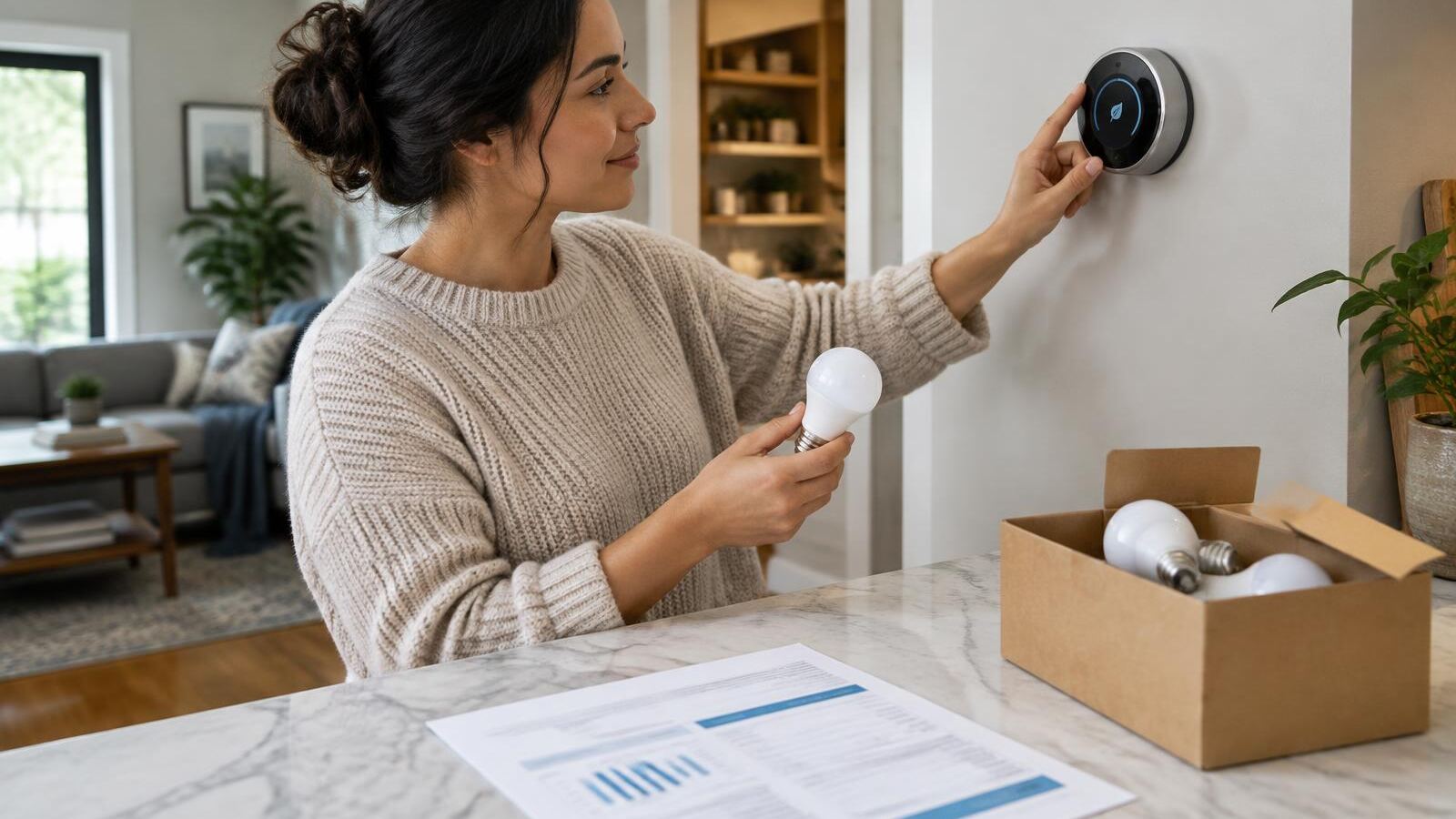
Utility bills can take a big bite out of your budget, especially during the hottest and coldest months of the year. The good news is that many of the biggest savings come from simple changes that cost little or nothing, and some upgrades pay for themselves over time. Here’s how to bring your bills down year-round.
Start with heating and cooling
According to the U.S. Department of Energy, heating and cooling account for a large share of energy use in a typical home, making them the best place to start.
Adjusting your thermostat while you’re asleep or away is one of the easiest ways to save. The Department of Energy notes that turning your thermostat back by several degrees for several hours a day can meaningfully reduce heating and cooling costs. A programmable or smart thermostat makes this automatic, adjusting the temperature on a schedule so you don’t have to remember.
Maintaining your heating and cooling system helps it run efficiently. Replace or clean filters regularly, often every one to three months depending on the filter and your home. A dirty filter forces the system to work harder. Scheduling routine maintenance can also prevent costly breakdowns.
Ceiling fans can help you feel cooler in summer, letting you raise the thermostat a bit without sacrificing comfort. Fans cool people, not rooms, so turn them off when you leave. Window coverings help too. Close curtains and blinds on hot, sunny days to block heat, and open them on sunny winter days to let warmth in.
Seal air leaks
Drafts around doors and windows let heated or cooled air escape, driving up your bills. Weatherstripping doors and caulking gaps around windows are inexpensive projects that many people can do themselves. Check for leaks around outlets, pipes and attic openings as well.
Many utilities offer free or low-cost home energy audits. An auditor can identify where your home is losing energy and recommend the most cost-effective improvements, such as adding insulation.
Lighting and appliances
Switching to LED bulbs is one of the simplest upgrades. LEDs use far less energy than traditional incandescent bulbs and last much longer, so they save money on both electricity and replacements.
Many electronics draw power even when turned off, sometimes called phantom or standby power. Unplugging devices you aren’t using, or plugging them into smart power strips that cut power automatically, can reduce this waste.
In the laundry room, washing clothes in cold water saves energy, since heating water accounts for much of the energy a washer uses. Running full loads in both the washer and dishwasher makes each cycle more efficient. Cleaning your dryer’s lint filter after every load improves efficiency and reduces fire risk.
When it’s time to replace an appliance, look for ENERGY STAR certified products, which meet efficiency guidelines set by the U.S. Environmental Protection Agency. They may cost more upfront but often save money over their lifetime.
Save on water
Leaks waste more water than many people realize. A dripping faucet or running toilet can waste a significant amount over time. Fixing leaks promptly is one of the easiest ways to lower your water bill. To check for a toilet leak, add a few drops of food coloring to the tank and wait; if color appears in the bowl without flushing, you have a leak.
Installing low-flow showerheads and faucet aerators reduces water use without a noticeable drop in performance. Taking shorter showers helps too.
Lowering your water heater temperature can save energy. The Department of Energy suggests 120°F for many homes, which is hot enough for most needs and lower than many manufacturers’ default settings.
Get help from your utility and government programs
Many utilities offer budget billing, which averages your payments over the year so you don’t face huge bills during peak seasons. It doesn’t lower your total cost, but it makes payments more predictable.
Check with your utility and state for rebates on energy-efficient appliances, insulation, smart thermostats and other upgrades. Federal tax credits may also be available for certain energy-efficiency improvements; check IRS.gov or ENERGY STAR’s website for current details.
If you’re struggling to pay your bills, the federal Low Income Home Energy Assistance Program, known as LIHEAP, helps eligible households with heating and cooling costs. Many utilities also offer hardship programs or payment plans. Contact your utility before you fall behind to ask about options.
Make it a habit
Review your utility bills each month and compare them with the same month last year. Unusual spikes can signal a leak or an appliance problem. With a few simple habits and smart upgrades, you can keep your home comfortable while keeping more money in your pocket.
Content on The Evergreen Edit is for educational and informational purposes only and is not individualized financial, investment, tax or legal advice. Learn more.
This article is for educational purposes only and isn't personalized financial, tax or legal advice. Consider talking with a qualified professional about your situation.

Kiara Miller — Founder & Editor
Kiara Miller is the founder and editor of The Evergreen Edit. He has been doing independent finance research for two decades and reviews every article before it's published.
More about Kiara →Get smarter about your money.
Join readers who get The Sunday Edit every week.