The small sting you feel when money leaves your hand does useful work, and modern payments are very good at hiding it.
What is the "pain of paying"?
The pain of paying is the small, real discomfort people feel when they hand over money. Researchers think it acts like a built-in brake on spending. When a payment feels less painful, as it often does with a card, a phone tap or an automatic subscription, that brake gets weaker and spending can creep up.
The idea comes from behavioral economics, the field that studies how real people make money choices, not how a perfectly logical person would. Economists Drazen Prelec and George Loewenstein put it plainly in a widely cited 1998 paper: "The pain of paying, we argue, plays an important role in consumer self-regulation, but is hedonically costly." In everyday words, that sting helps keep spending in check, but nobody enjoys feeling it.
That second half matters. Because the pain is unpleasant, both shoppers and businesses have reasons to make it disappear. A lot of modern payment design does exactly that, which is convenient, and also why it is worth understanding.
What the research found
Several well-known studies point in the same direction, though none of them says cash is always better or that cards make everyone overspend.
The most famous is a 2001 study by Prelec and Duncan Simester called "Always Leave Home Without It." In real auctions for items such as tickets to a Boston Celtics game, some bidders were told they would pay by credit card and others by cash. The authors reported that willingness to pay can rise when people are told to use a credit card, and that "the effect may be large (up to 100%)." A Michigan State University Extension summary of the study described the average credit card bid as "nearly twice as high" as the average cash bid.
A 2001 study by Dilip Soman looked at why. He found that past spending holds back future spending mainly when two things are true. First, you have to remember the payment clearly, which he called "rehearsal," and writing the amount down, as people do with checks, helps. Second, the money has to leave your wealth right away, which he called "immediacy." Payment methods that skip both steps make a purchase easier to forget.
Brain-imaging research adds a careful footnote. In a 2007 study published in the journal Neuron, Brian Knutson and colleagues scanned 26 people while they decided whether to buy products. They reported that excessive prices activated the insula, and that activity in several regions helped predict whether people would buy. The authors themselves noted that the insula's exact role needs more research, so it is best read as a clue, not proof of a "pain center."
Finally, people differ. In a 2008 paper, Scott Rick, Cynthia Cryder and George Loewenstein described "tightwads," who feel so much pain of paying that they spend less than they would ideally like, and "spendthrifts," who feel too little and spend more than they would like. A University of Chicago Press release on the study said tightwads outnumbered spendthrifts by about 3 to 2 among more than 13,000 people surveyed.
Why card, phone and subscription payments can feel almost painless
Think about what happens when you pay with cash. You see the bills, you count them out, and your wallet is visibly thinner when you walk away. Every one of those steps is a small reminder of what you just gave up.
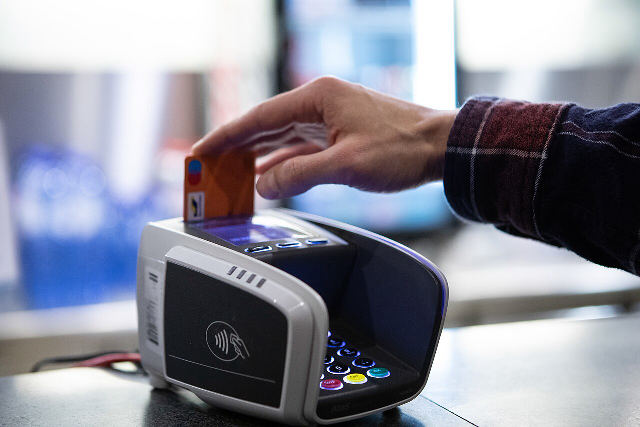
A card or phone tap removes most of those reminders. There is no counting and no thinner wallet. With a credit card, the money does not leave your account until the bill is due weeks later, which is the opposite of Soman's "immediacy." Many tap payments also skip the signature or PIN, so there is little to "rehearse."
Subscriptions and saved cards go one step further. Once you have signed up, the charge happens with no action from you at all. Prelec and Loewenstein's work suggests people often like flat-rate and prepaid arrangements because they hide the per-use cost. That can be a good thing, as when a gym membership makes each visit feel free. It can also mean a service you rarely use keeps billing quietly in the background.
None of this makes cards bad. Credit cards can offer fraud protection, rewards and a useful record of spending. If you are curious how card interest works when a balance is carried, our guide to credit card interest and APR covers it. The point is simply that a low-pain payment removes one of the natural checks on spending, so it helps to replace it on purpose.
A worked example: how small taps can add up
Here is a simple, made-up example to show the math. Imagine Jordan, who is 26 and single, taps a card for small things on workdays: a $6 coffee, a $9 lunch add-on and a $5 snack. That is $20 a day.
Over a five-day week, that is $100. Over a year of 52 weeks, it is $5,200, or roughly $433 a month. None of these purchases feels like a big decision, and with a tap, none of them comes with the moment of counting out bills that might make Jordan pause.
Now suppose Jordan keeps every purchase he truly enjoys but skips just one in three that he does not care much about. That trims about a third of the total, or roughly $1,700 a year, without a strict budget and without giving up the coffee he loves. The goal is not to make every purchase painful. It is to feel the ones that do not deserve the money.
A 30-day friction test, step by step
You do not need to switch to cash forever to use this research. A short experiment can show how much the pain of paying matters for you. Here is one way to run it.
- Pick one category. Choose a single area where small purchases pile up, such as takeout, coffee, rideshares or online impulse buys. Keeping it to one category makes the test easy to stick with.
- Write down a starting number. Look back at your last month of statements and total what you spent in that category. That is your baseline.
- Add one kind of friction. Choose the option that fits your life: pay for that category with cash only, remove your saved card from the apps involved, or turn off one-tap checkout so you must type your card number.
- Rehearse every payment. Write each purchase down the same day, with the amount. A notebook works, and so does the CFPB's free spending tracker, which has you total each category weekly and then monthly.
- Do a weekly check. Once a week, add up the category and compare it with a quarter of your baseline. Notice which purchases you were glad to make and which you skipped without missing them.
- Compare at day 30. Put the new total next to your baseline. If spending dropped and you did not feel deprived, keep the friction. If nothing changed, this category may not be where your money leaks, and you can try another.
The writing-it-down step does a lot of the work here. It is the "rehearsal" piece of Soman's research, turned into a daily habit. If you have tried no-spend rules before and found them too strict, our list of tactics to stop impulse spending has gentler options you can pair with this test.
Tightwad or spendthrift? Using the pain the right way
The research on tightwads is a reminder that more pain is not always better. If you already feel a strong sting every time you pay, you may put off things that truly matter, such as a needed car repair, a doctor's visit or a pair of work shoes, and end up paying more later.
So it can help to ask which way you lean. If you often regret what you bought, adding friction may help. If you often regret what you did not buy, or you feel anxious spending even on planned needs, the better move may be the reverse: decide ahead of time what a category is for, set the money aside, and give yourself permission to spend it.
That is where mental accounting can work in your favor. Labeling money for a purpose, the way people sometimes treat a tax refund differently from a paycheck, can make planned spending feel less painful and unplanned spending feel more deliberate. Our piece on mental accounting and windfalls explains how that labeling works.
When less pain is a good thing
Low-pain payments are not the enemy. Automatic transfers to savings, autopay on bills you have already budgeted for and a single prepaid plan for a service you use often are all ways of using "painless" payments on purpose. In each case, you made the decision once, when you were thinking clearly, and let the payment handle itself afterward.
The trouble starts only when painless payments are attached to decisions you never really made, such as a free trial that rolled into a paid plan or a saved card that makes a late-night purchase take two seconds. A good rule of thumb is to keep payments painless where you have already decided, and add a little friction where you have not.
Frequently asked questions
Do people really spend more with credit cards than with cash?
Some studies have found that they can. In Prelec and Simester's 2001 auction study, willingness to pay rose by up to 100% when people were told to pay by credit card, though the size of the effect varies by person and situation.
What does "pain of paying" mean?
It is the unpleasant feeling people get when they part with money. Researchers Drazen Prelec and George Loewenstein argued it helps people regulate their spending, even though it feels bad.
Should I switch to paying only with cash?
Not necessarily. Cards can offer fraud protection and a clear spending record, so many people prefer adding friction in one problem category, such as removing saved cards or tracking every purchase, rather than giving up cards entirely.
Sources
- Springer, Marketing Letters, Prelec and Simester, "Always Leave Home Without It," February 2001
- Michigan State University Extension, July 13, 2012
- RePEc, Marketing Science, Prelec and Loewenstein, "The Red and the Black," 1998
- RePEc, Journal of Consumer Research, Soman, "Effects of Payment Mechanism on Spending Behavior," March 2001
- Stanford University, Knutson et al., "Neural Predictors of Purchases," Neuron, January 4, 2007
- RePEc, Journal of Consumer Research, Rick, Cryder and Loewenstein, "Tightwads and Spendthrifts," April 2008
- EurekAlert! (University of Chicago Press Journals), March 17, 2008
- Consumer Financial Protection Bureau, Spending tracker, August 2021
Content on The Evergreen Edit is for educational and informational purposes only and is not individualized financial, investment, tax or legal advice. Learn more.
Which money-saving habit will you focus on next?
This article is for educational purposes only and isn't personalized financial, tax or legal advice. Consider talking with a qualified professional about your situation.
Kiara Miller — Founder & Editor
Kiara Miller is the founder and editor of The Evergreen Edit. He has been doing independent finance research for two decades and reviews every article before it's published.
More about Kiara →Get smarter about your money.
Join readers who get money stories on their chosen topics, daily or as new articles post.