Last week's outage left some customers staring at frozen balances. The Treasury Secretary says banks are sturdy, and the rules on deposit insurance explain why a glitch is not the same as losing your money.
Should you pull your cash out after a bank outage?
Treasury Secretary Scott Bessent says there is no need to worry. Asked on CBS's "Face the Nation" on Sunday, Nov. 22, 2026, whether Americans should worry about their banks after last week's outages, he answered, "And no, they shouldn't." An outage blocks access for a while; it does not erase insured deposits.
Host Margaret Brennan opened the interview by noting that thousands of customers had trouble at big banks during the week, causing what she called "a bit of a panic with people pulling out cash." Bessent said banks have been at the forefront of cybersecurity for decades and called them "by far the most resilient companies in the U.S. economy," according to the CBS transcript. Because banks are attacked constantly and keep patching their systems, he said, "the patches may cause a glitch, which is what happened last week."
He then offered an analogy: "I think the American people should think of it as a vaccine. Your arm may hurt, you may feel a little bad the next day, but it increases your long-term immunity and resiliency."
What happened during last week's outage?
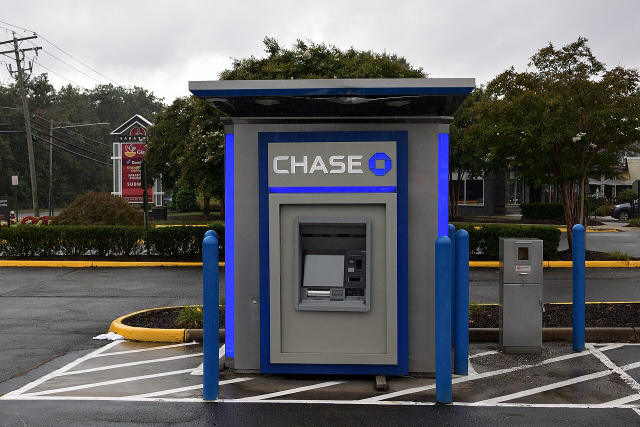
The trouble hit on Monday, Nov. 16. Customers at JPMorgan Chase, Bank of America, U.S. Bank and others reported problems on the tracking site Downdetector, and Zelle users did too, CBS News reported. As of 2 p.m. Eastern, nearly 4,800 users had reported problems with Chase, the most of any bank. Al Jazeera, citing AP and Reuters, said more than 800 Wells Fargo customers also reported issues with logins, balances and transfers.
The cause was not a hack. An FBI official told Fox Business the disruption was traced to a software release Chase rolled out earlier that Monday, with "no indication of malicious or external cyber activity." Chase said a software bug in its systems also slowed transactions at other banks when Chase was a party to them. A Chase spokesperson said some transactions were taking longer than usual, "but customers still have access to their accounts and funds." Bank of America said its systems operated normally, Capital One said it was not affected, and Zelle said it was "operating as it should." By early Tuesday, Downdetector showed service back to normal, CBS reported.
Why an outage is not the same as losing your money
It helps to separate two very different events. An outage is an access problem: the bank's app, website or payment systems stop working for a while, but your balance still exists on the bank's books. A bank failure is a solvency problem: the bank itself runs out of money. Deposit insurance is built for the second case.
The FDIC's deposit insurance guide says coverage is at least $250,000 per depositor, per ownership category, at each FDIC-insured bank, and that "no depositor has lost a penny of FDIC-insured funds" since the agency was founded in 1933. It covers checking, savings, money market deposit accounts, CDs and cashier's checks. It does not cover stocks, bonds, mutual funds, annuities, crypto assets or the contents of a safe deposit box. The insurance fund is backed by the full faith and credit of the U.S. government.
Here is the catch with pulling money out in a panic: cash in your home or wallet has no FDIC protection at all. If it is lost, stolen or burned, it is gone. You also give up interest. For example, if you moved $10,000 from a savings account paying 4% a year into a drawer, you would miss out on about $400 of interest over a year. Our guide to how FDIC insurance works shows how couples and families can insure well over $250,000 at one bank using different ownership categories.
What this means for your wallet
The lesson from last week is less about safety and more about access. Even a few hours without your banking app can mean a missed bill, a declined card at the grocery store or a rent payment stuck in limbo. A little planning can soften that without taking real risk.
Start with a small cash cushion sized to your actual spending. If your household spends about $150 a day on essentials such as food, gas and medicine, three days of cash would be $450. That covers a short outage without leaving a large pile of uninsured money at home.
Then add a backup way to pay. A debit or credit card tied to a different bank means one bank's glitch does not freeze all of your spending. Here is a short checklist for the next time your bank's app goes dark:
- Check whether the problem is on your end or the bank's, using the bank's official social media accounts or website rather than links in texts or emails.
- Don't resend the same payment over and over. Wait for the bank to confirm whether the first one went through, so you don't pay twice.
- Take screenshots of failed or delayed transactions, which security experts recommended to CBS, so you have a record if you need to dispute a fee.
- Watch for phishing. Scammers often send fake "verify your account" messages during outages, which CBS also warned about.
- Review your statement once service returns, looking for missing, duplicated or late transactions, and ask the bank to reverse any late fees the outage caused.
Outages are not limited to banks. Earlier this month, a Workday outage locked some workers out of their time clocks and benefits, and a separate vendor breach exposed some Chase, Visa and Mastercard customer data. Keeping records and a backup payment method helps in all of these cases.
Frequently asked questions
Is my money safe if my bank's app goes down?
An outage affects access, not your balance. Deposits at an FDIC-insured bank are insured up to at least $250,000 per depositor, per ownership category, and the FDIC says no depositor has lost a penny of insured funds since 1933.
What caused the Chase outage on Nov. 16, 2026?
An FBI official told Fox Business it was traced to a software release Chase rolled out earlier that day, with no sign of malicious cyber activity. Chase said a software bug also slowed some transactions at other banks.
How much cash should I keep at home for emergencies?
There is no official number. One approach is a few days of essential spending, because cash at home is not FDIC-insured and earns no interest.
Sources
- CBS News, Transcript: Treasury Secretary Scott Bessent on Face the Nation, November 22, 2026
- CBS News, Widespread service outages at major U.S. banks appear to be over, November 17, 2026
- Fox Business, JPMorgan Chase systems recovering following hourslong nationwide technical outage, November 16, 2026
- Al Jazeera (AP and Reuters), Thousands report online outages at major US banks, November 16, 2026
- FDIC, Understanding Deposit Insurance, accessed November 22, 2026
Content on The Evergreen Edit is for educational and informational purposes only and is not individualized financial, investment, tax or legal advice. Learn more.
Your savings goal
Months to your goal: 45
Estimate only. No interest, fees or changes in contributions assumed.
This article is for educational purposes only and isn't personalized financial, tax or legal advice. Consider talking with a qualified professional about your situation.

Kiara Miller — Founder & Editor
Kiara Miller is the founder and editor of The Evergreen Edit. He has been doing independent finance research for two decades, is a tax preparer, and reviews every article before it's published.
More about Kiara →Get smarter about your money.
Join readers who get money stories on their chosen topics, daily or as new articles post.