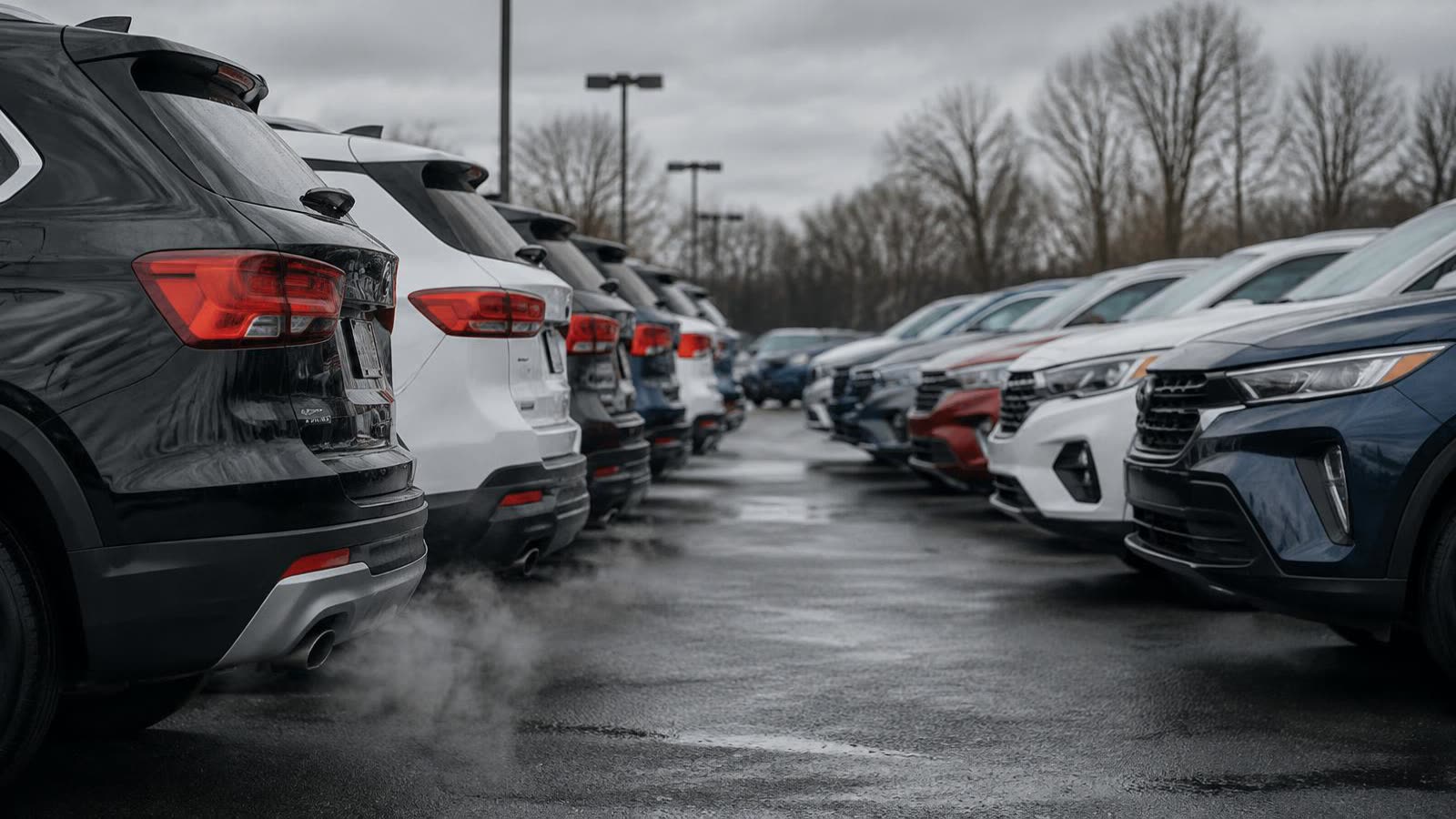
The fight is over a trade-off every car buyer feels: what you pay for the car versus what you pay to fuel it.
On Friday, Oct. 2, 2026, two sets of challengers went to court over the Trump administration's new fuel economy standards. A coalition of more than 20 states, Washington, D.C., and several cities filed a lawsuit in the U.S. Court of Appeals for the First Circuit, according to Minnesota Attorney General Keith Ellison's office. Five environmental groups filed a separate challenge in a federal appeals court the same day, the Associated Press reported.
Fuel economy standards set the average miles per gallon (mpg) that each automaker's new vehicles must reach. The rules are written by the National Highway Traffic Safety Administration (NHTSA), part of the U.S. Department of Transportation. They are often called CAFE standards, short for Corporate Average Fuel Economy.
What the new rule does
The Transportation Department finalized the new rule on Monday, Sept. 28. It sets a fleet average of 34.9 mpg by the 2031 model year, according to the department. Under the earlier Biden-era rules, the target was 50.4 mpg, the AP reported.
The administration says the change will make cars cheaper. The Transportation Department estimates the rule will lower the average cost of a new vehicle by about $1,300 and save Americans $138 billion over five years. Transportation Secretary Sean Duffy said the rule eliminates an "illegal mandate that forced automakers to produce more expensive electric vehicles," according to the AP.
What the challengers argue
The states argue the rule is "arbitrary and capricious," a legal term meaning a government decision lacked a reasonable basis, and that it breaks federal law requiring standards set at the "maximum feasible" level. They estimate drivers would lose nearly $220 billion in fuel savings compared with the earlier standards, according to Ellison's office.
The environmental groups (Sierra Club, Center for Biological Diversity, Conservation Law Foundation, Environmental Defense Fund and Public Citizen) made a similar point. "Oil companies will profit from less efficient cars, but drivers will take a hit to their wallets," said David Pettit of the Center for Biological Diversity, according to the AP.
The cases will take time. A court ruling is not expected right away, and the new standards remain in place while the lawsuits move forward unless a court says otherwise.
What this means for your wallet
Both sides are making a claim about your money. The administration points to lower sticker prices, while critics point to higher fuel bills over the life of a car. Which matters more for you depends on how you drive and what you buy.
- Look at total cost, not just price. When shopping for a car, consider the purchase price, financing, insurance and fuel together. A car that costs less up front could cost more to drive, or the other way around.
- Do a quick fuel estimate. Divide the miles you drive in a year by a car's mpg, then multiply by the price of a gallon of gas. That shows roughly what you would spend on fuel each year.
- Check the window sticker. New cars carry a fuel economy label with estimated yearly fuel costs, which can help you compare models.
- Don't rush because of the news. Vehicle lineups change slowly, and the lawsuits could take months or longer to resolve.
This article is for education only and is not financial advice. Everyone's situation is different.
Content on The Evergreen Edit is for educational and informational purposes only and is not individualized financial, investment, tax or legal advice. Learn more.
This article is for educational purposes only and isn't personalized financial, tax or legal advice. Consider talking with a qualified professional about your situation.

Kiara Miller — Founder & Editor
Kiara Miller is the founder and editor of The Evergreen Edit. He has been doing independent finance research for two decades and reviews every article before it's published.
More about Kiara →Get smarter about your money.
Join readers who get The Sunday Edit every week.