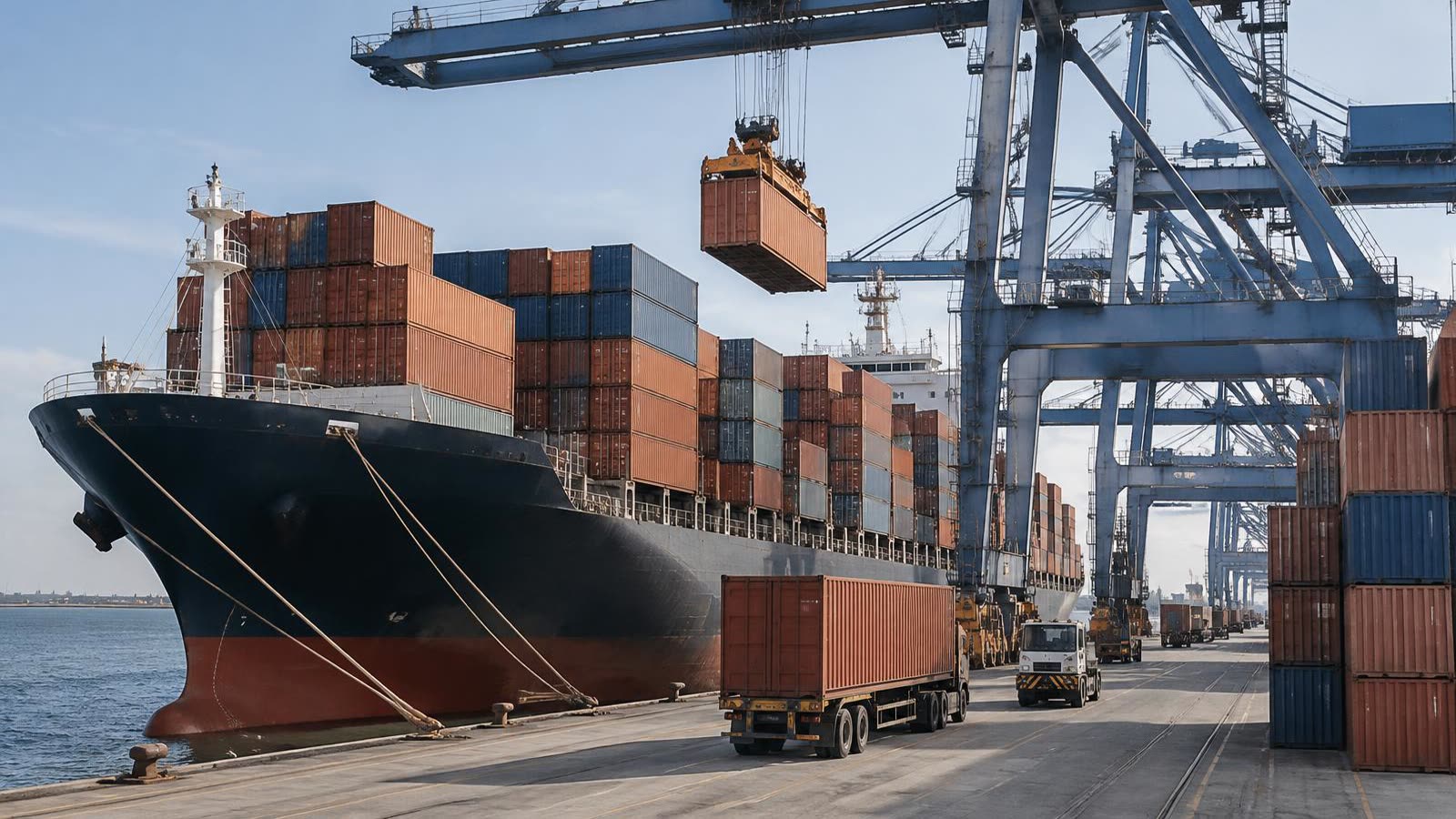
Americans and U.S. businesses bought more from abroad than ever in August, and that could ripple into economic growth, prices and your budget.
The U.S. trade deficit grew to $105.6 billion in August, the Commerce Department reported on Tuesday, Oct. 6. That's up 13.7% from July and the widest gap since March 2025, according to Reuters. CNBC noted that was just before the Trump administration's big tariffs took effect last year.
The main reason: imports hit an all-time high.
What a trade deficit is
A trade deficit happens when a country buys more goods and services from other countries (imports) than it sells to them (exports). The difference is the deficit.
A trade deficit isn't automatically good or bad. It can mean shoppers and businesses have money to spend. But economists watch it closely, because it affects how fast the economy grows and can hint at where prices are headed.
The numbers behind August's jump
According to the Census Bureau and the Bureau of Economic Analysis:
- Imports rose 4.3% to $420.8 billion, a record.
- Exports rose 1.4% to $315.2 billion.
- The goods deficit (physical products like cars, phones and machinery) widened by $12.8 billion to $136.6 billion.
- The services surplus (things like travel, banking and software that the U.S. sells abroad) stayed about flat at $31.0 billion.
Economists had expected a smaller deficit of about $102.0 billion, according to Reuters.
Imports of capital goods, the equipment businesses buy to make things or run their operations, hit a record $146.4 billion. Reuters said strong spending by consumers and businesses played a role, especially spending on artificial intelligence (AI) infrastructure like computers and data center gear. Companies restocking their shelves and warehouses, plus higher prices, also added to the total.
Reuters also reported record goods deficits with Mexico, Vietnam and Malaysia.
The bigger picture for the year
One month doesn't tell the whole story. For the first eight months of 2026, the trade deficit is down $138.2 billion, or 19.9%, compared with the same stretch of 2025, according to the government's report. Exports are up 11.8% so far this year, while imports are up 4.4%.
What this means for your wallet
- Economic growth: When imports rise faster than exports, it subtracts from gross domestic product (GDP), the main measure of how much the economy produces. Reuters said economists estimate trade could subtract up to 2.5 percentage points from third-quarter growth, and Goldman Sachs trimmed its estimate for third-quarter growth to 3.1% from 3.4%. A slower economy can affect hiring and raises.
- Prices on store shelves: Many imports, like electronics, clothes and toys, end up in stores. Higher import prices or tariffs (taxes on imported goods) can show up in what you pay, especially as the holiday shopping season approaches.
- Demand is still strong: Record imports also signal that people and businesses are still buying. That's one reason the economy has kept growing even with high interest rates.
- Plan ahead for big purchases: If you're eyeing a laptop, TV or other imported item for the holidays, consider setting a price limit now and tracking prices over a few weeks, rather than buying on impulse.
What to watch next
The next trade report, covering September, is due next month. Investors and the Federal Reserve will also be watching upcoming inflation data to see whether strong demand and import costs are pushing prices higher.
Why a bigger trade gap can make GDP look weaker
Gross domestic product measures what is produced inside the U.S. When Americans buy an imported laptop, the purchase shows up in consumer spending, but it wasn't made here. So the government subtracts imports when it adds up GDP. That's why a jump in imports can pull the headline growth number down even when shoppers and businesses are spending freely.
In other words, a wider deficit in August doesn't necessarily mean the economy is struggling. Here it mostly reflects strong demand for business equipment, including the computers and data center gear behind artificial intelligence projects.
How tariffs fit into the picture
Tariffs are taxes paid on imported goods, and businesses often pass some of that cost on to customers. Companies sometimes rush to import goods ahead of expected tariff changes, which can make monthly trade numbers jumpy. If you want the background, see our explainers on how tariffs work and how fast tariffs reach store prices, plus our guide to what inflation is and why it matters.
Frequently asked questions
What was the U.S. trade deficit in August 2026?
The goods and services deficit was $105.6 billion, up 13.7% from July, as imports rose to a record $420.8 billion and exports reached $315.2 billion, according to the Commerce Department.
Is a trade deficit bad for the economy?
Not automatically. It can reflect strong spending by consumers and businesses, but because imports are subtracted from GDP, a wider gap can lower the headline growth figure.
Is the trade deficit bigger or smaller than last year?
Smaller so far. For the first eight months of 2026, the deficit was down $138.2 billion, or 19.9%, from the same period of 2025.
Will the trade deficit affect prices I pay?
It can. Many imported goods end up on store shelves, so higher import costs or tariffs may show up in prices for items like electronics, clothing and toys.
Sources
Content on The Evergreen Edit is for educational and informational purposes only and is not individualized financial, investment, tax or legal advice. Learn more.
This article is for educational purposes only and isn't personalized financial, tax or legal advice. Consider talking with a qualified professional about your situation.

Kiara Miller — Founder & Editor
Kiara Miller is the founder and editor of The Evergreen Edit. He has been doing independent finance research for two decades and reviews every article before it's published.
More about Kiara →Get smarter about your money.
Join readers who get The Sunday Edit every week.