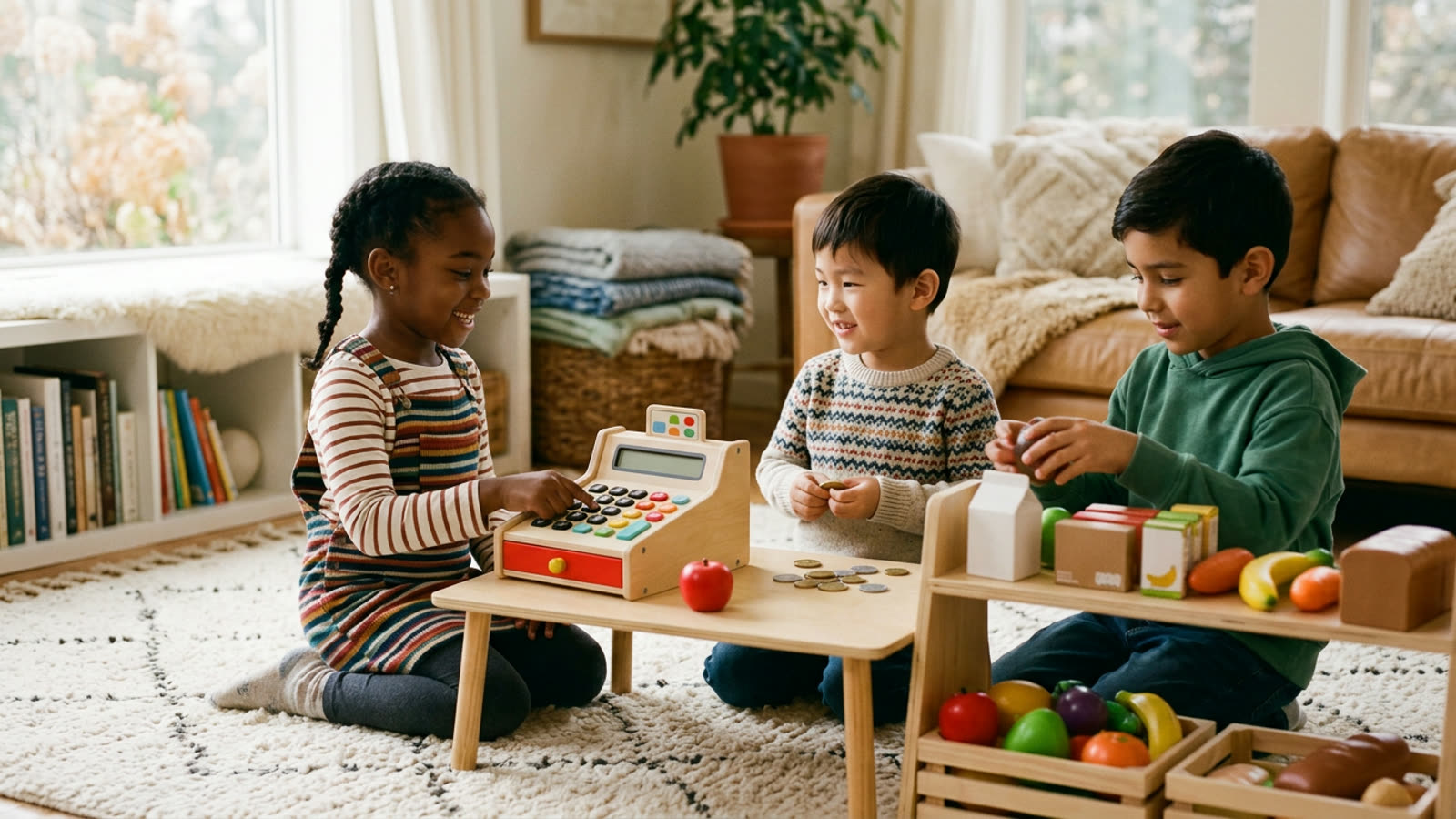
An allowance isn’t just pocket money. It’s one of the best tools parents have for teaching children money skills they’ll need as adults. When kids manage their own money, they learn to make choices, save for goals, experience the consequences of spending decisions and understand the value of a dollar. These lessons are much cheaper to learn as a child than as an adult.
When to start
Many families start an allowance around age five or six, when children begin to understand counting and the idea that money can be exchanged for things. Younger children can start learning simple concepts, such as recognizing coins and understanding that money is used to buy things. The right age depends on your child’s readiness and your family’s approach.
How much to give
There’s no perfect number. Some families use a simple rule of thumb, such as a dollar per week for each year of age, so a six-year-old would receive six dollars a week. Others base the amount on what the child is expected to buy with it.
The second approach can be especially effective. Consider what expenses you want your child to manage. A young child might use allowance for small treats and toys, while a teen might be responsible for clothing, entertainment, gas or a phone bill. A teen who pays for their own clothes or entertainment needs a larger allowance than a young child buying small treats.
Consider your family’s budget too. The allowance should be an amount you can afford to give consistently.
Chores or no chores?
One of the biggest decisions parents face is whether to tie allowance to chores. There are three common approaches.
Not tied to chores: In this approach, allowance is purely a learning tool for managing money, and chores are simply part of being in the family. Supporters argue that kids should help around the house because they’re part of the family, not because they’re paid, and that separating money from chores keeps the focus on financial learning.
Tied to chores: Kids earn money for completing specific tasks. This approach teaches that work leads to income, much like a job. However, kids may refuse to do chores if they don’t want the money.
Hybrid: Basic chores, such as making their bed and helping with dishes, are expected of everyone as family members, while extra jobs, such as washing the car or helping with yard work, earn extra money. Many families find this balances both goals.
Consistency matters more than which approach you choose. Pick an approach, explain it clearly and stick with it.
Save, spend, give
Help kids divide their money into three parts: saving for bigger goals, spending on small things now and giving to others. This simple framework teaches balance and introduces important financial concepts.
For young kids, clear jars labeled save, spend and give work well, since kids can see their money grow. Older kids can use a kids’ bank account, a savings account or a money app designed for children, which can introduce them to digital money management.
Encourage kids to set savings goals, such as a toy, a game or a special experience. Saving for something they want teaches patience and delayed gratification. Some parents offer matching, adding a portion to every dollar their child saves, to encourage saving.
The giving portion can teach generosity and empathy. Let kids choose causes they care about, such as an animal shelter, a food bank or a community organization.
Let them make choices
One of the most valuable parts of an allowance is letting kids make their own decisions, including mistakes. Resist the urge to rescue kids from small mistakes. If they spend all their money on something that breaks quickly or that they regret, talk about it calmly rather than replacing the money.
These lessons are cheap now and valuable later. A child who learns that impulse purchases can lead to regret with a few dollars is better prepared than an adult who learns the same lesson with a credit card.
Ask questions to help kids think through decisions, such as whether they’ll still want an item next week, or whether it’s worth giving up progress toward a savings goal.
Grow responsibility over time
As kids get older, increase both the allowance and the expenses they’re responsible for. A preteen might manage school lunches or entertainment, while a teen might handle clothing, activities or personal care items. Gradually adding responsibility gives kids practice managing a larger budget, preparing them for the financial independence of adulthood.
Some families transition teens to a monthly allowance to help them practice budgeting over longer periods, similar to managing a paycheck.
Make it a conversation
An allowance works best when combined with regular money conversations. Talk with your kids about how you make financial decisions, such as comparing prices, saving for goals or deciding what’s worth spending money on. Answer their questions honestly in age-appropriate ways.
With consistency, patience and room for learning, an allowance can help raise children who are confident, responsible and thoughtful with money.
Content on The Evergreen Edit is for educational and informational purposes only and is not individualized financial, investment, tax or legal advice. Learn more.
This article is for educational purposes only and isn't personalized financial, tax or legal advice. Consider talking with a qualified professional about your situation.

Kiara Miller — Founder & Editor
Kiara Miller is the founder and editor of The Evergreen Edit. He has been doing independent finance research for two decades and reviews every article before it's published.
More about Kiara →Get smarter about your money.
Join readers who get The Sunday Edit every week.