Kids learn best when they're having fun. Long lectures about saving and budgeting tend to go in one ear and out the other, but games and hands-on activities stick. The good news is that teaching kids about money doesn't require special materials or a finance background. Everyday moments, a few household items and a little creativity can turn money lessons into something kids actually look forward to.
Here are age-appropriate games and activities that build real money skills, from counting coins to planning a budget.
For young children, ages 3 to 6
At this age, kids are learning that money is something you exchange for things, and that you can't have everything at once. Hands-on play works beautifully.
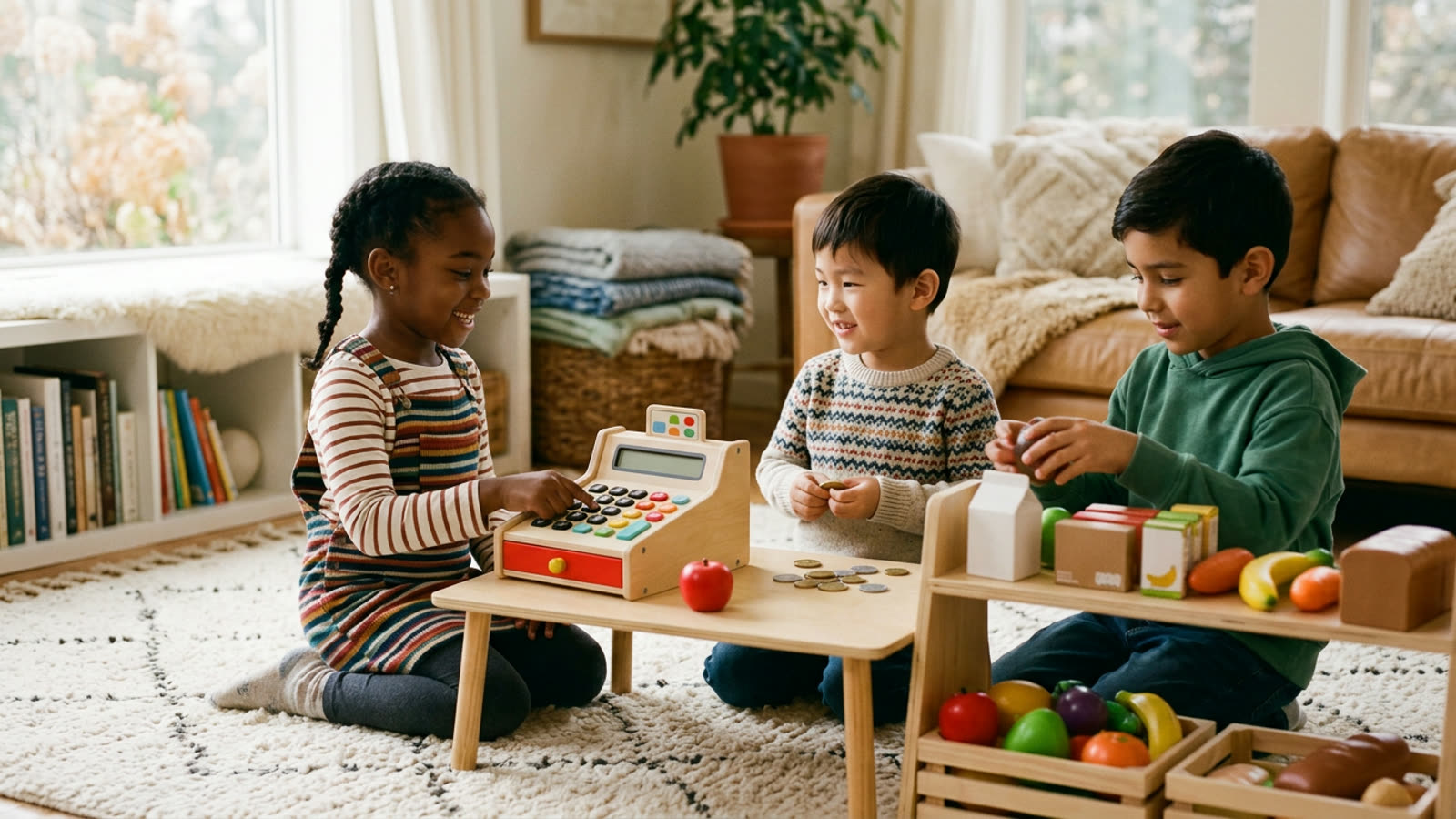
Playing store is a classic for good reason. Set up a pretend shop with toy food or household items, add simple price tags and give your child some play money or real coins. Take turns being the shopkeeper and the customer. Kids practice counting, learn that things cost money and begin to understand that money runs out.
Coin sorting is another simple favorite. Give your child a handful of coins and have them sort by size, color and value, then count them up together. It builds familiarity with coins and early math skills.
A savings jar race makes saving visual. Use a clear jar so your child can watch coins pile up toward a small goal, like a special treat. Seeing the jar fill up helps young kids grasp the idea that saving now leads to something later.
You can also play a needs versus wants game. Gather pictures or toys and help your child sort them into things people need, like food and a home, and things people want, like toys and candy. It's an early lesson in prioritizing.
For school-age kids, ages 7 to 11
Kids this age can handle more responsibility and enjoy challenges, so games that involve real decisions work well.
Try a grocery challenge. Give your child a small budget, such as $10, and let them choose snacks or ingredients for one meal. They'll need to compare prices, add up costs and make trade-offs. Many kids are surprised by how quickly money goes.
Turn your child into a price detective at the store. Show them how to compare the unit price, the cost per ounce or per item, between two products to find the better deal. It's a skill many adults never learn.
Board games that involve money, buying and saving can be great teachers, especially when you talk about the strategy afterward. Why did someone run out of money? What would they do differently?
A lemonade stand or bake sale is a hands-on lesson in business. Help your child plan their costs, set a price, sell their product and count their profit. They'll learn that revenue isn't the same as profit once costs are subtracted.
For tweens and teens
Older kids are ready for real-world planning and bigger concepts like budgeting, investing and trade-offs.
Have your tween or teen plan a family outing on a set budget. They'll need to research costs for tickets, food and gas, make choices and stay within the limit. It's a practical lesson in budgeting and planning.
A pretend stock portfolio can introduce investing without risk. Have your teen 'invest' an imaginary amount in a few companies or funds and track them for a few months. Talk about why prices go up and down and why diversification matters.
Give your teen responsibility for a month of their own expenses, such as their phone bill, entertainment or clothing, within a set allowance. Managing real money, and living with the results, is one of the best ways to learn.
You can also compare big purchases together. Research the true cost of different cars, phones or even college options, including ongoing costs like insurance, data plans or interest on loans. These discussions help teens see that the sticker price is only part of the story.
Make money part of everyday life
Some of the best money lessons happen naturally. Talk out loud about your money choices at the store, like why you're buying the store brand or skipping something that isn't on the list. Involve kids in comparing prices and let them pay at the register. When you make a bigger decision, such as choosing a phone plan or planning a vacation, explain your reasoning in simple terms.
Keep it positive
Money can be a stressful topic for adults, but it doesn't have to be for kids. Celebrate good choices, treat mistakes as learning moments and keep the tone light. The goal is to raise kids who feel confident and curious about money, not anxious about it. A few minutes of play now can shape habits that last a lifetime.
Content on The Evergreen Edit is for educational and informational purposes only and is not individualized financial, investment, tax or legal advice. Learn more.
This article is for educational purposes only and isn't personalized financial, tax or legal advice. Consider talking with a qualified professional about your situation.

Kiara Miller — Founder & Editor
Kiara Miller is the founder and editor of The Evergreen Edit. He has been doing independent finance research for two decades and reviews every article before it's published.
More about Kiara →Get smarter about your money.
Join readers who get The Sunday Edit every week.