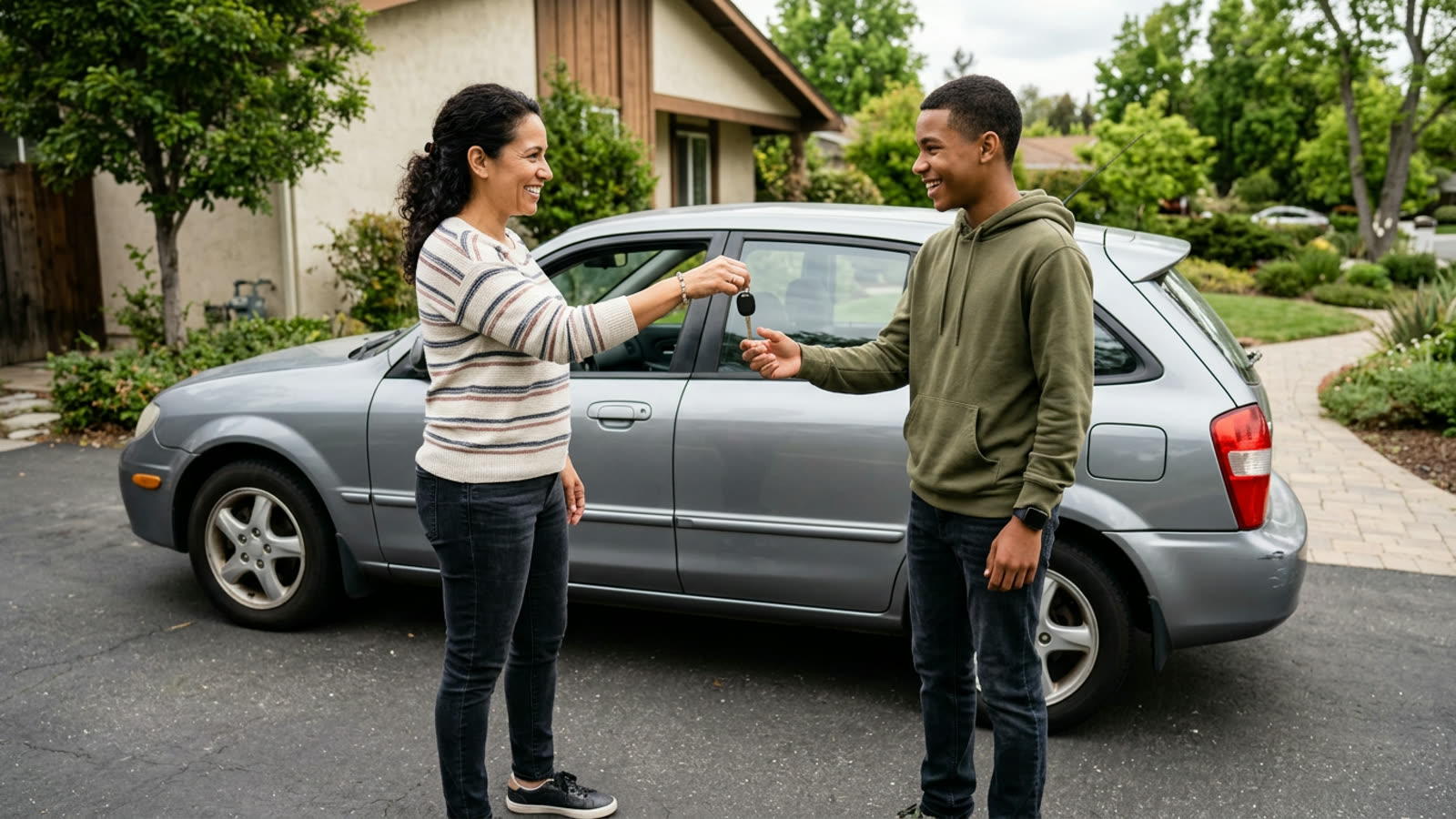
Getting a first car is a major milestone for teens, representing independence, freedom and new responsibility. It’s also a significant expense for families. Beyond the purchase price, there are ongoing costs that many families underestimate. A first car is also a great opportunity to teach teens about the real cost of driving and responsible money management.
Look beyond the purchase price
The sticker price or monthly payment is just one part of what a car costs. Before buying, consider the total cost of ownership.
The purchase price or monthly payment is the most obvious cost. If you finance the car, interest adds to the total cost.
Insurance is often the highest ongoing cost for young drivers and can sometimes exceed the monthly car payment.
Gas costs depend on how much your teen drives and the vehicle’s fuel efficiency.
Maintenance and repairs, such as oil changes, tires, brakes and unexpected repairs, are ongoing expenses, especially for older used cars.
Registration, taxes and fees vary by state and can include sales tax on the purchase, annual registration fees and inspection costs.
Parking and tolls may add costs, depending on where your teen drives.
Adding up these costs gives you a realistic picture of what a car will cost each month and year.
Understanding teen car insurance
Teen drivers usually pay more for insurance because they’re less experienced and statistically more likely to be involved in crashes. Insurance costs for teens can be substantial, so it’s important to plan for them.
Adding a teen to a parent’s policy is often cheaper than buying a separate policy for the teen. Contact your insurer before your teen starts driving to understand the cost and requirements.
Ask insurers about discounts that can reduce teen premiums. Many insurers offer good student discounts for teens who maintain a certain grade point average, discounts for completing driver’s education or defensive driving courses, discounts for using safe-driving apps or devices that monitor driving behavior, and discounts for teens who attend school far from home without a car.
Choosing a safe, modest car can also lower insurance costs. Sports cars and luxury vehicles typically cost much more to insure. Consider whether comprehensive and collision coverage makes sense for an older, lower-value car, but remember that liability coverage is required by law in most states.
Choosing the right car
A reliable, safe used car with good crash test ratings is often a smart first car. Newer used cars may have important safety features, such as electronic stability control, multiple airbags and advanced driver assistance features, without the high price of a new car.
Check safety ratings from the Insurance Institute for Highway Safety, or IIHS, and the National Highway Traffic Safety Administration, or NHTSA. IIHS publishes recommendations for safe used vehicles for teens, considering safety and affordability.
Avoid vehicles with high horsepower, which can tempt inexperienced drivers to speed, and very small or very old vehicles, which may offer less crash protection.
Before buying a used car, get a vehicle history report to check for accidents, title problems and odometer issues, and have an independent mechanic inspect the car. Check for open recalls using the vehicle identification number on NHTSA’s website.
Who pays for what?
Decide ahead of time how costs will be shared. Some families pay for everything, while others ask teens to contribute to the purchase price, insurance, gas or maintenance. Having teens contribute, even partially, teaches responsibility and helps them appreciate the true cost of car ownership.
Some families use a written driving agreement that covers costs, rules and responsibilities. An agreement might address who pays for what, expectations about grades, curfews, passengers, phone use while driving and consequences for tickets or accidents. Clear expectations help prevent conflicts.
Budgeting for a teen’s car
If your teen will contribute to car costs, help them create a budget that includes gas, insurance contributions, maintenance and savings for repairs. Setting up a separate savings account for car expenses helps teens prepare for costs like tires or unexpected repairs.
Teach car care and safety
Show your teen how to check tire pressure, oil levels and other basic maintenance tasks. Explain the importance of regular maintenance, like oil changes and tire rotations, in keeping a car safe and preventing costly repairs.
Teach your teen what to do after an accident, including checking for injuries, calling for help if needed, exchanging information with other drivers, taking photos and contacting your insurer. Keep insurance and registration information in the car.
Safety first
Many states have graduated driver licensing programs that limit nighttime driving and the number of passengers for new drivers, giving them time to gain experience in lower-risk conditions. Review your state’s rules with your teen and consider setting additional family rules.
Discuss the dangers of distracted driving, especially phone use, and the importance of always wearing seat belts and never driving impaired. With planning and clear expectations, a first car can be a positive step toward independence and financial responsibility.
Content on The Evergreen Edit is for educational and informational purposes only and is not individualized financial, investment, tax or legal advice. Learn more.
This article is for educational purposes only and isn't personalized financial, tax or legal advice. Consider talking with a qualified professional about your situation.

Kiara Miller — Founder & Editor
Kiara Miller is the founder and editor of The Evergreen Edit. He has been doing independent finance research for two decades and reviews every article before it's published.
More about Kiara →Get smarter about your money.
Join readers who get The Sunday Edit every week.