U.S. stock-index futures rebounded as trading resumed for the new week, but Asian markets were still absorbing the previous week's technology selloff. The split matters: a stronger overnight signal in New York does not mean the same recovery has reached chip-heavy markets elsewhere, or that Monday's regular U.S. session will finish higher.
This update covers the early Monday, November 23, session in Asia, which began on Sunday evening, November 22, in the United States. The quoted moves below are dated snapshots from published reporting, not live prices or predictions of the closing bell.
What happened in overnight trading?
U.S. futures attempted a rebound early Monday, November 23, while South Korean stocks fell sharply and Japanese markets were closed for a holiday. The opposing moves show that the previous week's AI-related selling has not resolved into a uniform recovery. Overnight gains remain signals, not guarantees of gains during the regular U.S. session.
Reuters' early-session report carried by Moneycontrol, published at 7:08 a.m. India time on November 23, reported Nasdaq 100 futures up nearly 3% and S&P 500 futures up about 2%. It also reported South Korea's KOSPI down more than 3% in the first minutes of trading.
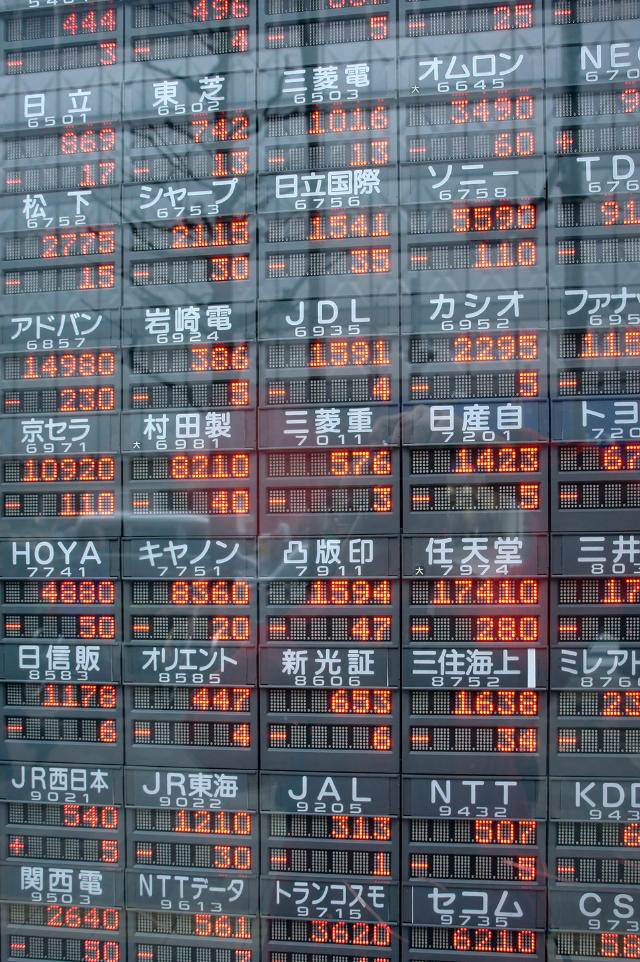
A separate CNBC TV18 report published at 7:09 a.m. India time put the KOSPI decline at 3.74% and Taiwan's Taiex down 0.93%. It said Japanese markets were shut for Labour Thanksgiving Day. These reports establish the current session and its direction without pretending every index was measured at exactly the same second.
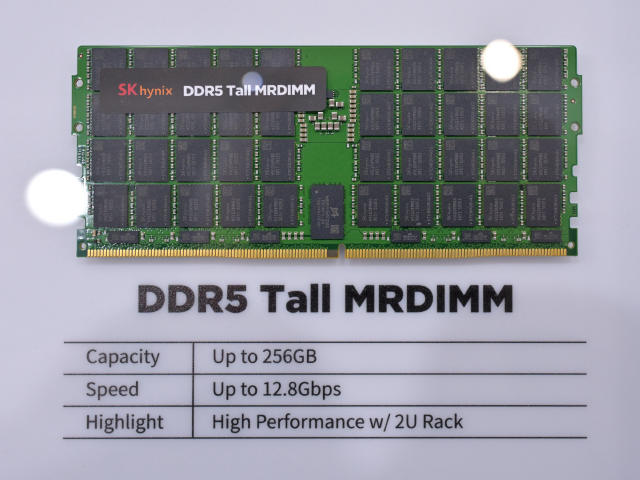
Both reports described continuing pressure on chip-related shares following last week's U.S. technology rout. CNBC TV18 identified Samsung Electronics and SK Hynix among the South Korean semiconductor heavyweights opening lower. This is not simply one stock missing expectations; the uncertainty spans linked businesses and markets.
Why can U.S. futures rise while Asian stocks fall?
A futures contract reflects an agreement tied to a later settlement or delivery framework. Stock-index futures respond to changing expectations while the ordinary U.S. stock session is closed. Asian cash indexes, meanwhile, reflect trading in their own listed companies during their local sessions. They are connected, but they are not identical portfolios trading under identical conditions.
The Nasdaq 100 is also not the same index as the Nasdaq Composite. Headlines that move between the two can accidentally compare unlike measures. This article's overnight gain refers specifically to Nasdaq 100 futures; it is not a claim that the Nasdaq Composite had already risen 3% in regular trading.
There are several possible reasons for a bounce after heavy selling: investors may reassess prices, traders may close positions that benefited from declines, or expectations may improve. The observed rebound alone does not identify which explanation dominates. It would be too strong to declare that investors have settled the broader AI-profitability debate.
Reuters framed that debate around whether large, partly debt-funded spending on data centers will produce returns quickly enough to repay lenders and justify valuations. The concern links demand for chips, infrastructure investment and the price investors pay for future profits. A lower share price can change valuation without changing those underlying business questions overnight.
What can show whether the rebound is broadening?
The first check is whether gains survive into the regular U.S. session and beyond its opening minutes. A strong futures move followed by weakness in ordinary trading tells a different story from gains that persist. Neither outcome can be known from an early Asian-session snapshot.
The second check is participation. If only a few large stocks rise while most shares remain weak, the headline index can look healthier than the broader market. Investors often call this market breadth: how widely gains or losses are distributed across the companies being traded.
The third check is whether other markets confirm the improvement. The South Korean and Taiwanese declines show why that matters today. Their semiconductor exposure connects them to parts of the same investment cycle, but currency moves, local policies and company-specific conditions can produce different results.
CNBC TV18 reported that authorities in China, Taiwan and South Korea announced market-support measures. Those responses show concern about disorderly declines, not a guaranteed price floor. Policy support and corporate profitability are different inputs; one cannot automatically replace the other.
**Related read:** Our guide to stock-market corrections explains why a rebound during a decline does not, by itself, identify its ending.
What this means for your wallet
An overnight bounce does not put a fixed amount back into a retirement account. Funds hold different assets, and their returns depend on those holdings and the prices at which they are valued. A Nasdaq futures percentage should not be applied directly to every person's savings balance.
Take a hypothetical $10,000 portfolio with 40% in a technology-heavy holding. If that holding rises 3% and everything else is unchanged, the portfolio gains $120, or 1.2%. If it falls instead, the same concentration works in reverse. This is illustration, not an estimate of today's actual fund returns.
Our explanation of asset allocation and diversification helps identify overlapping exposure. Several funds with different names can own many of the same large technology companies. Counting account balances or fund names is not the same as measuring the risks underneath them.
For money needed shortly, the key question is still whether it can withstand a decline before the spending date. A market rebound cannot guarantee that cash will be available when rent, taxes or a planned purchase comes due. Borrowed investing money adds financing costs and potential pressure to sell at an unfavorable time.
What to watch as Monday unfolds
The next meaningful test is the regular U.S. session, not whether an overnight quote can be refreshed into a more dramatic headline. Watch whether gains broaden, whether semiconductor shares stabilize across markets and whether new company information changes the earnings outlook rather than only the mood.
Schwab's explanation of overnight futures trading notes that E-mini S&P 500 futures trade from Sunday at 5 p.m. Central Time, with daily breaks. That helps explain why Americans can see Monday-session headlines on Sunday evening. It does not make weekend and overnight trading equivalent to the regular stock session.
The balanced reading tonight is straightforward: U.S. futures were recovering while parts of Asia remained under pressure. That is a useful new development, but an incomplete verdict on the selloff.
Frequently asked questions
Did regular U.S. stocks already rise 3%?
No. The early-session figure refers to Nasdaq 100 futures. Futures and the regular stock session are different markets.
Why are Monday headlines appearing on Sunday in America?
Asian Monday trading starts while it is still Sunday in U.S. time zones. Some U.S. index futures also reopen on Sunday evening.
Does a futures bounce mean the selloff is over?
No. Overnight moves can change before and during the regular session. Broader participation and subsequent trading provide additional evidence.
Content on The Evergreen Edit is for educational and informational purposes only and is not individualized financial, investment, tax or legal advice. Learn more.
Compound growth estimate
Estimated total
$17,175
Your contributions
$13,000
This is an estimate, not a prediction. Monthly compounding; taxes, fees and inflation are excluded.
This article is for educational purposes only and isn't personalized financial, tax or legal advice. Consider talking with a qualified professional about your situation.

Kiara Miller — Founder & Editor
Kiara Miller is the founder and editor of The Evergreen Edit. He has been doing independent finance research for two decades, is a tax preparer, and reviews every article before it's published.
More about Kiara →Get smarter about your money.
Join readers who get money stories on their chosen topics, daily or as new articles post.