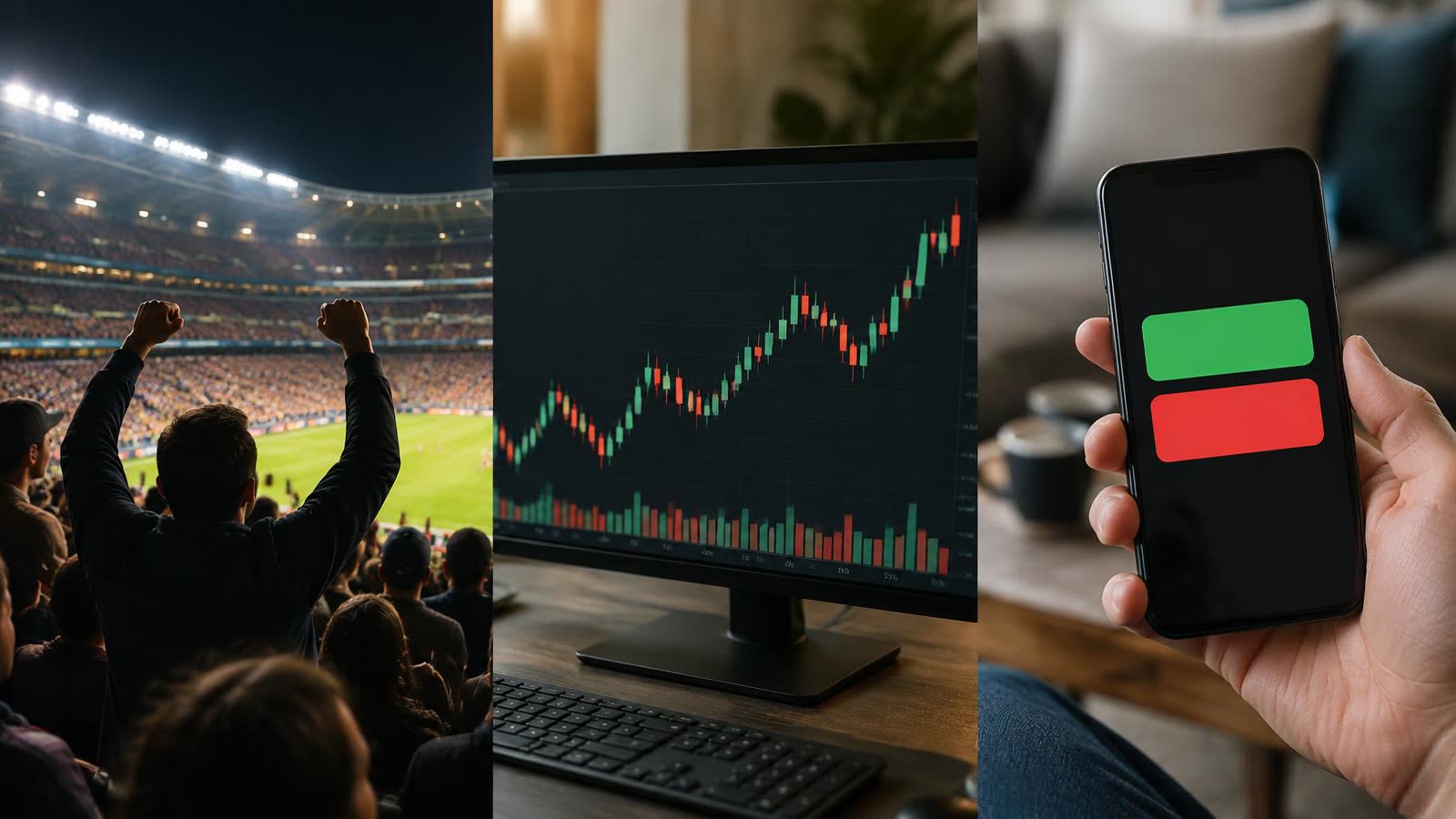
Will it rain in New York on Saturday? Will the Federal Reserve cut interest rates at its next meeting? Will inflation come in above a certain level this month? For most of history, the only way to put money behind questions like these was an informal bet with a friend. Today, a growing number of people trade on them through prediction markets, and one of the best-known is Kalshi.
Kalshi can look like a betting app at first glance, but it's structured very differently. Understanding how it works, how it's regulated and where the risks lie can help you decide whether it's something you want to try, and how to do so sensibly if you do.
What Kalshi is
Kalshi is an exchange for event contracts. An event contract is tied to the outcome of a real-world event and is framed as a simple yes-or-no question, such as whether a certain economic number will be above a specific level or whether a particular outcome will happen by a certain date.
What sets Kalshi apart from many other prediction platforms is its regulation. Kalshi is regulated by the Commodity Futures Trading Commission (CFTC), the federal agency that oversees futures markets in the United States, as a designated contract market. That's the same category of federal oversight that applies to established futures exchanges. It means Kalshi operates under federal rules covering things like how customer funds are handled and how markets are monitored.
How a contract works
Every Kalshi market asks a question, and you can buy either 'Yes' or 'No.' Contracts trade at prices between 1 cent and 99 cents each. When the event is resolved, each contract on the correct side pays out $1, and each contract on the wrong side pays $0.
Because Yes and No are two sides of the same question, their prices together add up to about $1. If Yes is trading at 40 cents, No will be around 60 cents. That relationship is also why prices can be read roughly as probabilities: a 40-cent price suggests the market collectively sees about a 40% chance of the event happening.
You don't have to wait for the outcome
One important difference from a traditional bet is that you can usually trade your contracts before the event is settled. Prices move as new information comes out. If you bought Yes at 40 cents and new information pushes the price up to 60 cents, you could sell and take a 20-cent profit per contract without waiting for the final result. Likewise, if things move against you, you can sell to limit your loss. Selling does depend on someone being willing to buy, so in less active markets it may be harder to get the price you want.
Who runs the other side of your trade?
On Kalshi, you're generally trading with other people, not against the house. When you buy Yes, someone else is effectively taking the No side. The exchange matches buyers and sellers and earns money mainly through trading fees. That's a key difference from a traditional sportsbook, which sets its own odds and profits from building an edge into them.
Signing up
Because Kalshi is a regulated U.S. exchange, opening an account works more like opening a brokerage account than downloading a game. You'll need to verify your identity, and users generally must be 18 or older. Money moves in and out through regular U.S. payment methods, such as bank transfers.
Availability is worth checking. Kalshi has faced legal challenges from some states, particularly over sports-related contracts, which some state regulators argue should be treated as gambling under state law. This area of law is still evolving, so certain markets may not be available everywhere, and the situation can change.
What it costs
Kalshi charges trading fees, and the amount varies depending on the trade, including the price of the contract. The app shows the fee before you confirm, so it's worth checking every time, especially on small trades where fees can take a noticeable share of any potential profit.
The risk, in plain terms
Event contracts are speculative. Every contract can go to zero, and many people who trade them lose money over time, especially after fees. Unlike stocks or index funds, event contracts don't represent ownership in anything that grows. They simply resolve to $1 or $0.
That's why many people treat Kalshi as entertainment money, the same category as concert tickets or a night out, rather than as investing or a way to earn income. If you try it, set a firm limit you can afford to lose, never trade with money meant for bills, savings or debt payments, and keep your long-term investing separate.
Why people find it interesting
Even if you never trade, prediction markets offer something genuinely useful: a real-time read on what a crowd of people expects to happen. Watching how prices shift around economic data, weather events or major announcements can be an interesting way to follow the news and think about uncertainty in terms of probabilities rather than certainties.
Content on The Evergreen Edit is for educational and informational purposes only and is not individualized financial, investment, tax or legal advice. Learn more.
This article is for educational purposes only and isn't personalized financial, tax or legal advice. Consider talking with a qualified professional about your situation.

Kiara Miller — Founder & Editor
Kiara Miller is the founder and editor of The Evergreen Edit. He has been doing independent finance research for two decades and reviews every article before it's published.
More about Kiara →Get smarter about your money.
Join readers who get The Sunday Edit every week.