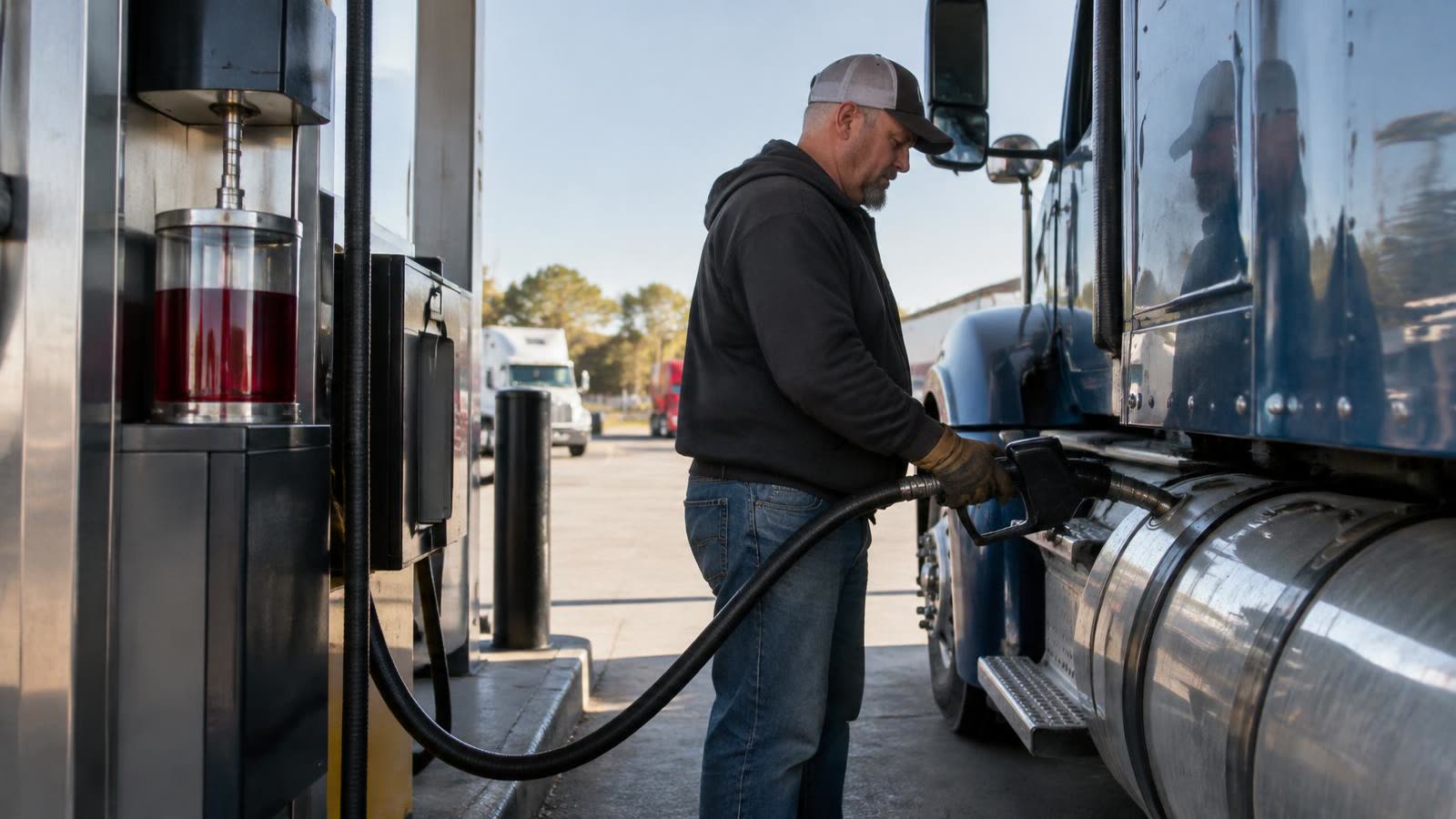
Diesel moves almost everything you buy, so a break on diesel costs could ripple into store prices, but how much of it reaches shoppers is still an open question.
On Monday, Oct. 5, President Trump signed an executive order that temporarily allows "red-dyed" diesel, a fuel normally limited to farm and construction equipment, to be used by vehicles on public highways. The order also defers the federal excise tax on that fuel for the rest of 2026, without interest or penalties.
The move comes after a record run in diesel prices. The national average for diesel was about $6.32 a gallon at the start of this week, according to AAA, down from a record of about $6.53 set on Sept. 22.
What is red-dyed diesel?
Red-dyed diesel is chemically similar to the diesel sold at truck stops. The difference is tax. Fuel used off the road, such as in tractors, bulldozers and generators, usually isn't subject to the federal highway tax, so it is dyed red to make it easy for inspectors to spot if it ends up in a truck on the highway.
Normally, using dyed diesel on the road can bring fines. The new order directs federal agencies to temporarily waive that off-road requirement. In the president's words, the order will "allow anyone to purchase tax-free red dye diesel for any reason."
What the order actually does
According to the White House, the order:
- Tells the Treasury secretary to defer payment of the federal excise tax on dyed diesel used on the road for the rest of the year, with no interest or penalties, and to explore whether that deferred tax can be eliminated entirely.
- Asks the Transportation secretary to work with states, industry and labor groups on access to dyed diesel for highway use.
- Directs the Agriculture secretary to make sure farmers can still get dyed diesel in high-demand areas.
- Encourages states to take matching steps on their own fuel taxes and enforcement.
The federal diesel tax is 24.4 cents a gallon. The White House says that works out to about $60 on a typical 250-gallon truck fill-up, and that savings could top $100 per fill where states also cut their taxes.
One detail matters: the federal tax is being deferred, which means delayed, not formally canceled. Treasury was told to look at wiping it out, but the order itself doesn't do that.
What this means for your wallet
Most passenger cars run on gasoline, not diesel, so this order won't change what you pay at the regular pump. Its bigger effect, if any, would show up in the cost of moving goods. Trucks, trains and farm equipment burn diesel, and those costs are built into the price of groceries, packages and building materials.
The president said the order "will also drive down the costs of all goods, including groceries." Whether that happens depends on several things the order can't control:
- State taxes still apply unless each state chooses to waive them. State diesel taxes vary widely.
- Supply at the pump. Truck stops would need to stock and sell dyed diesel for highway use, which takes time.
- Whether companies pass savings on. Trucking firms and retailers decide how much of any fuel savings shows up in prices.
- The tax may still come due. Since the federal tax is deferred, businesses may need to plan for the chance that it is owed later.
If you drive a diesel pickup or run a small business that uses diesel, it may be worth asking your fuel supplier whether they will offer dyed diesel for road use, checking your own state's rules before you switch, and keeping clear records of every purchase in case the tax rules change.
For everyone else, the most useful move is the same one that helps any time prices swing: keep an eye on your grocery and shipping costs over the next few weeks and adjust your budget categories if they rise or fall.
This article is for education only and is not financial advice. Everyone's situation is different.
Content on The Evergreen Edit is for educational and informational purposes only and is not individualized financial, investment, tax or legal advice. Learn more.
This article is for educational purposes only and isn't personalized financial, tax or legal advice. Consider talking with a qualified professional about your situation.

Kiara Miller — Founder & Editor
Kiara Miller is the founder and editor of The Evergreen Edit. He has been doing independent finance research for two decades and reviews every article before it's published.
More about Kiara →Get smarter about your money.
Join readers who get The Sunday Edit every week.