
Pay is still rising, but more slowly than prices, and a bigger share of what employers spend on workers is going to health coverage.
How fast are wages growing right now?
Wages and salaries for U.S. civilian workers rose 3.1% in the 12 months through September, the Labor Department said Friday, Oct. 30. That is the slowest annual pace since early 2021. After adjusting for inflation, private-sector wages fell 0.6% over the year, meaning the typical raise bought a little less than it did a year earlier.
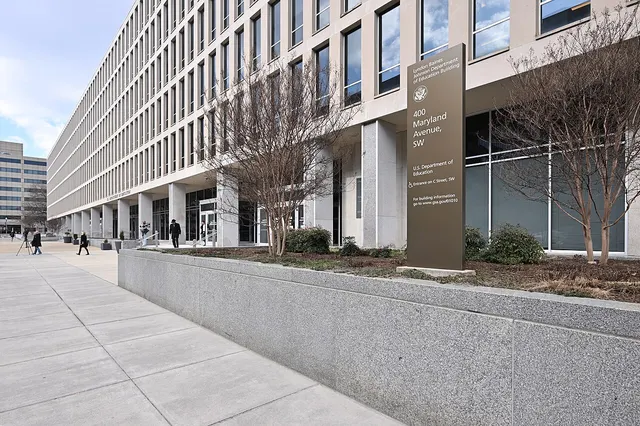
The figures come from the Employment Cost Index, or ECI, which the Bureau of Labor Statistics (part of the Labor Department) released at 8:30 a.m. Eastern. The ECI tracks what employers pay for the same set of jobs over time, so it isn't skewed when lots of high- or low-paid workers join or leave the workforce. Economists and the Federal Reserve watch it closely for that reason.
For the third quarter alone, total compensation costs rose 0.8%, down from 0.9% in the second quarter. Wages rose 0.7% and benefit costs rose 0.9%. Over 12 months, total compensation was up 3.4%, wages 3.1% and benefits 3.9%.
Benefits are rising faster than paychecks
The split between pay and benefits is the most telling part of this report. Benefit costs climbed 3.9% over the year, the fastest pace since the third quarter of 2023, and have outpaced wage growth for four straight quarters, according to an analysis by TheStreet. Health benefit costs for private employers rose about 6.4% over the year, up from 6.0% in June, according to TheStreet and Haver Analytics, which cited unpublished BLS figures.
"Health insurance costs are running at their fastest clip since 2005," Matthew Martin, senior U.S. economist at Oxford Economics, told Reuters.
Haver put it bluntly: higher benefit costs plus slower wage growth show an environment where employers' management of compensation costs "is falling directly on employees." In plain terms, when health coverage costs more, employers have less room in the budget for raises.
Who saw bigger and smaller raises
Not every worker had the same year. In private industry, union workers saw wages rise 4.3% over the year, compared with 3.0% for nonunion workers, the BLS said. State and local government workers saw wages rise 3.2%.
Some lower-paid fields slowed sharply. Wages in service occupations rose 2.8%, the smallest gain since 2016, and private leisure and hospitality wages rose just 2.2%, according to TheStreet's breakdown of the BLS data. Sales workers saw wages rise only 1.8%. Workers in management and professional jobs fared better, with wages up 3.3%.
The broader job market helps explain why. Reuters noted that the labor market has been mostly stable this year, supported by historically low layoffs, while hiring has been lackluster. When fewer employers are hiring, workers have less leverage to push for bigger raises or switch jobs for more pay. As we reported last week, jobless claims hit a three-month low, but finding a new job can still be hard.
What this means for your wallet
The headline number, real wages down 0.6%, sounds small, but it adds up. On a $60,000 salary, losing 0.6% of buying power is like giving up about $360 over a year. Christopher Rupkey, chief economist at FWDBONDS, told Reuters that "paychecks are barely able to keep workers' heads above water."
Inflation is the other half of the squeeze. Reuters noted that the Personal Consumption Expenditures price index, a key inflation gauge, rose 3.6% in the 12 months through September. The Fed held its benchmark rate at 3.75% to 4% on Wednesday, Oct. 28, saying inflation remains elevated.
Here are a few ways to use this report:
- If you are preparing for a pay review, the ECI gives you a neutral benchmark. A raise below 3.1% would trail the average, and with the PCE inflation gauge at 3.6%, even an average raise lost some buying power this year. Our guide on how to ask for a raise covers how to build your case with numbers like these.
- If it's open enrollment at your job, compare plans carefully. With employers' health costs rising about 6% a year, some may shift more costs to workers through higher premiums or deductibles. Our explainer on understanding your employee benefits walks through what to compare.
- If you are budgeting for next year, assume your take-home pay may not keep pace with prices, and plan your spending around your actual raise, not the hope of a bigger one.
Not everyone sees the same picture. Some economists read the report as good news on inflation. "Labor-cost inflation continues to move in the right direction," Priscilla Thiagamoorthy, senior economist at BMO Capital Markets, told Reuters, adding that the labor market is no longer a significant source of price pressures. That matters for borrowers, because slower wage growth could ease pressure on the Fed to raise rates.
The next ECI report, covering the last three months of 2026, is scheduled for Jan. 29, 2027.
Frequently asked questions
What is the Employment Cost Index?
It is a quarterly Bureau of Labor Statistics measure of what employers spend on wages, salaries and benefits for the same set of jobs over time. Because the job mix stays fixed, it is considered one of the cleanest measures of pay growth.
Did wages keep up with inflation in 2026?
Not in the year through September. The BLS said inflation-adjusted wages and salaries for private industry workers fell 0.6% over the year, and for state and local government workers they fell 0.5%.
When is the next Employment Cost Index report?
The BLS has scheduled the next release, covering data through December 2026, for Friday, Jan. 29, 2027, at 8:30 a.m. Eastern.
Content on The Evergreen Edit is for educational and informational purposes only and is not individualized financial, investment, tax or legal advice. Learn more.
Which money-saving habit will you focus on next?
This article is for educational purposes only and isn't personalized financial, tax or legal advice. Consider talking with a qualified professional about your situation.

Kiara Miller — Founder & Editor
Kiara Miller is the founder and editor of The Evergreen Edit. He has been doing independent finance research for two decades and reviews every article before it's published.
More about Kiara →Get smarter about your money.
Join readers who get money stories on their chosen topics, daily or as new articles post.