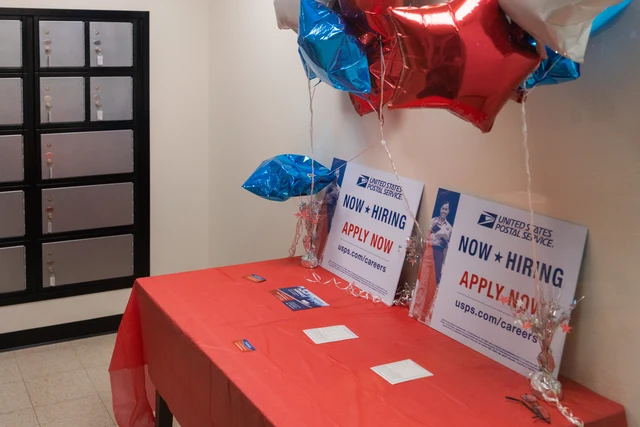

Many workers are unhappy but have stayed put because few employers were hiring. A new report says that could change next year, starting in certain cities.
What did the Indeed and Glassdoor report say?
Indeed Hiring Lab and Glassdoor released their 2027 U.S. Hiring and Worklife Trends Report on Wednesday, Nov. 18. Its main message is that the job market's long holding pattern, with little hiring and little firing, is likely to end in 2027, and that pent-up frustration could turn a hiring rebound into a wave of people quitting.
The report from Indeed Hiring Lab and Glassdoor Economic Research is signed by Indeed chief economist Svenja Gudell and Glassdoor chief economist Daniel Zhao. It notes that Indeed job postings grew from a year earlier in September for the first time since 2022.
Workers have been holding back. According to Fortune's coverage, quits are running about 349,000 a month below what current worker unhappiness would predict. The share of Glassdoor reviewers giving their career opportunities one or two stars rose to 21% in September from 17% in April 2022, while the government's quits rate fell from 3.3% to 2.1% over the same stretch. "They want out, but the market hasn't given them the opportunities to leave," Zhao told Yahoo Finance.
Where hiring is picking up first
The report says local job markets are moving at very different speeds. Job postings are 12% to 15% above pre-pandemic levels in Dallas, Austin and Houston, but roughly 30% below in Seattle and San Francisco. Fortune reported that 49% of U.S. metro areas had more postings in September than a year earlier, up from about 1 in 10 at the start of 2026.
Laura Ullrich, director of economic research at Indeed, told Yahoo Finance that "several metros are starting to turn the corner," but added, "It's too early to call it a recovery." She also warned Fortune that downturns can arrive suddenly: "Economic expansions don't die of old age; they're murdered."
The report also points to a tougher climb for people early in their careers. Senior-level postings are up 19% since January 2025, while entry-level postings have fallen, and more than half of 2025 college graduates were underemployed a year after graduating. Gen Z now makes up nearly a quarter of the labor force, and 58% want a mentor, but only 25% have one.
Pay is not keeping up with prices
One reason workers are restless is money. The report says advertised wages are growing 2.5% a year while prices are rising 3.7%. Employers' health insurance costs are up 25% in four years, and worker ratings of pay and benefits on Glassdoor are the lowest since 2017. "Workers are looking at their whole compensation package right now, and they don't love what they see," Zhao told Yahoo Finance.
Artificial intelligence is another source of worry. Fortune reported that the share of Indeed postings mentioning AI doubled in a year, from 3.6% to 7.2%. The report found that only 45% of AI mentions in Glassdoor reviews are positive, down from 81% in 2019.
What this means for your wallet
If wages grow more slowly than prices, staying put can quietly cost you. Here is an example with round numbers to show the gap. Say you earn $60,000 and get a 2.5% raise, matching the report's figure for advertised wages. Your pay rises to $61,500. To keep up with 3.7% price growth, though, you would need $62,220. That leaves you about $720 a year behind in buying power.
Now say a new employer offers 10% more, or $66,000. That is $4,500 more than your $61,500 after a raise. But salary is only part of the picture. If the new job's health plan costs you $150 more a month in premiums, that is $1,800 a year. And if your current 401(k) match is 4% of pay, worth $2,460 on $61,500, while the new job matches 2%, worth $1,320 on $66,000, you get $1,140 less in match money. Together those trim the gain from $4,500 to about $1,560 before taxes. These figures are only illustrations; use the real numbers from your offer letter and benefits guide. Our guide on how to compare two job offers walks through total compensation step by step.
If you are weighing a move in 2027, a few steps can help you prepare without rushing:
- Track job postings for your role in your own city, since the report shows local markets are recovering at very different speeds.
- Write down your total pay today, including salary, bonus, retirement match and what you pay for health coverage.
- Build or top up an emergency fund before you resign, in case a start date slips or a new job does not work out.
- Ask your current employer about a raise first, using what you learn from postings. Our guide on how to negotiate a job offer has tips that also apply to raise talks.
For more on how quits and openings have moved this fall, see our look at September's job openings report.
Frequently asked questions
What does "low hire, low fire" mean?
It describes a job market where employers are doing little hiring but also few layoffs. Workers who have jobs tend to keep them, but people looking for work or hoping to switch find fewer openings.
Is 2027 a good year to change jobs?
Indeed and Glassdoor expect hiring to pick up in 2027, but they say the recovery is uneven by city and role. Whether a move makes sense depends on your local market and the total value of any offer.
How do I know if my raise kept up with inflation?
Compare your percentage raise with the rise in consumer prices over the same period. If prices rose faster, your pay buys less than before, even though the dollar amount went up.
Sources
- Indeed Hiring Lab and Glassdoor Economic Research, Indeed & Glassdoor's 2027 U.S. Hiring and Worklife Trends Report, November 18, 2026
- Fortune, Indeed and Glassdoor see a wave of quitting ahead in 2027, November 18, 2026
- Yahoo Finance, The 'low hire, low fire' job market could finally crack in 2027, November 18, 2026
Content on The Evergreen Edit is for educational and informational purposes only and is not individualized financial, investment, tax or legal advice. Learn more.
Which money-saving habit will you focus on next?
This article is for educational purposes only and isn't personalized financial, tax or legal advice. Consider talking with a qualified professional about your situation.

Kiara Miller — Founder & Editor
Kiara Miller is the founder and editor of The Evergreen Edit. He has been doing independent finance research for two decades, is a tax preparer, and reviews every article before it's published.
More about Kiara →Get smarter about your money.
Join readers who get money stories on their chosen topics, daily or as new articles post.