Sometimes the option on the menu isn't there to be bought. It's there to make the one next to it look like a steal.
What is the decoy effect?
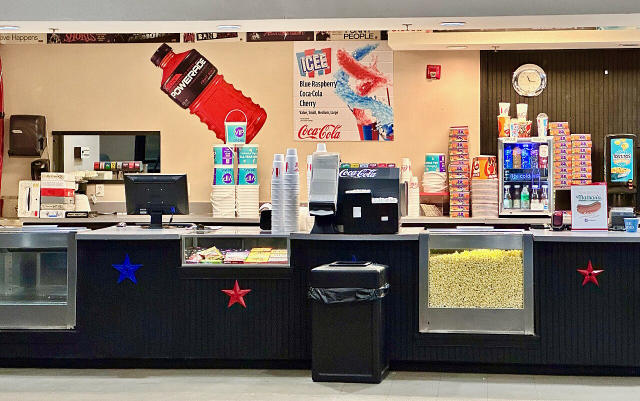
The decoy effect happens when a third option that's clearly worse than one of the others makes that other option more attractive. Researchers call it the attraction effect. A medium popcorn priced just below the large is a common illustration: its job isn't to be bought, but to make the large look like an obvious upgrade.
The idea isn't a marketing myth. It was documented in a 1982 study by Joel Huber, John Payne and Christopher Puto in the Journal of Consumer Research, and it's been debated by researchers ever since. This guide explains how a decoy works, what the research says about when it does and doesn't sway people, and four worked examples with a simple test you can use at the snack counter, on a streaming plan page or at a car dealership.
How a decoy works
Start with two options that each have a strength. One is cheaper; the other gives you more. Picking between them means a real trade-off, and many people feel stuck.
Now add a third option that's similar to the pricier choice but slightly worse in every way that matters: nearly the same price, noticeably less value. In their 2014 follow-up in the Journal of Marketing Research, Huber, Payne and Puto describe the setup this way: "the decoy option would be clearly dominated by the target but not by the competitor." The target is the option the decoy makes look good. The competitor is the cheaper option it doesn't compete with directly.
Researchers call this asymmetric dominance, and it's the heart of the trick. Comparing the target with the decoy is easy, because one is plainly better. That easy win spills over onto the target, even though the decoy tells you nothing new about whether you need the bigger option at all. As Frederick, Lee and Baskin summarize it, the effect means "the addition of an inferior option to a choice set increases the choice share of the option it most closely resembles."
What the research says about when it works
The effect has limits, and knowing them helps. In a 2014 paper titled The Limits of Attraction, Shane Frederick, Leonard Lee and Ernest Baskin ran many studies with realistic products. They reported: "We found attraction effects when stimuli were represented numerically, but not otherwise." They also wrote that such effects "do not typically obtain when consumers experience the product," and they questioned how much the effect matters in practice.
Huber, Payne and Puto answered in the same journal issue. They agreed the effect has boundary conditions, writing that "the most critical condition is that people have either very weak or initially unformed preferences." They also noted that it "only happens if the decision maker observes and is rewarded by the dominance relationship," meaning the decoy's inferiority has to be easy to see.
Put the two papers together and you get a practical picture. A decoy is most likely to sway you when the choices are laid out as numbers, like prices, ounces, gigabytes or months, when the worse option is easy to spot, and when you walked in without a firm idea of what you wanted. Menus and plan pages often check all three boxes.
Worked example 1: the popcorn counter
Here's a hypothetical menu with prices and sizes chosen to show the math:
- Small: 4 cups for $6.00
- Medium: 8 cups for $9.50
- Large: 12 cups for $10.00
Now find the price per cup:
- Small: $6.00 ÷ 4 = $1.50 a cup
- Medium: $9.50 ÷ 8 ≈ $1.19 a cup
- Large: $10.00 ÷ 12 ≈ $0.83 a cup
The medium is the decoy. For just $0.50 more than the medium, the large gives you 4 more cups. That comparison feels like a no-brainer, so the medium quietly makes the large look like the smart buy.
The question the decoy hides is the one that matters: compared with the small, the large costs $4.00 more, or about 67% more, for 8 more cups. If you'll eat 12 cups, that's good value. If you'll stop at 4, you've spent $4.00 on popcorn you'll throw away, and its per-cup price doesn't help you.
Worked example 2: the subscription with an odd middle tier
A hypothetical news site offers three yearly plans:
- Digital only: $60
- Print only: $120
- Print plus digital: $120
Nobody needs the print-only plan; it costs the same as print plus digital and gives you less. Its job is to make the bundle look like a free add-on. Without it, the choice would be a plain trade-off: is print worth an extra $60 a year to you? With it, the bundle feels like "getting digital for free," which nudges people toward the $120 option.
The $60 difference between the two real options is the number to judge. If you won't read the paper copy, the bundle costs you $60 a year, or $5 a month, for something you don't use.
Worked example 3: the phone plan
A hypothetical carrier lists three monthly plans:
- Basic: 5 GB of data for $20
- Plus: 10 GB for $38
- Premium: unlimited data for $40
Plus is the decoy. Next to it, Premium looks like an extra $2 for unlimited data. But the real comparison is Basic against Premium, and that gap is $20 a month. Over a year it adds up to $20 × 12 = $240, and over two years $480.
To decide, check your actual usage in your phone's settings for the past few months. If you regularly use 3 GB, the Plus plan was never relevant and Premium costs you $240 a year for data you don't touch. If you often run out of 5 GB, Premium may be worth it on its own merits.
Worked example 4: the "delete the decoy" test
Here's a test you can run on any set of options in about a minute.
- Look for an option that's nearly the same price as another but worse in every way. That's a likely decoy.
- Cover it with your thumb, or mentally cross it off.
- Compare only what's left. Find the extra cost of moving up, and convert it to a unit you understand: per cup, per month or per year.
- Ask whether you'd pay that difference if the decoy had never been there.
Run it on the popcorn: without the medium, the choice is $6.00 for 4 cups or $10.00 for 12. The upgrade costs $4.00. Some people will take it and some won't, but either way, you're deciding about the popcorn, not about beating the medium.
Our guide to reading a unit price tag shows how to do the per-unit math quickly in a store.
Where decoys show up
The same structure can show up anywhere a seller lists several tiers side by side: cup sizes at a snack counter or coffee shop, streaming and software plans, phone and internet bundles, and protection plans at checkout. It can also sit alongside other pricing tactics. A high first price can work as an anchor, which our article on anchoring bias explains, and "free" add-ons can pull you toward a bigger order, as we cover in our piece on the zero-price effect.
None of this means the middle or top option is always a bad deal. Sometimes the bigger size really is the better value for how you'll use it. The goal is to make the choice based on your needs rather than on a comparison someone set up for you.
Common mistakes to avoid
The first mistake is judging an upgrade against the decoy instead of against the cheapest option you'd actually be happy with. The useful number is the extra cost over that baseline.
The second is treating a low price per unit as savings when you won't use the extra. A cheaper cost per cup only helps if you finish the cups.
The third is deciding at the counter. Decoys work best when your preferences are unformed, so knowing ahead of time what size or plan you need takes away much of their pull.
The fourth is assuming every three-tier menu has a decoy. Run the test; if no option is plainly worse than another, you're looking at a normal trade-off.
What to do next
Pick one recurring purchase, such as your phone plan, a streaming service or your usual coffee order, and run the four-step test on it. Write down the extra cost of the option you chose over the next cheapest one you'd be happy with, then multiply it out to a yearly figure. If the number surprises you, that's money you can redirect without giving up anything you really use.
Frequently asked questions
What is an example of the decoy effect?
A movie theater might price a medium popcorn just below the large, so the large looks like a small step up. The medium's real job is to make the large seem like the better deal.
Is decoy pricing the same as anchoring?
No. Anchoring is when a first number you see shapes what seems reasonable afterward. A decoy works by adding an option that's plainly worse than one choice, which makes that choice look better by comparison.
Does the decoy effect always work?
No. Research by Frederick, Lee and Baskin found the effect mainly when options were described with numbers, and Huber, Payne and Puto say it depends on people having weak or unformed preferences and seeing the inferior option easily.
How can I avoid being influenced by a decoy?
Cross off any option that's nearly the same price as another but worse, then compare only the remaining choices. Look at the extra cost of upgrading and convert it to a monthly or yearly figure.
Sources
- Huber, Payne and Puto, Let's Be Honest About the Attraction Effect, Journal of Marketing Research (2014)
- Frederick, Lee and Baskin, The Limits of Attraction, Journal of Marketing Research (2014)
- EconPapers, Huber, Payne and Puto, Adding Asymmetrically Dominated Alternatives: Violations of Regularity and the Similarity Hypothesis, Journal of Consumer Research (1982)
Content on The Evergreen Edit is for educational and informational purposes only and is not individualized financial, investment, tax or legal advice. Learn more.
Which money-saving habit will you focus on next?
This article is for educational purposes only and isn't personalized financial, tax or legal advice. Consider talking with a qualified professional about your situation.

Kiara Miller — Founder & Editor
Kiara Miller is the founder and editor of The Evergreen Edit. He has been doing independent finance research for two decades, is a tax preparer, and reviews every article before it's published.
More about Kiara →Get smarter about your money.
Join readers who get money stories on their chosen topics, daily or as new articles post.