
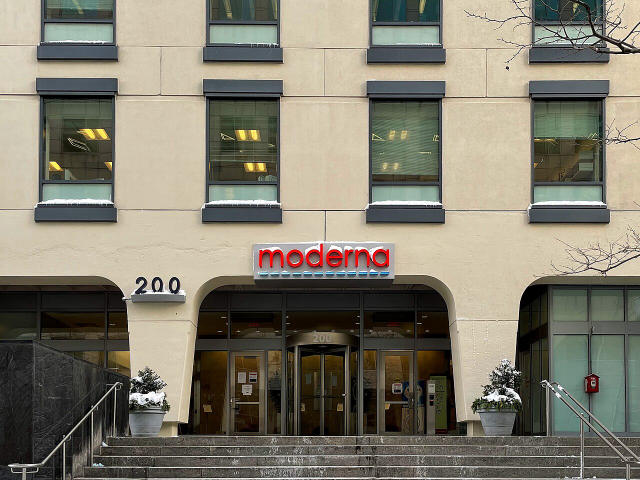
Analysts expected a loss. Moderna posted a profit, raised its forecast and cut its research budget, but the details show why one quarter isn't a turnaround.
Why did Moderna stock go up after earnings?
Moderna (MRNA) stock rose on Friday, Nov. 6, after the vaccine maker reported a third-quarter profit of $162 million, or 38 cents a share, when analysts expected a loss. Revenue grew 29% to $1.31 billion, and Moderna raised its 2026 revenue growth outlook to 15% to 25%, up from up to 10% before.
The shares jumped about 10% early in the day, Investing.com reported, then gave back part of that gain to close up 5.27%, according to StockTitan's list of Friday's movers. The results came out before the market opened, ahead of an 8 a.m. Eastern conference call.
How big was Moderna's earnings beat?
Analysts had expected a loss of $1.09 a share on revenue of about $892 million, Investing.com reported. Moderna instead earned $0.38 a share on diluted shares and brought in $1.313 billion in revenue, according to its earnings release filed with the Securities and Exchange Commission. That's revenue roughly 47% above the estimate. A year earlier, Moderna lost $200 million, or 51 cents a share, in the same quarter.
"We delivered 29% revenue growth in the third quarter, alongside the U.S. approval of mFLUSIVA," CEO Stéphane Bancel said in comments quoted by Investing.com.
Where did the money come from? U.S. sales were $780 million and international sales were $533 million. Moderna credited "higher COVID vaccine sales in international markets, supported by deliveries under long-term strategic government partnerships."
Cost cuts helped too. Research and development spending fell 27% to $583 million. Selling and administrative costs rose 5% to $282 million. That left operating income, the profit from the core business before interest and taxes, at $130 million, compared with a $260 million operating loss a year earlier.
What did Moderna change in its 2026 outlook?
Moderna now expects total revenue to grow 15% to 25% in 2026, "exceeding its previous outlook of up to 10% growth," the release said. It expects sales to be split roughly evenly between the U.S. and international markets. It didn't give a dollar range.
It also trimmed its research budget to about $2.7 billion for the year, down from about $2.9 billion, and kept administrative spending at about $1.0 billion. The bigger change was cash. Moderna now expects to end 2026 with $8.1 billion to $8.3 billion in cash and investments, up from its earlier forecast of $4.7 billion to $5.2 billion.
Most of that jump isn't from selling more vaccines, though. Cash and investments rose to $8.0 billion at the end of September from $6.9 billion at the end of June. The release said that included about $2.6 billion in net money raised from convertible notes, a type of debt that can later turn into stock, partly offset by a $950 million payment tied to a litigation settlement. Raising money through convertible notes can mean more shares down the road if the notes convert, which can shrink each existing shareholder's slice.
What's the catch in the numbers?
The first catch is timing. COVID vaccines sell mostly in the fall and winter, so the third and fourth quarters are usually Moderna's strongest. One profitable quarter doesn't mean the full year will be profitable.
The second is cost of sales, the cost of making the products it sold, which rose 54% to $318 million. And the full-year cost of sales forecast of about $1.7 billion includes a $0.9 billion one-time litigation settlement charge.
The pipeline news was mixed. The U.S. Food and Drug Administration approved Moderna's flu vaccine, mFLUSIVA, in August for adults 50 to 64, with accelerated approval for people 65 and older. Moderna called it its fifth approved product. But approval came after the yearly contracting season, so the U.S. launch this season will be limited. Its norovirus vaccine trial "did not meet the statistical criteria for early success" at an interim check. Meanwhile, its experimental melanoma treatment with Merck cut the risk of cancer returning or death by 42% versus Merck's Keytruda alone in a late-stage trial, and the companies are working toward regulatory filings.
What this means for your wallet
If you owned Moderna, Friday's move was a solid day, not a reset. Here's a simple example without fees or taxes. A $1,000 position at Thursday's close would have been worth about $1,052.70 at Friday's close after the 5.27% gain. If you had bought near the early high, around 10% up, you'd have been down about 4% by the close.
That gap between the early pop and the close is common after big earnings surprises, as we explain in our guide to why stocks move after earnings. Prices before the opening bell can be jumpy too, as our explainer on premarket and after-hours trading covers.
Most people own Moderna only as a small slice of a broad index fund or a health care fund. In that case, one quarter's beat barely moves your balance.
What should Moderna investors watch next?
Moderna holds its Analyst Day on Nov. 12, 2026, where investors may look for more detail on future revenue, costs and the path to steady profits. Investors may also watch how fast the newer vaccines sell, whether the FDA gives more guidance on Moderna's combined flu and COVID shot in the U.S., and the timing of filings for the melanoma treatment with Merck. Fourth-quarter results will show whether the higher outlook holds.
Frequently asked questions
Did Moderna make a profit in Q3 2026?
Yes. Moderna reported net income of $162 million, or $0.38 a diluted share, compared with a $200 million loss a year earlier.
What is Moderna's 2026 revenue guidance?
Moderna now expects total revenue to grow 15% to 25% in 2026, up from its earlier outlook of up to 10% growth.
How much did Moderna stock go up after earnings?
The stock rose about 10% early on Friday, Nov. 6, and closed up 5.27%, according to StockTitan.
When is Moderna's Analyst Day?
Moderna's Analyst Day is scheduled for Nov. 12, 2026.
Content on The Evergreen Edit is for educational and informational purposes only and is not individualized financial, investment, tax or legal advice. Learn more.
Compound growth estimate
Estimated total
$17,175
Your contributions
$13,000
This is an estimate, not a prediction. Monthly compounding; taxes, fees and inflation are excluded.
This article is for educational purposes only and isn't personalized financial, tax or legal advice. Consider talking with a qualified professional about your situation.

Kiara Miller — Founder & Editor
Kiara Miller is the founder and editor of The Evergreen Edit. He has been doing independent finance research for two decades, is a tax preparer, and reviews every article before it's published.
More about Kiara →Get smarter about your money.
Join readers who get money stories on their chosen topics, daily or as new articles post.