That half-used gift card in your drawer is probably still worth something, as long as you know which rules apply to it.
How long does gift card money last?
Under federal rules, the money on most gift cards can't expire until at least five years after the card was bought or last loaded. Inactivity fees are allowed only after 12 months with no use, no more than one a month, and only if the card discloses them. Promotional and some other cards aren't covered.
Those protections come from a federal rule known as Regulation E, section 1005.20, which the Consumer Financial Protection Bureau (CFPB) publishes. This guide explains what the rule covers, the fee and expiration limits in plain English, the cards that fall outside it, and how to work out what an old card is worth today. It's for anyone who has gift cards tucked away, gives them as presents, or wants to know what a card's fine print is allowed to say.
Which cards the federal rules cover
The rule covers three kinds of cards, and the difference is mostly about where you can spend them.
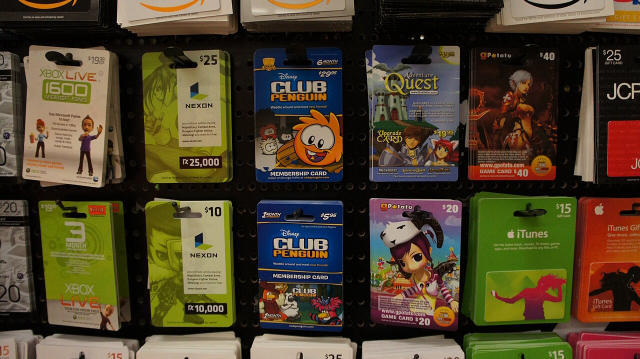
A gift certificate is issued in a specified amount that may not be increased or reloaded, and it can be redeemed at a single merchant or an affiliated group of merchants. A store gift card works the same way at one merchant or group of related merchants, whether or not more money can be added to it. A general-use prepaid card can be redeemed at multiple, unaffiliated merchants, like the network-branded gift cards sold on racks in grocery and drug stores.
All three get the same core protections on expiration dates and fees. The rule also applies to electronic "codes," so a gift card sent by email is generally treated the same way as a plastic one.
The cards that aren't covered
This is where many surprises come from. The regulation lists cards that are excluded, and it says an excluded card generally is not subject to any of the requirements of the section. The exclusions are cards that are:
- Usable solely for telephone services.
- Reloadable and not marketed or labeled as a gift card or gift certificate.
- Loyalty, award or promotional gift cards.
- Not marketed to the general public.
- Issued in paper form only.
- Redeemable solely for admission to events or venues at a particular location or group of affiliated locations.
The second exclusion matters most for everyday shoppers. A reloadable prepaid card that's sold as a spending card, not as a gift, doesn't get gift card protections. The CFPB has warned that if a card isn't sold as a gift card, the federal gift card rules don't apply, and the issuer might start charging fees, like monthly service fees, right away.
Promotional cards are the other big one. Think of a "bonus card" you get for buying a bigger gift card, or a reward card from a rebate offer. These can expire sooner and carry fees, but the rule still requires certain disclosures. The front of the card must say it's issued for loyalty, award or promotional purposes and must show the expiration date for the money on it. The card must also disclose any fees and when they apply, plus a toll-free number to call about them.
The five-year expiration rule
For covered cards, the regulation says the expiration date for the underlying funds must be at least the later of five years after the card was first issued or the date funds were last loaded, or the expiration date printed on the card. In other words, every time money is added to a reloadable gift card, the five-year clock starts again for at least that money.
A card itself can carry an earlier "valid thru" date than the money on it. That's allowed, but the card has to say so. It must disclose the expiration date for the funds (or that the funds don't expire), a toll-free number and website, if there is one, for getting a replacement card after the card expires, and a statement that the card can expire while the money doesn't, and that you can contact the issuer for a replacement.
Replacing an expired card can't cost you anything. The rule says no fee may be charged for replacing the card, or for giving you the remaining balance in some other manner before the funds expire, unless the card was lost or stolen.
When fees are allowed
The rule limits three kinds of charges: dormancy fees, inactivity fees and service fees. A dormancy or inactivity fee is a fee for not using the card. A service fee is a periodic fee for holding or using it, such as a monthly maintenance fee. One-time fees, like a purchase fee at the register or a replacement fee for a lost card, aren't counted as service fees under the rule.
A dormancy, inactivity or service fee is allowed only if all three of these are true:
- There's been no activity on the card in the one-year period ending on the date the fee is charged.
- The card clearly states the amount of the fee, how often it can be charged, and that it may be charged for inactivity.
- No more than one such fee is charged in any calendar month.
Watch out for one detail. Under the official interpretation of the rule, checking your balance doesn't count as activity, and neither does replacing an expired, lost or stolen card. Making a purchase does.
The disclosures also have to appear in the right place. The rule says a disclosure that's only in a separate terms document, on the packaging, or on a sticker stuck to the card doesn't count as a disclosure on the card. Fee information must also be shown to you before you buy, and those terms can't be changed after purchase.
Worked examples
These examples use made-up cards and simple numbers so the math is easy to follow. Check the back of your own card for its real terms.
Example 1: The birthday card from years ago. Maria received a $50 store gift card on March 10 of Year 1 and forgot about it. The card has no printed expiration date and lists no fees. Under the five-year rule, the money can't expire before March 10 of Year 6. If she finds it in Year 4, the full $50 is still there.
Example 2: Reloading resets the clock. Jamal bought a reloadable store gift card on June 1 of Year 1 with $40. On September 15 of Year 3, he adds $25. The funds expiration must now be at least five years after that last load, so at least September 15 of Year 8.
Example 3: An inactivity fee in action. Lena has a $50 general-use gift card. The card states a $2.50 monthly inactivity fee after 12 months of no use. She doesn't use it for 18 months. No fee is allowed during the first 12 months. After that, at most one fee a month can be charged for months 13 through 18, which is 6 fees. That's 6 × $2.50 = $15, leaving $50 − $15 = $35. If she had made even a small purchase in month 10, the 12-month clock would have restarted from that purchase. Checking her balance would not have restarted it.
Example 4: The card expires before the money. Chris finds an old store gift card in a drawer. The "valid thru" date printed on the plastic has passed, so it no longer works at the register, but the back says the funds on it don't expire. Chris can call the toll-free number on the card and ask for a replacement, which must be free because the card wasn't lost or stolen.
Example 5: The bonus card. During a holiday sale, Priya buys a $100 gift card and gets a $20 "bonus card." The front of the bonus card says "Promotional" and shows an expiration date about two months away. The $100 card follows the five-year rule. The $20 bonus card is a promotional card, so it can expire much sooner. If she wants that extra $20, she'll need to use it before the date on the front.
Lost cards, store closures and records
The federal rule protects your balance from expiring too soon, but it can't protect a card you lose. The CFPB has noted that some issuers, like stores, might not replace lost or stolen cards, while others might replace a card only if you registered it before it went missing. That's why it recommends treating a gift card like cash.
A few habits make a lost card easier to recover. The CFPB suggests writing down the card number, security code and customer service phone number and keeping them in a safe place. When you give a gift card, it also suggests giving the terms and conditions and the receipt along with it. Registering a card online, when the issuer offers it, can help too.
Store closures are another risk. The CFPB has pointed out that if a retailer goes under, its gift cards may not be redeemable, and if nearby locations close, the card may be harder to use. Spending a store gift card fairly soon is the simplest way to avoid that.
Finally, federal law is a floor, not a ceiling. The CFPB notes that your state may provide additional protections and rights, so it's worth checking your state attorney general's or consumer protection office's website if a card's terms seem unfair.
Gift card scams to know about
Gift cards are a favorite payment method for scammers because the money is hard to trace once the numbers are shared. The Federal Trade Commission (FTC) is blunt about it: "Only scammers will tell you to buy a gift card" to pay them, and no real business or government agency will ever tell you to buy a gift card to pay them. That's true whether the caller claims to be from a government agency, a utility, tech support or a family member in trouble.
If you've already paid someone with a gift card, the FTC says to report it to the gift card company right away and ask for your money back. Some companies might return it, so it's worth asking. Then report the scam to the FTC at ReportFraud.ftc.gov. As the FTC puts it, gift cards are for gifts, not payments. Our guide to spotting and avoiding money scams covers other warning signs.
Common mistakes to avoid
The most common mistake is assuming an old card is worthless. Under the five-year rule, many forgotten cards still carry their full balance, so check before tossing one out.
Another mistake is believing a balance check keeps a card "active." Only real activity, like a purchase or reload, restarts the 12-month fee clock.
A third is treating every card the same. Promotional bonus cards and reloadable prepaid cards that aren't sold as gifts play by different rules, so read the front and back of each card.
A fourth is not keeping records. Without the card number and receipt, a lost card can be impossible to replace.
What to do next
Gather the gift cards in your drawer, wallet and email inbox. For each one, note the balance, any printed expiration dates for the card and the funds, and any fees listed. Use the cards closest to expiring or charging fees first, and spend store cards from shops that are closing locations. If you're giving cards as presents, our guide to saving money on holiday gifts has more ideas for keeping the total in check.
Frequently asked questions
Can a store refuse a gift card after it expires?
The plastic card can expire before the money on it, but for covered cards the funds must last at least five years from purchase or the last reload. If the card expires first, you can ask the issuer for a free replacement.
Can gift cards charge monthly fees?
Only after 12 months with no activity, only if the fee is disclosed on the card, and no more than one fee a month. These limits don't apply to excluded cards, such as promotional cards.
Does checking my gift card balance keep it active?
No. Under the official interpretation of the federal rule, a balance inquiry doesn't count as activity, so it doesn't restart the 12-month clock.
Do promotional or bonus gift cards follow the same rules?
No. Loyalty, award and promotional cards are excluded, so they can expire sooner. The front of the card must say it's promotional and show when its funds expire.
Sources
- eCFR, 12 CFR 1005.20 Requirements for gift cards and gift certificates
- Consumer Financial Protection Bureau, § 1005.20 Requirements for gift cards and gift certificates (with official interpretation)
- Consumer Financial Protection Bureau, Giving or receiving gift cards? Know the terms and avoid surprises
- Federal Trade Commission, Avoiding and Reporting Gift Card Scams
Content on The Evergreen Edit is for educational and informational purposes only and is not individualized financial, investment, tax or legal advice. Learn more.
Which money-saving habit will you focus on next?
This article is for educational purposes only and isn't personalized financial, tax or legal advice. Consider talking with a qualified professional about your situation.

Kiara Miller — Founder & Editor
Kiara Miller is the founder and editor of The Evergreen Edit. He has been doing independent finance research for two decades, is a tax preparer, and reviews every article before it's published.
More about Kiara →Get smarter about your money.
Join readers who get money stories on their chosen topics, daily or as new articles post.