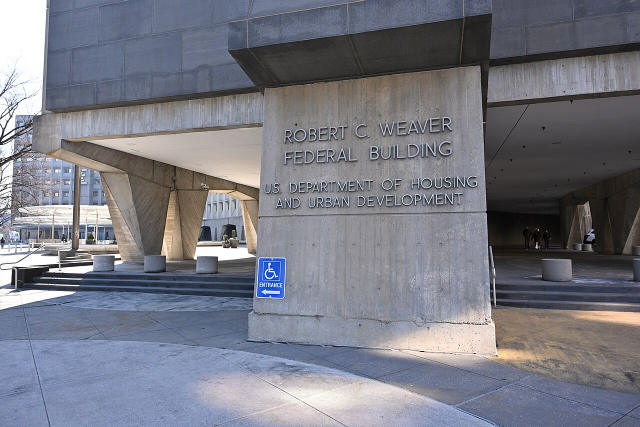
The fund that backs FHA loans is still far above its legal floor, and lenders say that leaves room to lower what borrowers pay each month.
What did FHA's new annual report show?
The Federal Housing Administration's mortgage insurance fund ended fiscal 2026 with a capital ratio of 10.29%, down from 11.47% a year earlier. That is still more than five times the 2% minimum set by law. The report, released Monday, Nov. 16, has renewed calls to cut FHA mortgage insurance premiums.
The fund is called the Mutual Mortgage Insurance Fund, or MMI Fund. It pays lenders when FHA-insured borrowers default, and it is paid for by the premiums FHA borrowers are charged. The capital ratio compares the fund's capital with the total amount of loans it insures, so a higher number means a bigger cushion against losses. According to HUD's FY 2026 annual report to Congress, the ratio has now been above the 2% floor for 12 straight years.
Why the cushion got smaller
The fund's economic net worth was $182.6 billion as of Sept. 30, 2026, down $6.3 billion from a year earlier. Total capital resources rose $9.3 billion to $148.9 billion. At the end of the year, the fund insured about 8.4 million forward mortgages worth roughly $1.7 trillion.
HUD gave three main reasons for the decline. First, the 2023 premium cut keeps lowering revenue as more of FHA's loans carry the lower rate. Second, slowing home price growth and updated economic forecasts raised projected losses. Third, the reverse mortgage side of the fund weakened sharply. The stand-alone ratio for those loans, called HECMs, fell from 24.06% to 5.43%. The ratio for regular "forward" mortgages slipped only from 10.95% to 10.47%.
Who FHA is serving
FHA insured 935,283 forward mortgages in fiscal 2026. Of the purchase loans, 530,198, or 83.09%, went to first-time homebuyers, up slightly from 83.03% the year before. The average borrower's credit score was 679, unchanged from the year before. The average purchase loan was 95% of the home's value, meaning a typical buyer put about 5% down. In other words, FHA remains the main path to a first home for buyers with modest savings and middling credit. Our guide to FHA, VA, USDA and conventional loans explains how FHA compares.
Will FHA premiums go down?
Nothing has been announced. Bob Broeksmit, president and CEO of the Mortgage Bankers Association, said "FHA should modestly reduce annual mortgage insurance premiums," HousingWire reported. The Community Home Lenders of America said "it is long past time to stop overcharging homeowners for FHA loans." It also argued that life-of-loan premiums were meant as a stop-gap fee hike in 2013. But Joseph Gormley, who is performing the duties of FHA commissioner, told HousingWire the administration is "comfortable" with the fund's capital. HousingWire took that as a sign of no immediate premium changes.
What FHA borrowers pay today
The current premium schedule comes from HUD Mortgagee Letter 2023-05. It applies to loans with FHA case numbers endorsed on or after March 20, 2023. Every FHA loan has an upfront premium of 1.75% of the base loan amount, which most borrowers add to the loan. Then there is an annual premium, billed monthly. On a 30-year loan of typical size, it is 0.55% of the loan if you put down less than 5%. It is 0.50% if you put down 5% or more. Larger loans pay 0.70% to 0.75%.
How long you pay matters as much as the rate. If you put down less than 10%, the annual premium lasts for the life of the loan. If you put down 10% or more, it ends after 11 years. Unlike private mortgage insurance on conventional loans, it doesn't drop off once you build equity. The common way out is refinancing into a non-FHA loan.
What this means for your wallet
Here is a worked example. Say you buy a $350,000 home with 3.5% down. Your base loan is $337,750. The upfront premium is 1.75% of that, or $5,910.63, so the loan grows to $343,660.63 if you add it in. The annual premium is 0.55%, about $1,857.63 in the first year, or roughly $154.80 a month. That is a first-year estimate; the exact amount depends on your loan balance and your lender's calculation. Because you put less than 10% down, it lasts for as long as you keep the loan.
Now suppose you put 10% down on the same home instead. Your loan is $315,000 and the annual premium is 0.50%, about $1,575 a year, or $131.25 a month, for 11 years.
What would a cut mean? The MBA didn't name a number, so take this only as an illustration. If the annual rate on the first example fell by 0.10 percentage point, to 0.45%, the monthly premium would drop to about $126.66. That saves about $28 a month in the first year. A cut would almost certainly apply only to new loans, as the 2023 cut did. So current borrowers would benefit only by refinancing.
If you're shopping now, these steps can help:
- Ask lenders for side-by-side FHA and conventional quotes, including all mortgage insurance.
- Check what you'd pay at 3.5%, 5% and 10% down.
- Look into first-time homebuyer programs that can help with the down payment.
Rates were above 7% for 30-year loans in mid-November, so every monthly cost adds up.
Frequently asked questions
What is the FHA MMI Fund capital ratio?
It compares the capital in FHA's Mutual Mortgage Insurance Fund with the total amount of loans the fund insures. The law requires at least 2%, and the ratio was 10.29% as of Sept. 30, 2026.
How much is FHA mortgage insurance right now?
Under HUD Mortgagee Letter 2023-05, FHA loans carry a 1.75% upfront premium. Most 30-year loans also pay an annual premium of 0.50% to 0.55%, with larger loans paying 0.70% to 0.75%.
Can I get rid of FHA mortgage insurance?
If you put at least 10% down, the annual premium ends after 11 years. With less than 10% down, it lasts for the life of the loan, so the usual way out is refinancing into a non-FHA loan.
Is FHA cutting mortgage insurance premiums in 2026?
No cut has been announced. Lender groups including the Mortgage Bankers Association are calling for one, but an FHA official told HousingWire the administration is comfortable with the fund's current capital.
Sources
- U.S. Department of Housing and Urban Development, Annual Report to Congress on the Financial Status of the FHA Mutual Mortgage Insurance Fund, Fiscal Year 2026
- HousingWire, FHA's MMI Fund stays 5x above floor, fueling calls to cut insurance premiums, November 16, 2026
- U.S. Department of Housing and Urban Development, Mortgagee Letter 2023-05: Reduction of FHA Annual Mortgage Insurance Premium Rates, February 22, 2023
- Fortune, Mortgage rates today, Nov. 16, 2026, November 16, 2026
Content on The Evergreen Edit is for educational and informational purposes only and is not individualized financial, investment, tax or legal advice. Learn more.
Which money-saving habit will you focus on next?
This article is for educational purposes only and isn't personalized financial, tax or legal advice. Consider talking with a qualified professional about your situation.

Kiara Miller — Founder & Editor
Kiara Miller is the founder and editor of The Evergreen Edit. He has been doing independent finance research for two decades, is a tax preparer, and reviews every article before it's published.
More about Kiara →Get smarter about your money.
Join readers who get money stories on their chosen topics, daily or as new articles post.