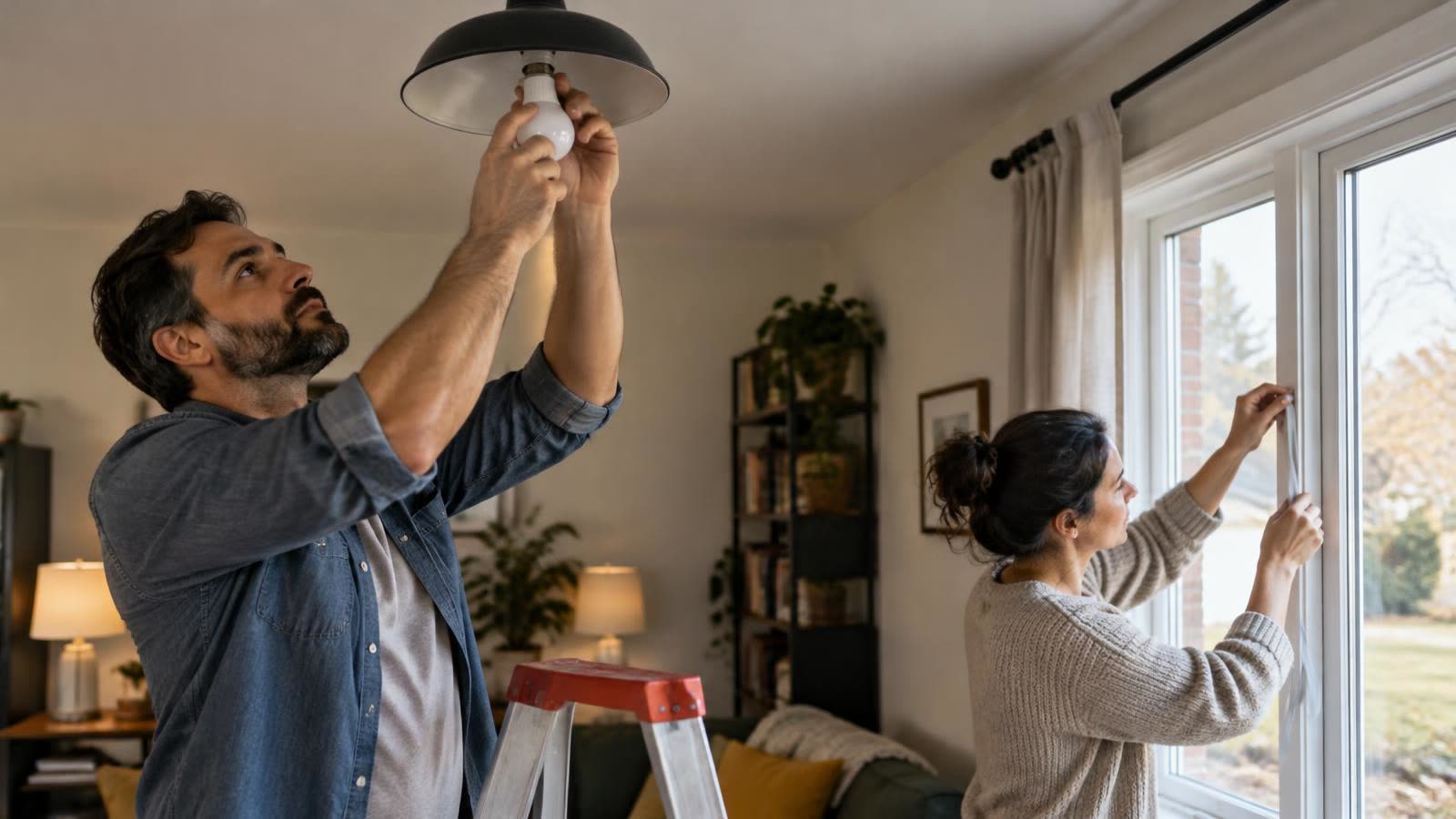
Your utility bill can feel out of your control, but small changes to how you heat, cool and light your home can add up to real savings.
Energy bills are one of the few big household costs that show up every single month. Unlike rent or a car payment, though, you have some control over how much you use. You don't need to buy solar panels or a new furnace to make progress. Most of the steps below cost little or nothing, and many work whether you rent or own.
Start by reading your bill
Before you change anything, grab a recent bill and look for three things:
How much energy you used. Electricity is usually measured in kilowatt-hours (kWh), and natural gas in therms or cubic feet.
What you pay per unit. This is your rate. Some utilities charge different rates at different times of day, called time-of-use pricing.
Fixed charges. These are monthly fees you pay no matter how much energy you use.
Many utilities also show a 12-month usage chart. Look for the months when your use spikes. That tells you whether heating, cooling or something else is your biggest cost.
Heating and cooling: the biggest lever
For many homes, heating and cooling make up the largest share of energy use, so this is where small changes can matter most.
Turn the thermostat back when you're asleep or away. The U.S. Department of Energy has said that setting your thermostat back 7 to 10 degrees Fahrenheit from its normal setting for eight hours a day can save up to 10% a year on heating and cooling.
Pick a comfortable but efficient setting. The Environmental Protection Agency (EPA) suggests keeping your home around 68 degrees during the day in winter and lower at night, if that's comfortable for your household.
Use a programmable or smart thermostat. These do the adjusting for you, so you don't have to remember. Many utilities offer rebates on them.
Change or clean your filters. Dirty furnace and air conditioner filters make your system work harder. The EPA recommends cleaning or replacing them regularly.
Don't block vents. Furniture and curtains over vents can keep warm or cool air from circulating.
Use ceiling fans wisely. Fans make a room feel cooler without changing the temperature, which may let you set the air conditioner a little higher in summer. Turn them off when you leave the room, since fans cool people, not rooms.
Seal the leaks
Air leaking through gaps around windows, doors and outlets lets warm air out in winter and hot air in during summer.
Weatherstrip doors and windows. Peel-and-stick foam or rubber strips are inexpensive and easy to install.
Caulk small gaps. Look around window frames, baseboards and where pipes enter walls.
Add a door sweep. If you can see daylight under an exterior door, a sweep can block the draft.
Use curtains strategically. Open them on sunny winter days to let heat in, and close them at night. In summer, close them during the hottest part of the day.
If you rent, ask your landlord before making changes. Many renter-friendly fixes, like removable weatherstripping and draft stoppers, don't damage anything.
Water heating
Warming up water is often one of a home's bigger energy costs.
Lower the temperature. The EPA says turning your water heater down to 120 degrees Fahrenheit can cut water heating costs by 6% to 10%.
Insulate the tank and pipes. According to the EPA, an insulation blanket for an older water heater can reduce heat loss by 25% to 40% and often pays for itself within a year. Check your water heater's label or manual first.
Use less hot water. Shorter showers, low-flow showerheads and washing clothes in cold water all help.
Fix drips. A leaky hot water faucet wastes both water and the energy used to heat it.
Lighting and electronics
Switch to LED bulbs. According to ENERGY STAR, certified LED bulbs use up to 90% less energy than standard incandescent bulbs and last about 15 times longer.
Turn off what you're not using. It sounds obvious, but lights, TVs and game consoles left on in empty rooms add up.
Tackle "phantom" power. Many devices draw a little power even when off. Plugging them into a power strip you can switch off may help.
Look for the ENERGY STAR label. When you replace an appliance, ENERGY STAR-certified models are designed to use less energy than standard models.
In the kitchen and laundry room
Run full loads. Dishwashers and washing machines use about the same energy whether they're full or half empty.
Air-dry when you can. Hanging clothes or using the dishwasher's air-dry setting skips the heat cycle.
Clean the dryer lint filter every load. It helps the dryer work efficiently and is an important fire-safety habit.
Match pot size to the burner, and keep lids on to cook faster.
Check the fridge seal. If a dollar bill slides out easily when the door is closed on it, the seal may need replacing.
Use your utility's programs
Your utility company may offer more help than you realize:
Free or low-cost home energy audits. An auditor can find leaks and suggest the upgrades that will save you the most.
Rebates on thermostats, insulation, efficient appliances and heat pumps.
Budget billing. This spreads your yearly costs into equal monthly payments, so a cold January doesn't wreck your budget. You still pay for what you use, but it's easier to plan.
Assistance programs. If you're struggling to pay, ask about payment plans. The federal Low Income Home Energy Assistance Program (LIHEAP) also helps eligible households with heating and cooling costs. Your state or local energy office can explain how to apply.
Build a simple energy-saving plan
Trying to do everything at once can feel overwhelming. Instead:
Pick three changes from this guide that fit your home and habits, such as adjusting the thermostat, switching to LEDs and washing clothes in cold water.
Note your current usage from this month's bill.
Compare the same month next year, or the next few months, keeping in mind that weather can change your usage.
Put the savings to work. Whatever you save, consider moving it into your emergency fund or toward a debt payment so it doesn't disappear into everyday spending.
This article is for education only and is not financial advice. Everyone's situation is different.
Content on The Evergreen Edit is for educational and informational purposes only and is not individualized financial, investment, tax or legal advice. Learn more.
This article is for educational purposes only and isn't personalized financial, tax or legal advice. Consider talking with a qualified professional about your situation.

Kiara Miller — Founder & Editor
Kiara Miller is the founder and editor of The Evergreen Edit. He has been doing independent finance research for two decades and reviews every article before it's published.
More about Kiara →Get smarter about your money.
Join readers who get The Sunday Edit every week.