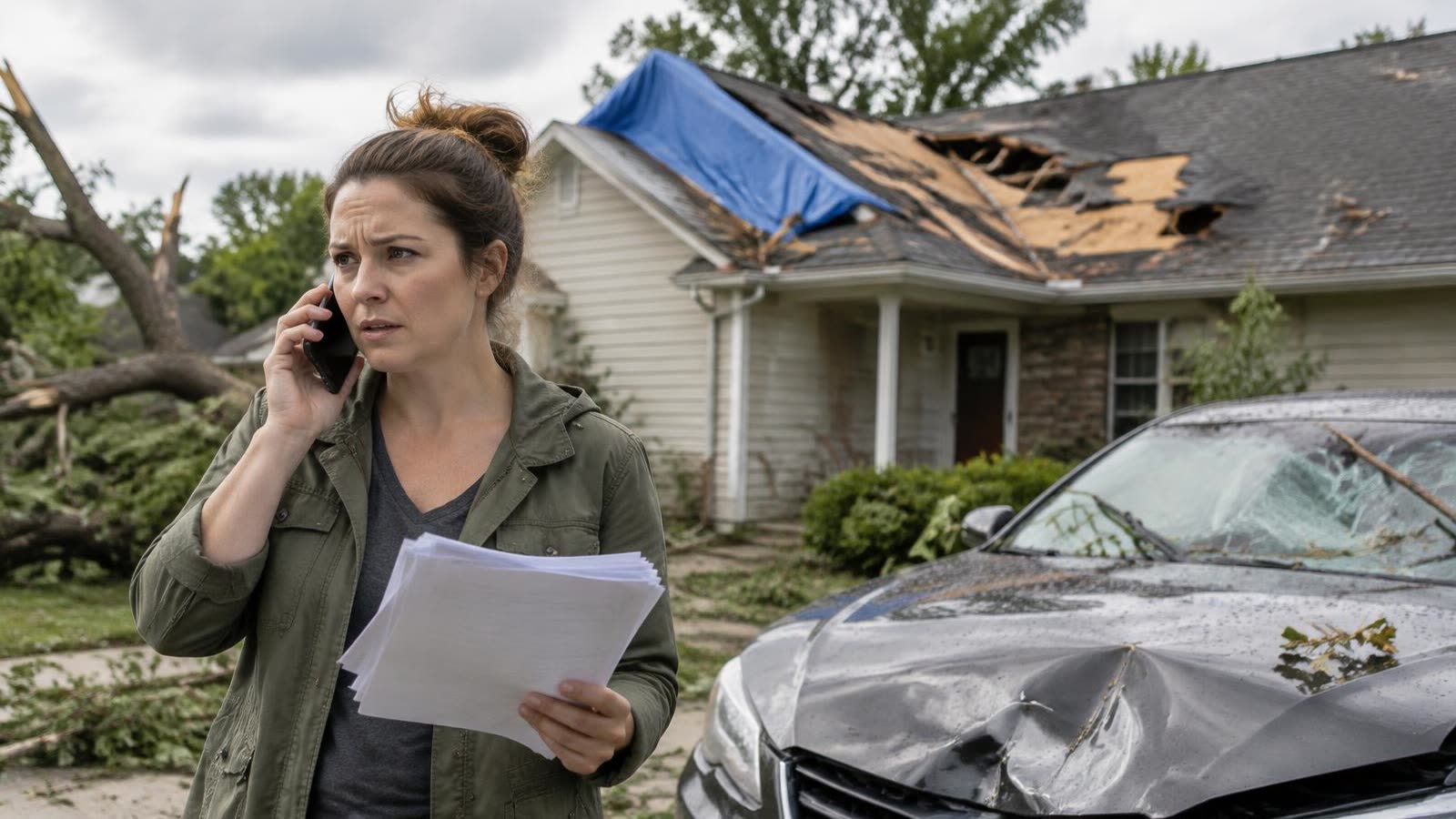
Knowing which policy pays for which damage can make a big difference to your recovery.
Hurricane Isaias came ashore near Destin, Florida, on Friday, Oct. 9, as a Category 2 storm. It was the first hurricane to hit the continental United States since Milton in 2024, according to Insurance Business. Isaias had briefly strengthened to a Category 3 with 120 mph winds on Friday morning before wind shear weakened it ahead of landfall.
At least four people died, and more than 800,000 homes and businesses lost power across Florida, Alabama, Georgia and the Carolinas. The worst wind damage was in the western Florida Panhandle. In the town of Milton, roofs were torn off an apartment complex and a high school gymnasium, and in Pensacola a hotel lost its roof.
If your home or car was damaged, the next few weeks of paperwork matter. Here is where to get help and how coverage generally works.
Where to get help right now
Florida's Department of Financial Services, the state agency that oversees insurance consumer help, opened an Insurance Assistance Hub in Destin on Sunday, Oct. 11. It is at the Morgan Sports Complex, 4200 Indian Bayou Trail, and starting Monday, Oct. 12, it is open from 9 a.m. to 4 p.m. Central Time through Friday, Oct. 16, according to Cuba Headlines, which reported on the announcement.
Twelve insurance companies took part on the first day, with more expected to join. Staff can help you start a claim and answer coverage questions, but the center does not guarantee payments, process FEMA aid or sell new policies.
"Floridians recovering from Hurricane Isaias shouldn't have to navigate the insurance claims process alone," said Florida Chief Financial Officer Blaise Ingoglia. If you can't get to Destin, the state's insurance helpline is 1-877-693-5236 (1-877-MY-FL-CFO). To report suspected fraud, call 1-800-378-0445.
On the federal side, President Trump approved an emergency declaration for Florida on Oct. 9 covering 27 counties, including Escambia, Santa Rosa, Okaloosa, Walton and Bay. That declaration lets FEMA support emergency response work, with federal money covering 75% of eligible costs. FEMA said more designations could follow if the state requests them and damage assessments support it, so check fema.gov or disasterassistance.gov for updates on aid for individual households.
What your policy may cover
The biggest source of confusion after a hurricane is the difference between wind damage and flood damage. A standard homeowners policy generally covers wind damage, such as a torn-off roof or a tree falling on your house. Damage from storm surge or rising water, however, is usually excluded and falls under a separate flood policy from the National Flood Insurance Program or a private flood insurer.
That means homes hit by both wind and water are the most likely to end up in coverage disputes, Insurance Business noted. If you don't have flood insurance, surge damage is likely to be excluded.
Deductibles work differently for hurricanes, too. Many Florida policies carry a separate hurricane deductible set as a percentage of your home's insured value, often 2% to 5%, rather than a flat dollar amount. On a home insured for $300,000, a 2% hurricane deductible means you'd pay the first $6,000 of a covered loss yourself.
Farther inland in Alabama and Georgia, many claims are expected to be smaller ones for wind and fallen trees. Some policies also help pay for spoiled food after a long power outage and for extra living costs, such as a hotel, if your home isn't livable while it's being repaired.
What this means for your wallet
Insurance industry analysts estimated before landfall that insured losses would likely land in the mid-single-digit billions of dollars, using 2020's Hurricane Sally as the closest comparison. Brokers did not expect the storm to have a major effect on reinsurance prices, which can feed into what homeowners pay over time. Still, every big storm adds pressure to Florida's insurance market.
If you were affected, these steps may help protect your claim:
- Take photos and video of all damage before you clean up or make repairs.
- Make temporary repairs, like covering a roof with a tarp, to prevent more damage, and keep every receipt.
- Contact your insurer as soon as possible and write down your claim number and every conversation.
- Be wary of anyone who knocks on your door offering repairs or claim help. Florida officials warn that unlicensed contractors and scammers often show up after storms.
If you live elsewhere, Isaias is a reminder to check your own policy before the next storm. Look for your hurricane or windstorm deductible on your declarations page, and ask whether you need flood coverage. Most flood policies have a 30-day waiting period, so it pays to plan ahead.
This article is for education only and is not financial advice. Everyone's situation is different.
Content on The Evergreen Edit is for educational and informational purposes only and is not individualized financial, investment, tax or legal advice. Learn more.
This article is for educational purposes only and isn't personalized financial, tax or legal advice. Consider talking with a qualified professional about your situation.

Kiara Miller — Founder & Editor
Kiara Miller is the founder and editor of The Evergreen Edit. He has been doing independent finance research for two decades and reviews every article before it's published.
More about Kiara →Get smarter about your money.
Join readers who get The Sunday Edit every week.