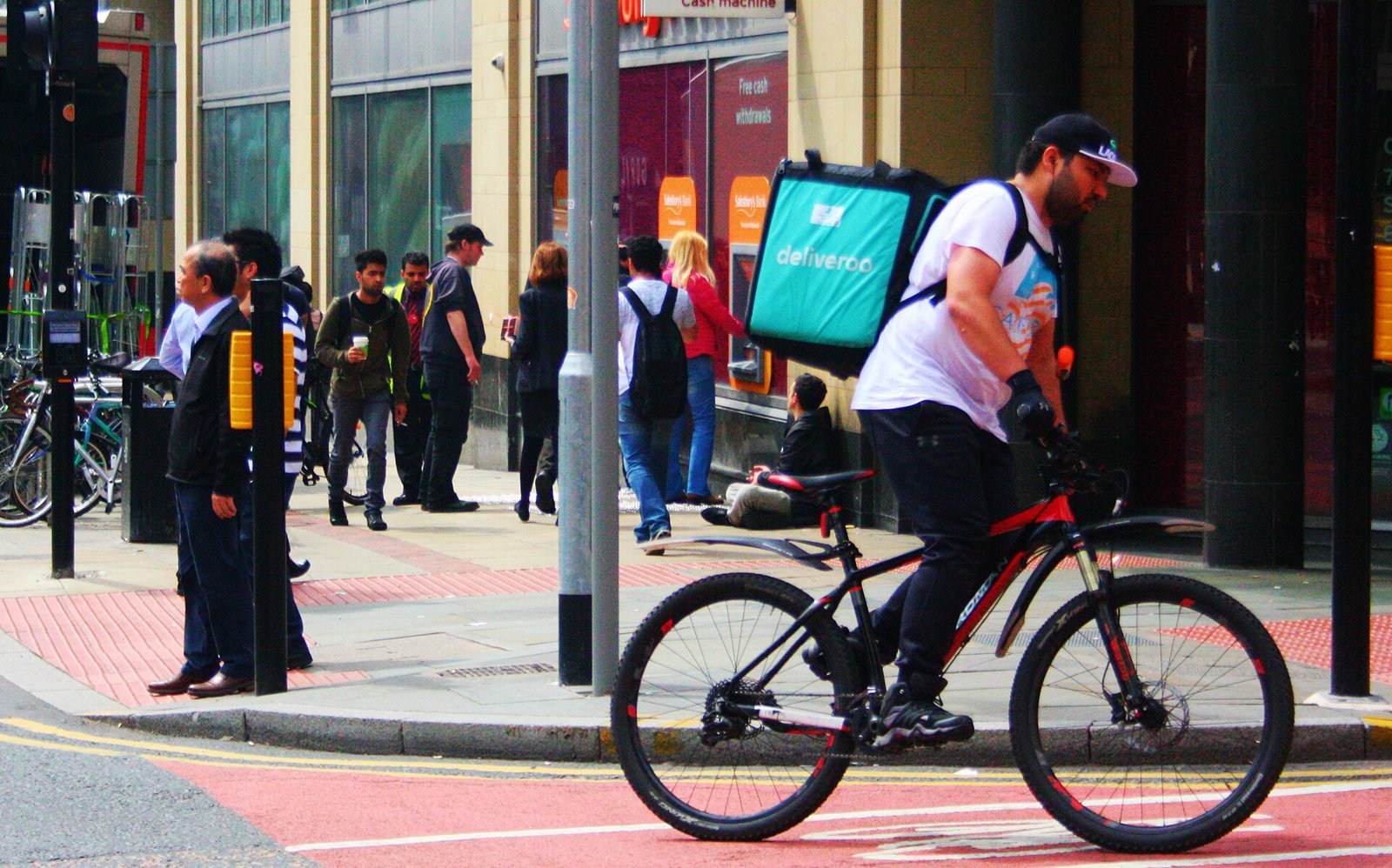
When your paycheck goes up and down, a budget built for steady income can fall apart — but a few simple systems can smooth out the bumps.
If you drive for a delivery app, freelance, work on commission or earn much of your pay in tips, you know the feeling. One week is great. The next week is thin. Standard budgeting advice often assumes the same paycheck lands every two weeks, which does not match your life.
The goal of an irregular-income budget is not to predict every dollar. It is to make sure the must-pay bills are always covered, so the good months can carry the slow ones. Here is a step-by-step way to get there.
Step 1: Find your bare-bones number
Start by figuring out the least amount of money you need to get through a month. This is your bare-bones budget — the essentials only.
List your must-pay costs:
- Rent or mortgage
- Utilities and phone
- Groceries (basic, not takeout)
- Transportation, including gas and car insurance
- Minimum payments on debts
- Insurance and medical costs
- Child care, if you have it
Add them up. That total is your baseline. Any month you earn at least this much, you are covered. Anything above it can go toward savings, debt payoff, taxes and fun.
Knowing this number takes away a lot of fear. Instead of wondering "Is this enough?", you can check one figure.
Step 2: Look back to find your low month
Next, gather your income records for as many past months as you can — bank statements, app payout histories, invoices or your tip log.
Look for your lowest-earning month in that stretch. Many people with uneven pay choose to budget as if every month will be a low month. If you plan around your worst month, your average and best months become a bonus instead of the plan.
If your low month is below your bare-bones number, that is useful to know too. It tells you how big a cushion you may need to build.
Step 3: Set aside money for taxes right away
This step is the one many freelancers and gig workers learn the hard way. When you work for an employer, taxes are usually taken out of each paycheck. When you work for yourself, nobody does that for you.
A few key points from the IRS:
- Income from gig work must be reported on your tax return, even if you did not receive a tax form for it and even if you were paid in cash.
- Self-employment tax is the Social Security and Medicare tax that people who work for themselves pay. According to the IRS, you generally must file for it if your net earnings from self-employment are $400 or more.
- Estimated taxes are payments you make during the year, instead of waiting until you file. The IRS says you generally must pay estimated tax if you expect to owe at least $1,000 after subtracting withholding and refundable credits. These payments are usually made in four installments through the year.
Because of this, many self-employed people move a set percentage of every payment into a separate savings account for taxes the day it arrives. That way, the money is there when a payment is due. The right percentage depends on your income, deductions and state, so consider using the estimated tax worksheet on irs.gov or talking with a tax professional.
If you earn tips: The IRS says employees must keep a daily record of tips and report cash tips to their employer if they total $20 or more in a month from that employer. Tips also need to be reported on your tax return. The rules for how tips are taxed can change, so check irs.gov for the current details.
Step 4: Build a buffer account
A buffer account is a savings account that sits between your income and your bills. Here is how it works:
- All income — app payouts, client payments, tips — goes into the buffer account first.
- On the same day each month (or every two weeks), you "pay yourself" a set amount from the buffer into your checking account. That amount is usually your bare-bones number, or a bit more.
- You pay your bills and everyday costs from checking, just like someone with a steady paycheck.
In good months, the buffer grows. In slow months, it covers the gap. Over time, many people aim to keep at least one month of bare-bones costs in the buffer, and then work up to more.
Some people keep their buffer in a high-yield savings account so the money earns a little interest while it waits.
Step 5: Give extra money a job
When a big month comes in, it can be tempting to spend it. Instead, consider deciding ahead of time how extra income will be used. A simple order might look like this:
- Tax savings — set aside your tax percentage first.
- Buffer account — top it up until it reaches your target.
- Emergency savings — for surprise costs like car repairs.
- Debt payoff — extra payments on high-interest debt.
- Goals and fun — travel, a new laptop for work, or something you enjoy.
Writing down this order ahead of time makes decisions easier when money arrives.
Step 6: Plan for lumpy costs
People with irregular income also tend to have irregular expenses: equipment, software subscriptions, car maintenance, professional licenses or slow seasons.
Make a list of costs that come up once or twice a year. Divide each by 12 and set that amount aside monthly. That way, a yearly bill does not land in your slowest month and knock your budget off track.
Step 7: Track and adjust
An irregular-income budget is never "set and forget." Try a quick weekly check-in:
- How much came in this week?
- How much went to taxes and the buffer?
- Are any bills coming up that need extra attention?
Then, every few months, look at the big picture. Has your low month changed? Is your bare-bones number still right? Small adjustments keep the system working.
Helpful habits for uneven pay
- Separate business and personal money. A separate account for work income and expenses makes taxes and tracking much easier.
- Keep records. The IRS encourages gig workers to keep records of their income and business expenses throughout the year.
- Invoice quickly. If you freelance, sending invoices right away can shorten the gap between work and pay.
- Watch the slow seasons. Many jobs have predictable busy and slow times. Save extra during busy stretches.
This article is for education only and is not financial advice. Everyone's situation is different.
Content on The Evergreen Edit is for educational and informational purposes only and is not individualized financial, investment, tax or legal advice. Learn more.
This article is for educational purposes only and isn't personalized financial, tax or legal advice. Consider talking with a qualified professional about your situation.

Kiara Miller — Founder & Editor
Kiara Miller is the founder and editor of The Evergreen Edit. He has been doing independent finance research for two decades and reviews every article before it's published.
More about Kiara →Get smarter about your money.
Join readers who get The Sunday Edit every week.