When money seems to vanish between paydays, putting real cash into labeled envelopes can make your spending limits easy to see and hard to ignore. This guide walks through how the system works, a full example with real numbers, the rules that keep it working, and a digital version if you rarely carry cash.
What is the cash envelope system?
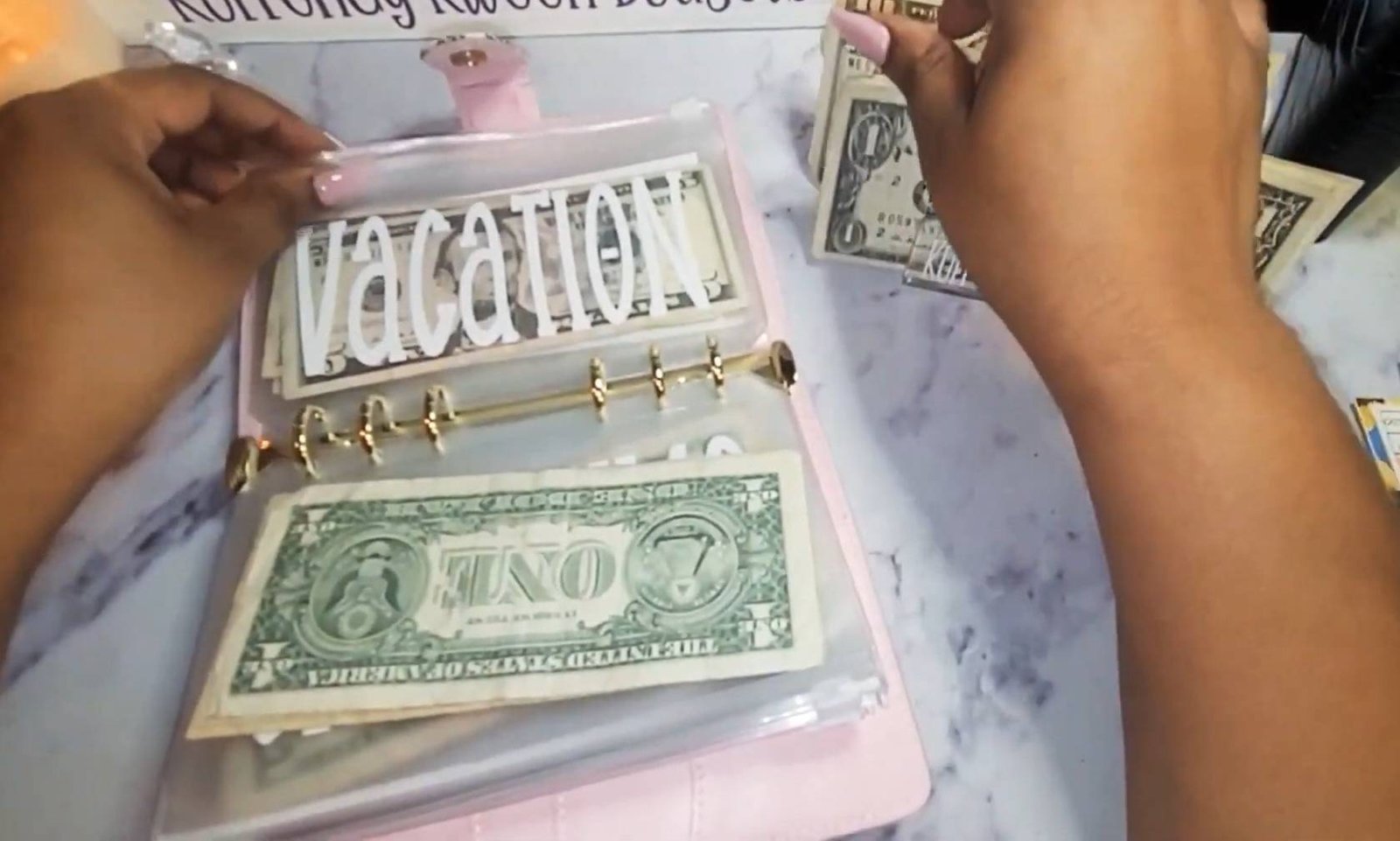
The cash envelope system is a budgeting method where you withdraw cash for flexible spending categories, such as groceries, gas and eating out, and put each amount in its own labeled envelope. You pay for purchases in that category only from its envelope. When an envelope is empty, spending in that category stops until the next refill.
That's the whole idea, and it is simple on purpose. A budget is just a plan for the money you have. Envelopes turn that plan into something you can hold. Instead of a balance on a screen, you can see exactly how much grocery money is left on the 19th of the month.
Why paying with cash can change how you spend
Many people find that handing over paper money makes them pause in a way that tapping a card does not. Researchers have tested this. In a 2001 study published in Marketing Letters, Drazen Prelec and Duncan Simester asked people how much they would pay for tickets to a sold-out professional basketball game. Those told they had to pay by credit card were willing to pay more than twice as much on average as those told to pay cash.
Cash is also becoming less common, which is part of why the envelope method can feel unusual today. The Federal Reserve's 2026 Diary of Consumer Payment Choice found that cash made up about 14% of consumer payments in 2025, or roughly 6 of the 47 payments a typical consumer made each month. Cards made up most of the rest. Using cash on purpose for a few categories puts a little friction back into spending that has become almost invisible.
Envelopes are not magic, though. They work because they force two things most budgets skip: deciding on a limit before you spend, and noticing in real time when you are close to it.
Step 1: Know what comes in and what must be paid
Before you fill any envelopes, find your monthly take-home pay. That is the money that actually lands in your account after taxes, insurance and retirement contributions come out.
Next, list your fixed bills, the costs that stay about the same each month: rent or mortgage, utilities, phone, insurance, loan payments and subscriptions. Keep paying these from your bank account by autopay, transfer or check. They don't belong in envelopes, and paying them in cash would mean carrying large sums for no benefit.
Then decide how much you will save each month, and treat it like a bill. Subtract fixed bills and savings from your take-home pay. What remains is the money you divide among your envelopes.
If you don't know where your money goes now, track it first. The Consumer Financial Protection Bureau's spending tracker tool suggests tracking for a full month rather than a week or two, and writing down the amount and item whenever you don't get a receipt. The CFPB notes that many people discover they are spending money in small ways that add up. Those small leaks are exactly what envelopes are good at catching. Our guide on how to track your spending has more ways to do this.
Step 2: Pick your envelope categories
Envelopes work best for flexible spending, the categories that change from week to week and are easy to overspend. Common choices include:
- Groceries
- Eating out and coffee
- Gas or transit
- Entertainment and going out
- Personal care, like haircuts and toiletries
- Clothing
- Household supplies
- Gifts
- "Fun money," a small personal allowance you can spend on anything without guilt
Start small. Three to five envelopes is plenty for your first month. Choose the categories where you most often overspend, because that is where a hard limit pays off fastest. You can add more once the habit sticks.
Step 3: Set amounts and fill the envelopes
Use what you actually spent in the past one to three months as your starting point, then trim where you want to cut back. Be realistic. An envelope set too low will run dry in week two, and the system will start to feel like punishment.
Once you have amounts, make it real:
- Withdraw cash on payday. If you are paid every two weeks, fill envelopes for two weeks at a time.
- Label each envelope with the category and the amount for the period.
- Keep a running tally on the back. Each time you spend, jot down the date, what you bought and how much is left.
- Carry only the envelope you need. Bring the grocery envelope to the grocery store, not every envelope everywhere you go.
- Use an ATM in your bank's network to avoid out-of-network ATM fees eating into your budget.
A worked example with real numbers
Here is how the math could look for one person. These numbers are an illustration, not a recommendation for what you should spend.
Take-home pay: $3,600 a month, paid every two weeks. Fixed bills paid from checking (rent, utilities, phone, car insurance, a student loan payment and two subscriptions): $2,150. Automatic transfer to savings: $300. That leaves $1,150 for envelopes.
- Groceries: $500
- Gas: $160
- Eating out and coffee: $120
- Clothing: $100
- Fun money: $100
- Household supplies: $70
- Personal care: $60
- Gifts: $40
The eight envelopes add up to exactly $1,150. In practice, this person might keep clothing, gifts and household supplies in a digital category, since those purchases are irregular and often happen online. That leaves five cash envelopes totaling $940 a month, or $470 per paycheck, withdrawn every other Friday.
Now say it is day 10 of the pay period and the eating-out envelope, which held $60 for two weeks, has $8 left. That is the system doing its job. The choice is visible: skip takeout for the next four days, or move $15 from fun money and write the transfer on both envelopes. Either way, the decision is made on purpose rather than discovered on a statement weeks later.
Step 4: Set your rules for empty and leftover envelopes
Decide ahead of time what you will do in the two situations that always come up.
When an envelope runs out early, the core rule is to stop spending in that category. If you truly must, move cash from another envelope, but only on purpose and with a note on the back of both. If the same envelope runs dry month after month, that is information, not failure. Raise that amount next month and lower another to match.
When there is money left over, you have options. You can roll it into the same envelope for next month, move it to savings, or put it toward debt. Many people let a small share go to fun money as a reward and send the rest to savings, which keeps the habit enjoyable.
For costs that come once or twice a year, like car registration, holiday gifts or annual subscriptions, consider a separate savings bucket you add to each month. Our sinking funds guide shows how to set these up so they don't wreck your monthly envelopes.
Pros and cons of cash envelopes
Pros:
- Spending limits are clear and physical, so you know where you stand before you buy.
- It is hard to overspend, since you can't spend cash you don't have.
- Categories paid in cash can't trigger interest charges or overdraft fees.
- It breaks the "tap and forget" habit that comes with cards and phones.
Cons:
- Cash can be lost or stolen. The FDIC insures deposits at insured banks, generally up to $250,000 per depositor, per ownership category, per bank, but cash in an envelope at home is not a deposit and is not covered.
- Cash in envelopes earns no interest.
- Online orders, many subscriptions and some travel bookings require a card.
- Paying with cash does not add to your credit history, so it won't help you build credit.
- Carrying cash every day may not feel practical or safe for everyone.
To limit the risk, keep only a week or two of envelope cash on hand, store it somewhere secure, and leave the rest in your bank account until the next refill.
The digital envelope option
If cash doesn't fit your life, you can use the same idea without paper money:
- Separate accounts: Some banks let you open several savings "buckets" or sub-accounts. Name each one for a category and move money into it on payday.
- Budgeting apps: Many apps use an envelope-style setup where each dollar is assigned to a category and you can see the remaining balance before you buy.
- A simple spreadsheet: List each category, its amount and a running balance, and update it each time you spend.
- A hybrid: Use cash for the one or two categories you overspend most, often groceries and eating out, and track the rest digitally.
The rule stays the same as with cash: each category gets a set amount, and when it's gone, it's gone until the next refill. If you go digital, turn on low-balance alerts so you know when a category is running low. One caution: if you pay with a credit card, you lose the built-in limit that makes envelopes work, so check your category balance before every purchase and pay the card in full.
Who the envelope system works best for
Envelopes tend to suit people who overspend on everyday categories, people paying down debt who need to free up cash quickly, and anyone who has tried budgeting apps but never looked at them. Couples can use envelopes too, with each person carrying the envelope for the errand they handle that week.
It is a weaker fit if most of your spending is online, if your income swings a lot from month to month, or if carrying cash is unsafe where you live. In those cases a digital version, or a simpler framework like the 50/30/20 rule, may be easier to keep up.
Your first-month checklist
- Track one month of spending, or review the last 30 to 90 days of statements.
- Total your take-home pay, fixed bills and monthly savings.
- Pick three to five envelope categories where you overspend most.
- Set amounts based on past spending, then withdraw cash on payday.
- Write a running tally on each envelope.
- At month's end, review which envelopes ran short or had leftovers and adjust.
Give it at least two or three months. The first month is mostly learning what your real numbers are. By the third, most people know whether the system fits, and many keep a few cash envelopes for life even after moving everything else to digital.
Frequently asked questions
What is the cash envelope system?
It is a budgeting method where you put cash for each flexible spending category, such as groceries or gas, into its own labeled envelope. You spend only what is in each envelope, and when one is empty, spending in that category stops until the next refill.
How many envelopes should I start with?
Three to five is a good start. Pick the categories where you overspend most, like groceries, eating out and fun money, and add more only after the habit sticks.
Is it safe to keep envelope cash at home?
Cash at home can be lost or stolen and is not covered by FDIC deposit insurance, which only protects deposits at insured banks. Keeping only a week or two of cash on hand limits the risk.
Can I do the envelope system without cash?
Yes. You can use separate savings buckets, an envelope-style budgeting app or a spreadsheet. The key rule is the same: each category gets a set amount, and when it's gone, you stop spending.
Sources
Content on The Evergreen Edit is for educational and informational purposes only and is not individualized financial, investment, tax or legal advice. Learn more.
This article is for educational purposes only and isn't personalized financial, tax or legal advice. Consider talking with a qualified professional about your situation.

Kiara Miller — Founder & Editor
Kiara Miller is the founder and editor of The Evergreen Edit. He has been doing independent finance research for two decades and reviews every article before it's published.
More about Kiara →Get smarter about your money.
Join readers who get The Sunday Edit every week.