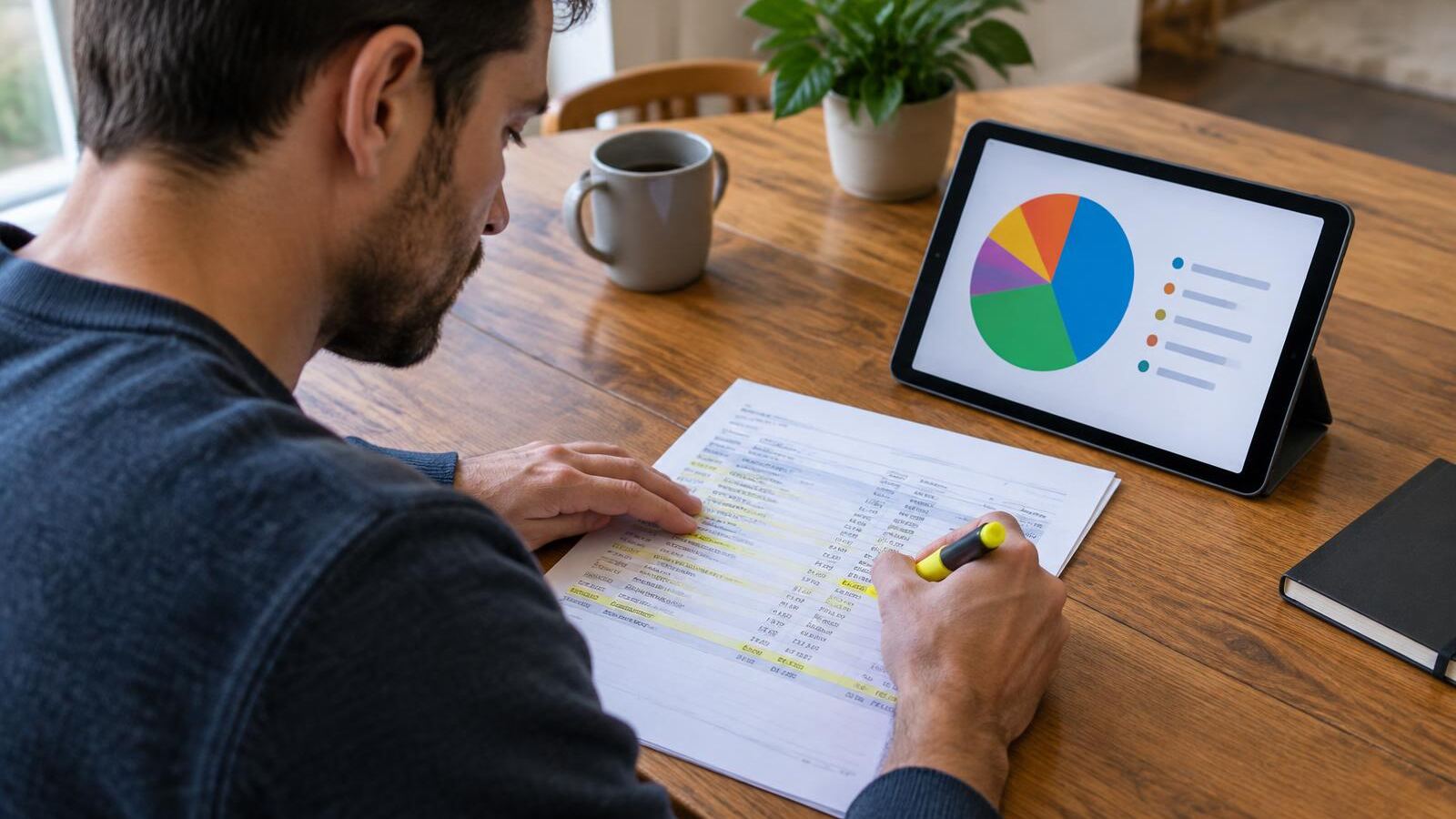
Most people underestimate how much they spend on small things. A few dollars here for coffee, a delivery fee there, an app subscription you forgot about. None of these feel significant on their own, but together they can add up to hundreds of dollars a month.
Tracking your spending is how you find out what is really happening with your money. It isn’t glamorous, but it is the foundation for almost every other financial goal, from building an emergency fund to paying off debt. You can’t make a realistic plan for money you can’t see.
Why tracking matters
A budget is a plan for the future. Tracking is a record of the past. Without tracking, a budget is mostly guesswork, and guesses tend to be optimistic. Many people are genuinely surprised when they total up a month of real spending, especially in categories like food, shopping and entertainment.
Tracking also gives you leverage. Once you know where money is going, you can make deliberate choices about which expenses truly matter to you and which ones you’d happily cut. That turns vague guilt about spending into specific, manageable decisions.
Choose a method you’ll actually use
There is no single best way to track spending. The best method is simply the one you will keep using month after month.
Budgeting apps that connect to your bank and card accounts are the most automatic option. They import transactions and sort them into categories, so your main job is reviewing and correcting them. This works well for people who use cards for most purchases and want minimal manual effort.
A spreadsheet gives you more control. You can download transactions from your bank, paste them in weekly and organize them however you like. Many people find that the act of reviewing each line makes them more aware of their spending than an app does.
A notebook or printable tracker suits people who prefer pen and paper or who use a lot of cash. Writing down each purchase takes discipline, but it creates a strong mental connection between spending and awareness.
Many banks and card issuers also offer free tools that categorize your transactions automatically. If most of your spending runs through one account, these built-in features may be all you need.
Keep your categories simple
It is tempting to create dozens of detailed categories, but that usually makes tracking feel like a chore. Start with a handful: housing, food, transportation, bills and utilities, debt payments, fun, and everything else. You can always split a category later if you want more detail, such as separating groceries from dining out.
The goal is to answer a few useful questions quickly, like how much you spend on food each month or whether transportation costs are creeping up, not to build a perfect accounting system.
Make it a habit
The biggest reason people stop tracking is that it slips out of their routine. Decide when you will do it and attach it to something you already do. Some people log purchases every evening in a couple of minutes. Others review all their transactions once a week, perhaps over Sunday morning coffee.
If you use cash or get paper receipts, keep them in one place, such as an envelope or a dedicated pocket in your wallet, until you log them. Photographing receipts with your phone works too.
Don’t worry about catching every penny at first. Consistency matters far more than perfection. A rough picture you maintain is more valuable than a flawless system you abandon after two weeks.
Look for patterns
After a full month, total each category and look at the results. Which numbers surprised you? Where are small, frequent purchases adding up? Are there expenses that don’t reflect what you actually value?
Resist the urge to overhaul everything at once. Choose one or two changes to focus on, such as cooking at home two more nights a week or canceling a subscription you rarely use. Small, specific changes are much easier to stick with than sweeping resolutions.
Over several months, tracking also reveals irregular expenses that blindside many budgets: annual subscriptions, car registration, gifts, back-to-school costs and medical bills. Once you see them coming, you can set aside a little each month so they no longer feel like emergencies.
Turn tracking into a plan
Once you have two or three months of data, you have everything you need to build a realistic budget. Use your actual averages as a starting point, then adjust categories to match your goals. Tracking continues to play a role, showing you each month whether you stayed on plan and where adjustments are needed.
Be kind to yourself
Tracking isn’t about judging your past spending or feeling guilty. It is about understanding your money so you can make choices that fit your goals. Some months will go better than others, and that is normal. The point is to keep looking, because awareness is what makes every other improvement possible.
Content on The Evergreen Edit is for educational and informational purposes only and is not individualized financial, investment, tax or legal advice. Learn more.
This article is for educational purposes only and isn't personalized financial, tax or legal advice. Consider talking with a qualified professional about your situation.

Kiara Miller — Founder & Editor
Kiara Miller is the founder and editor of The Evergreen Edit. He has been doing independent finance research for two decades and reviews every article before it's published.
More about Kiara →Get smarter about your money.
Join readers who get The Sunday Edit every week.