The Federal Reserve's latest minutes showed most officials expect to keep raising rates, and a selloff in health insurers dragged the Dow lower on Wednesday.
What happened in the stock market on Nov. 18?
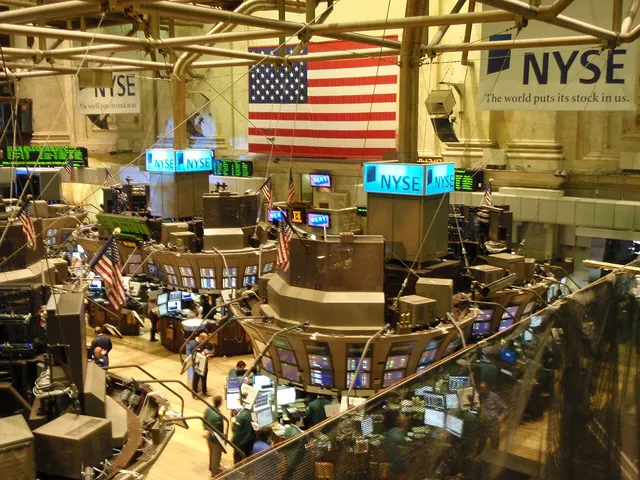
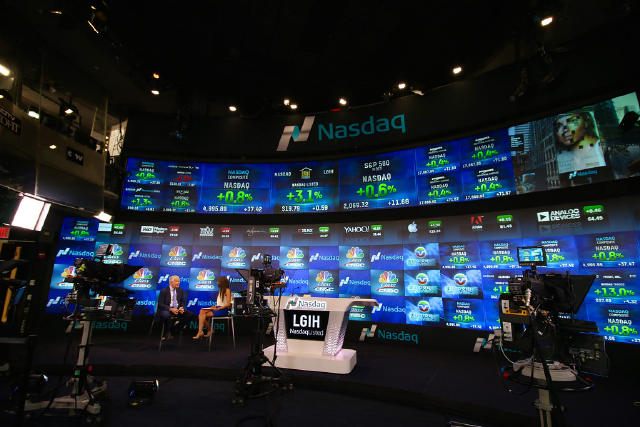
The Dow Jones Industrial Average fell 561.25 points, or 1.11%, to 50,198.17 on Wednesday, Nov. 18, 2026. The S&P 500 slipped 0.23% to 7,323.63, its fifth losing day in a row, while the Nasdaq Composite rose 0.42% to 24,429.88. Fed minutes pointing to more rate hikes and a plunge in health insurers weighed on stocks.
Those closing figures come from Stock Titan's live market coverage, which cited CNBC data, and match the levels reported by The Motley Fool. The split between the three indexes tells the story of the day. The Dow, which tracks just 30 large companies and weights them by share price, was hit hard by its health care members. The tech-heavy Nasdaq held up better. Our guide to the Dow vs. the S&P 500 vs. the Nasdaq explains why the three can move so differently on the same day.
What did the Fed minutes say?
At 2 p.m. Eastern time, the Federal Reserve released the minutes of its Oct. 27-28 policy meeting. Minutes are the detailed written record of what officials discussed, and they often reveal more than the short statement issued on meeting day.
At that meeting, the Fed held its benchmark federal funds rate in a range of 3.75% to 4%. The vote was 10 to 2. Governor Lisa D. Cook and Cleveland Fed President Beth M. Hammack dissented because they wanted to raise rates by a quarter point right away.
The bigger news for markets was the outlook. According to the minutes, "almost all participants judged" that further action to raise the target range would likely be appropriate to bring inflation back to the Fed's 2% goal. "A couple of participants" said an increase of more than 25 basis points (a quarter of a percentage point) could warrant consideration at the next meeting if incoming inflation data were unfavorable. That next meeting is Dec. 8-9.
The minutes also showed why officials are worried. Staff noted that inflation "remained elevated," with total PCE inflation, the Fed's preferred price gauge, at 3.6% in September and core PCE, which leaves out food and energy, at 3.1%. Almost all participants also discussed the risk that returns on artificial intelligence investment could disappoint investors.
Traders were already betting on a hike. After the minutes, futures pricing tracked by CME FedWatch showed a 91.7% chance of a quarter-point increase to 4% to 4.25% in December, InvestmentNews reported.
Which stocks moved the most?
Health insurers led the decline. UnitedHealth Group (UNH), a Dow member, fell 10.21%, Humana (HUM) dropped 12.98%, Elevance Health (ELV) lost 7.63% and Centene (CNC) fell 7.03%, both Stock Titan and The Motley Fool reported. It was the group's second straight day of steep losses after the Centers for Medicare & Medicaid Services proposed a rule on Nov. 16 that would expand how it recovers Medicare Advantage overpayments through audits.
Nvidia (NVDA) gave back its early gain from Tuesday night's strong earnings report and closed down 2.89%, according to Stock Titan. We covered those results in our Nvidia earnings story.
There were winners, too. Off-price retailer TJX Companies (TJX) surged 8.05% after reporting stronger-than-expected comparable sales growth and raising its full-year guidance, The Motley Fool reported. Target (TGT) rose 4.01%, according to Stock Titan.
What this means for your wallet
The Fed raises rates to cool inflation. Higher rates make borrowing more expensive for companies and households, and they make safer assets like Treasury bills more attractive compared with stocks. That is why hawkish minutes, meaning minutes that lean toward higher rates, can weigh on share prices.
Here is a simple way to see the day in numbers. Someone holding $10,000 in a fund that tracks the Dow would have seen it drop by about $111 on Wednesday, to roughly $9,889. The same $10,000 in a Nasdaq Composite tracker would have gained about $42. An S&P 500 fund would have lost about $23. The difference shows how much your results depend on what your fund holds.
For most people saving in a 401(k), the S&P 500 matters most because many target-date and index funds are built around it. Five losing days in a row can feel unsettling, but Wednesday's 0.23% drop was small. Some long-term investors use stretches like this to check that their mix of stocks and bonds still fits their timeline, rather than reacting to one day's headlines. Our guide to investing during a market downturn walks through that thinking.
Rising rate expectations also matter if you carry a credit card balance or plan to borrow. If the Fed raises rates in December, credit card and other variable-rate loans could get more expensive soon after.
What should investors watch next?
The next big test for markets is the Fed's Dec. 8-9 meeting, and especially whether officials raise rates by a quarter point or more. Before then, inflation data will carry extra weight, since some officials tied the size of the next move to those numbers. Investors will also watch whether health insurer stocks stabilize as the industry responds to the Medicare audit proposal, which is open for public comment until Jan. 19, 2027.
Frequently asked questions
Why did the Dow fall on Nov. 18, 2026?
The Dow fell 1.11% as Fed minutes signaled more rate hikes and health insurers, including Dow member UnitedHealth, dropped sharply after a Medicare audit proposal.
What did the October 2026 Fed minutes say about rate hikes?
The minutes said almost all officials judged that further increases would likely be appropriate. A couple said a hike larger than a quarter point could be considered at the Dec. 8-9 meeting if inflation data were unfavorable.
What is the federal funds rate right now?
The Fed held its target range at 3.75% to 4% at its Oct. 27-28, 2026, meeting. Its next decision is due Dec. 9.
Sources
- Federal Reserve, "Minutes of the Federal Open Market Committee, October 27-28, 2026," November 18, 2026
- Federal Reserve, press release on the release of the minutes, November 18, 2026
- Stock Titan, "Stock Market Today, November 18, 2026: The Dow Closes Lower," November 18, 2026
- The Motley Fool, "Stock Market Today, Nov. 18: S&P 500 Breaks Key Support as Fed Minutes Signal More Rate Hikes Ahead," November 18, 2026
- InvestmentNews, "The Fed came close to an October rate hike, FOMC minutes show," November 18, 2026
- Centers for Medicare & Medicaid Services, CRUSH proposed rule press release, November 16, 2026
Content on The Evergreen Edit is for educational and informational purposes only and is not individualized financial, investment, tax or legal advice. Learn more.
Compound growth estimate
Estimated total
$17,175
Your contributions
$13,000
This is an estimate, not a prediction. Monthly compounding; taxes, fees and inflation are excluded.
This article is for educational purposes only and isn't personalized financial, tax or legal advice. Consider talking with a qualified professional about your situation.

Kiara Miller — Founder & Editor
Kiara Miller is the founder and editor of The Evergreen Edit. He has been doing independent finance research for two decades, is a tax preparer, and reviews every article before it's published.
More about Kiara →Get smarter about your money.
Join readers who get money stories on their chosen topics, daily or as new articles post.