
Friday's AI-led rout capped Wall Street's worst week since April 2025 and wiped out the Nasdaq's gain for the year.
How far did stocks fall on Friday, Nov. 20?
The S&P 500 fell 265.44 points, or 3.70%, to 6,910.39 on Friday, Nov. 20, 2026, its seventh straight loss. The Dow Jones Industrial Average dropped 949.73 points, or 1.93%, to 48,147.33, and the Nasdaq Composite plunged 1,261.47 points, or 5.28%, to 22,617.73, erasing its 2026 gain.
Those closing figures match across Yahoo Finance's live coverage and Fox Business. Fox Business called it the Nasdaq's second-largest single-day point drop on record, and said the seven-day slide was the S&P 500's longest losing streak since February 2020.
The losses pushed both the S&P 500 and the Dow into a correction, which means a drop of at least 10% from a recent record high. The S&P 500's record close was 7,818.93 on Oct. 6, according to Yahoo Finance, so Friday's close left it about 11.6% below that peak. The Dow finished more than 10% under its August record. Our guide to stock market corrections explains how often they happen and how long they have tended to last.
For the week, the S&P 500 lost more than 8%, its worst week since April 2025. The Nasdaq fell about 10%, which Fox Business said was its largest weekly percentage loss since March 2020.
Why did Nvidia stock fall 14%?
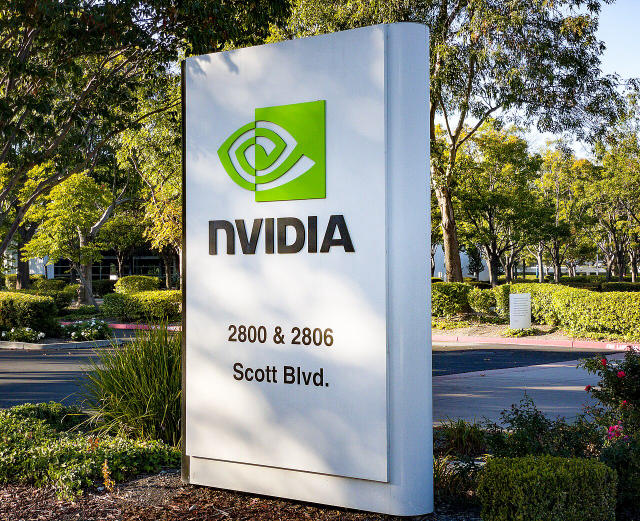
Nvidia (NVDA) closed down 14.01% at $125.53. Investing.com, citing Reuters, said the stock fell after a Reuters report that the Securities and Exchange Commission was probing the chipmaker for potential accounting issues. The SEC is the federal agency that polices public companies and their financial reports. The Wall Street Journal had first reported on Nov. 17 that the SEC was probing Nvidia, examining in part whether its disclosures misled investors, InvestmentNews reported. A probe is not a finding of wrongdoing, but Friday's report hit a stock that was already under heavy pressure.
Nvidia had been sliding since its earnings report earlier in the week and since Jensen Huang stepped down as chief executive, a change we covered in our article on Nvidia's stock after Huang's exit. Friday was its seventh straight decline, and Investing.com said the chipmaker had its worst week since October 2008.
Because Nvidia is one of the biggest companies in the S&P 500 and the Nasdaq, a 14% drop in its shares drags both indexes down hard on its own.
Which other stocks were hit hardest?
The selling spread across chip and AI stocks. Advanced Micro Devices (AMD) fell 13.25%, Micron (MU) lost 13.89% and Broadcom (AVGO) dropped 12.19%. The Philadelphia Semiconductor Index, a basket of chip stocks, fell about 11%. Anthropic (ANT), which began trading on Thursday, slid 8.50% to $88.91, still above its $83 IPO price.
Technology was the worst-performing sector, and consumer staples, which include food and household-goods makers, were the only S&P 500 sector to rise, according to the CappNotes market recap. A few stocks moved against the tide. Gap (GAP) jumped more than 11% after its quarterly earnings beat estimates, and Global Payments (GPN) rose 9.95% after Bloomberg reported that private equity firm GTCR was exploring a takeover.
Fear showed up in other markets too. The Cboe Volatility Index, or VIX, Wall Street's "fear gauge," rose 26.2% to close at 35.89. Our explainer on what the VIX measures shows how to read that number. Investors moved into safer assets, and the 10-year Treasury yield fell about 12 basis points to 4.92%. A basis point is one-hundredth of a percentage point.
Is the Fed adding to the pressure?
Investors are also bracing for higher interest rates. CME FedWatch data cited by Yahoo Finance showed roughly a 92% chance that the Federal Reserve raises rates by a quarter point at its Dec. 8-9 meeting. Fed Governor Lisa Cook added to those expectations on Friday, saying, "Waiting longer to implement rate increases risks getting behind the curve," according to Yahoo Finance.
Higher rates raise borrowing costs for companies and can make fast-growing stocks with high prices, like many AI names, look less attractive compared with safer investments.
What this means for your wallet
A quick example shows the size of the move. Someone with $10,000 in an S&P 500 index fund at Thursday's close would have seen it drop by about $370 on Friday, to roughly $9,630. The same $10,000 in a fund tracking the Nasdaq Composite would have lost about $528.
Most 401(k) target-date and index funds lean heavily on the S&P 500, and its largest companies are the same tech and AI names leading this selloff. That means retirement balances can fall on AI headlines even if you never bought a single chip stock.
Corrections are a normal part of investing, even when they feel sudden. Some long-term investors use them to check whether their mix of stocks, bonds and cash still fits their timeline, and keep contributing on schedule instead of reacting to one bad week. Our guide to investing during a market downturn walks through that approach.
What should investors watch next?
Next week is short. U.S. stock markets are closed on Thursday, Nov. 26, for Thanksgiving, and Friday, Nov. 27, is an early close at 1 p.m. Eastern. Monday brings S&P Global's flash readings on business activity, and investors will watch whether selling spreads beyond tech, whether Nvidia responds to the SEC report and whether the Fed signals more than one more hike.
Frequently asked questions
Is the stock market in a correction?
Yes. After Nov. 20, 2026, both the S&P 500 and the Dow closed more than 10% below their record highs, which meets the definition of a correction. The S&P 500 was about 11.6% below its Oct. 6 record close of 7,818.93.
Why did Nvidia stock drop on Nov. 20, 2026?
Nvidia fell 14.01% to $125.53 after Reuters reported that the SEC was probing the company for potential accounting issues, adding to an SEC probe first reported by the Wall Street Journal on Nov. 17. The stock was already falling after its earnings report and the resignation of CEO Jensen Huang.
Is the stock market open on Thanksgiving 2026?
No. U.S. stock markets are closed on Thursday, Nov. 26, 2026, and close early at 1 p.m. Eastern on Friday, Nov. 27.
Content on The Evergreen Edit is for educational and informational purposes only and is not individualized financial, investment, tax or legal advice. Learn more.
Compound growth estimate
Estimated total
$17,175
Your contributions
$13,000
This is an estimate, not a prediction. Monthly compounding; taxes, fees and inflation are excluded.
This article is for educational purposes only and isn't personalized financial, tax or legal advice. Consider talking with a qualified professional about your situation.

Kiara Miller — Founder & Editor
Kiara Miller is the founder and editor of The Evergreen Edit. He has been doing independent finance research for two decades, is a tax preparer, and reviews every article before it's published.
More about Kiara →Get smarter about your money.
Join readers who get money stories on their chosen topics, daily or as new articles post.