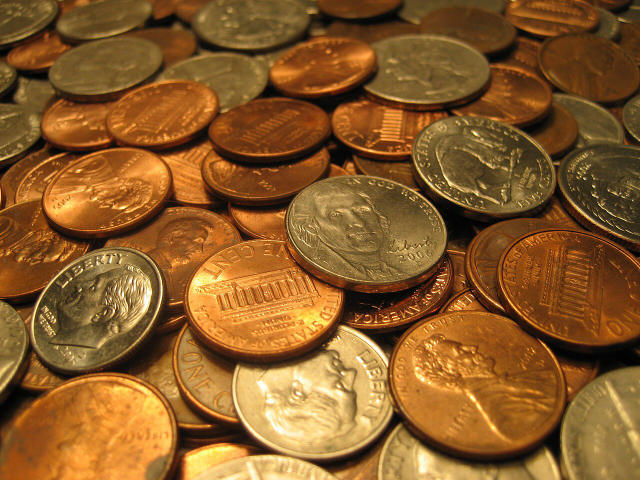
A new federal law ends the penny for everyday use and sets rules for rounding cash purchases. Here is what changes when you pay with bills and coins, and what stays exactly the same.
What does the Common Cents Act do?
The Common Cents Act, which President Trump signed into law on Friday, Nov. 20, 2026, tells the Treasury to stop making pennies except for collectors and gives businesses a legal framework to round cash totals to the nearest 5 cents. Card, check and electronic payments stay exact to the cent.
According to the White House summary of the bill, the law also allows the nickel to be made from cheaper materials and sets out steps the Treasury Secretary must follow before stopping production of any coin for general circulation.
The law puts into writing something that had already started. The U.S. Mint struck its final circulating penny on Nov. 12, 2025, according to a press release from Sen. Cynthia Lummis (R-Wyo.), who led the Senate version of the bill and joined the president in the Oval Office for the signing. The bill passed both the House and the Senate without opposition, the release said.
Why lawmakers wanted rounding rules
Stopping production created a practical problem for stores: what do you do when a cash total ends in 2 cents and the drawer has no pennies? Before this law, businesses could be sued if they failed to give customers exact change, even when they rounded in the customer's favor, CBS News reported.
Retail groups pushed for a clear answer. "Retailers have been looking for federal guidance on processing cash transactions since penny production ended," Brennan Duckett, director of regulatory and policy at NACS, the convenience store trade group, told CBS. Restaurants care too. Sean Kennedy of the National Restaurant Association said in the Lummis release that "nearly one in four purchases in restaurants are still made in cash."
Cost was the other driver. Supporters say a penny costs nearly four cents to make, and the U.S. Mint projects that ending production will save taxpayers $56 million a year, according to the Lummis release.
How rounding to the nearest nickel works
The rule rounds the final cash total up or down to the nearest 5 cents. CBS gave two examples: a purchase that comes to $10.02 after tax would round down to $10.00, and a $10.04 total would round up to $10.05. The rounding applies to the total you owe, not to each item on the receipt.
Using ordinary nearest-nickel math, here is how each ending works:
- Totals ending in 1 or 2 cents round down to 0 (for example, $7.41 becomes $7.40).
- Totals ending in 3 or 4 cents round up to 5 (for example, $7.43 becomes $7.45).
- Totals ending in 6 or 7 cents round down to 5 (for example, $7.46 becomes $7.45).
- Totals ending in 8 or 9 cents round up to the next 10 (for example, $7.48 becomes $7.50).
- Totals already ending in 0 or 5 cents don't change.
That means the most any single cash purchase can move is 2 cents, in either direction. Existing pennies remain legal tender, so if you still have a jar of them at home, you can keep spending them.
What this means for your wallet
For most people, the dollar effect is tiny. Because the endings round down about as often as they round up, a shopper whose totals land on random cents should come out close to even over time.
Here is a worked example. Say you make 10 cash purchases in a month with these endings: 1, 3, 4, 6, 8, 2, 9, 7, 0 and 3 cents. Rounding changes them by −1, +2, +1, −1, +2, −2, +1, −2, 0 and +2 cents. Add those up and you paid 2 cents more for the whole month.
Now take the worst case. If every one of your cash purchases happened to end in 3 or 8 cents, you would pay an extra 2 cents each time. At five cash purchases a week, that is 10 cents a week, or $5.20 over a year. The best case is the mirror image: endings of 2 or 7 cents every time would save you the same $5.20.
A few practical tips if you pay with cash often:
- If you want to pay the exact amount, use a debit card, credit card or mobile wallet. Those payments are not rounded.
- Check your receipt. A cash total and a card total for the same items can differ by up to 2 cents, so it helps to know which one you were charged.
- Keep your old pennies. They are still legal tender, so a jar of them is still worth exactly what it was before the law.
- If you track spending with a budget app, small rounding differences may show up. Our guide on how to track your spending can help you keep the habit going.
The bigger money lessons at the register haven't changed. A 2-cent rounding swing matters far less than reading the unit price on the shelf or doing the math on a stacked coupon. See our guides on how to read a unit price tag and how stacked discounts really work.
Frequently asked questions
Are pennies still legal tender after the Common Cents Act?
Yes. Existing pennies remain legal tender, so you can still spend them or deposit them. The law ends production for general circulation, with an exception for collectors.
Does rounding to the nearest nickel apply to card payments?
No. Card, check and electronic payments stay exact to the cent. The rounding framework is for cash transactions.
How much can rounding change a cash purchase?
At most 2 cents. Totals ending in 1, 2, 6 or 7 cents round down, and totals ending in 3, 4, 8 or 9 cents round up to the nearest 5 cents.
Content on The Evergreen Edit is for educational and informational purposes only and is not individualized financial, investment, tax or legal advice. Learn more.
Which money-saving habit will you focus on next?
This article is for educational purposes only and isn't personalized financial, tax or legal advice. Consider talking with a qualified professional about your situation.

Kiara Miller — Founder & Editor
Kiara Miller is the founder and editor of The Evergreen Edit. He has been doing independent finance research for two decades, is a tax preparer, and reviews every article before it's published.
More about Kiara →Get smarter about your money.
Join readers who get money stories on their chosen topics, daily or as new articles post.